Matthew 3:1-12 What Does Repentance Mean?
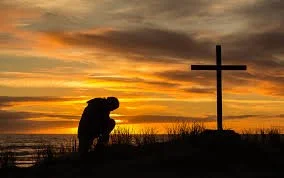
One important way that Biblical authors emphasise a key message is by the repetition of words. In this passage a repeated word is ‘Repent’, it comes three times. Matthew is stressing that the fact of God sending Jesus Christ as his chosen king or Messiah demands our response, we must repent.
The word ‘repent’ does not mean a sentimental feeling of remorse, it involves a change of direction. Literally the English word traces back to the Latin verb ‘pensare’ means ‘to weigh, think or consider’ so to ‘repent’ is to ‘reconsider’, ‘to change direction’. The Greek word for ‘repent’ is μετανοέω (metanoeō), which also means ‘to change one's mind’. It is a compound word, with ‘meta’ meaning ‘change’ and ‘noein’ referring to the mind, thought, or perception. So ‘repentance’ involves a fundamental shift in thinking and perspective, going beyond mere regret to a change of heart and intention. This in turn always leads to a change in behaviour. In the Bible repentance means to change direction so that Jesus takes the lead in our lives, it is a summons to return to God.
The Bible scholar, Don Carson, has said about ‘repentance’:
“What is meant is not merely an intellectual change of mind or mere grief. Still less doing penance but rather a radical transformation of the whole person. A fundamental turnaround involving mind and action. It includes overtones of grief, which results in fruit in keeping with repentance.”
Thus in this passage repentance led to action:
“Confessing their sins, they were baptised by him in the Jordan River.”
It is unfortunately all too easy for people to enjoy religious and even Christian activities and even to become religious leaders and not understand that the only way into eternal life is through the door of repentance. In verse 7 we read that many of the religious elite, the Sadducees and the Pharisees came out to hear John the Baptist. John realised what was in their minds and warned them:
“You brood of vipers! Who warned you to flee from the coming wrath? Produce fruit in keeping with repentance.” Matthew 3:7-8
Christian repentance is far more than a feeling, it results in a new direction in life. These religious people thought that because they believed orthodox doctrines and were part of the establishment, with a good pedigree that they must be in good standing before God. How wrong they were.
“And do not think you can say to yourselves, ‘We have Abraham as our father.’ I tell you that out of these stones God can raise up children for Abraham.” Matthew 3:9.
There is a very real judgment facing all of us and Jesus can see whether hypocrisy is in people’s hearts:
“The axe is already at the root of the trees, and every tree that does not produce good fruit will be cut down and thrown into the fire.” Matthew 3:10
Jesus gave a similar warning to some church leaders who had the outward appearance but whose hearts were not given to Jesus:
“Not everyone who says to me, ‘Lord, Lord,’ will enter the kingdom of heaven, but only the one who does the will of my Father who is in heaven. Many will say to me on that day, ‘Lord, Lord, did we not prophesy in your name and in your name drive out demons and in your name perform many miracles?’ Then I will tell them plainly, ‘I never knew you. Away from me, you evildoers!’ Matthew 7:21-23
This is why a reversal of direction a turning round is essential. The British Prime Minister, Margaret Thatcher. famously said,
“The lady is not for turning.”
However,, whether we will submit to the rule of Jesus or not is a vital decision It is very hard for many of us to admit that we have been going in the wrong direction.
A middle class successful Australian man started going to church. One day he summonsed his daughter and two younger sons and solemnly announced that he had an apology to make.
“I’ve been listening to what has been said in church, taken it all in, realised it is true and that I have been leading the family in the wrong direction for the last 18 years. I am deeply sorry but from now on we’re going a different way - Christ’s way”
That is an example of true repentance.
Matthew gives us here three convincing reasons why we should repent.
1. God’s Has Promised v. 3-6
This section begins with a quote from the prophet Isaiah. In this way Matthew is emphasising that all of Scripture is the Word of God and profitable for us.
“A voice of one calling: ‘In the wilderness prepare the way for the Lord; make straight in the desert a highway for our God.’” Matthew 3:3 and Isaiah 40:3
It is a strange coincidence that just as there are 39 books in the Old Testament, the first half of Isaiah consists of 39 chapters. Chapter 40 of Isaiah introduces the notion of a prophet preparing people for the coming of the Lord. Matthew is the 40th book in the bible, the first in the New Testament and this book also starts with a prophet, John the Baptist, preparing the way for the Lord.
This voice is calling on God’s people to prepare for the coming of the Messiah. He will come when they are ‘in the desert’. The message is urgent, the Messiah is coming, get ready. Just as when a President or Royalty are about to visit people tidy everything up, so we are told to do some hard work and make a straight highway for the Lord. Surely this is telling us to go straight! The response that people confessed their sins does suggest that this moral sense was well understood.
Isaiah’s message was that the Messiah, God’s chosen King is coming so get ready and make a fresh start, repent.
Why does Matthew talk about the clothes John the Baptist was wearing and the food he was eating?
“John’s clothes were made of camel’s hair, and he had a leather belt around his waist. His food was locusts and wild honey.” Matthew 3:4
There is a story in the Old Testament about King Ahaziah who had fallen from a height and was injured. He sent his servants to ask Elijah whether he would live. When they returned the king asked them:
“What kind of man was it who came to meet you and told you this?” They replied, “He had a garment of hair and had a leather belt around his waist.”The king said, “That was Elijah the Tishbite.”
Elijah was identified by his dress code. John the Baptist had emulated this dress as he wanted all to know that heals came with a warning that was from God. This is why the gospel writers are specific about his clothes - he was speaking on behalf of God.
The prophet Malachi had made a promise:
“See, I will send the prophet Elijah to you before that great and dreadful day of the Lord comes.” Malachi 4:5
The role of this forerunner to the Messiah was clear, it would be to call people to repent, to turn.
“He will turn the hearts of the parents to their children, and the hearts of the children to their parents; or else I will come and strike the land with total destruction.” Malachi 4:6
All God’s promises to us are fulfilled in Jesus, he promised he would come and now he has come. John’s message is timeless. It is relevant for both the first and second comings of Jesus. He is coming, so ‘Get ready’. It is only reasonable to remove all obstacles that are in the way of pleasing him.
During the Battle of Copenhagen in 1801, Admiral Horatio Nelson famously ignored a signal from his superior, Admiral Sir Hyde Parker, to retreat by holding a telescope to his blind eye. This story is the origin of the idiom to ‘turn a blind eye,’ meaning to deliberately ignore something. Nelson continued the battle, leading the British to a decisive victory.
Today there are many who treat God’s orders in a similar way and hope they will get away with this as Nelson did. God has only one word for such people, they are fools.
“For although they knew God, they neither glorified him as God nor gave thanks to him, but their thinking became futile and their foolish hearts were darkened. Although they claimed to be wise, they became fools.” Romans 1:21-22
Those who refuse to turn are refusing forgiveness, eternal life and the opportunity of being part of God’s family.
Shōichi Yokoi was a Japanese soldier found in Guam in January 1972. He had been hiding for nearly 28 years after World War II, refusing to surrender due to the shame of capture, even after the war ended in 1945. He lived in a handmade cave and survived on a diet of foraged food, eventually becoming a symbol of outdated pre-war Japanese values when he returned to Japan. There are many reasons people give for refusing to surrender to Christ but loss of face is a common reason. What would my family and work colleagues think? Such people forget to ask,
‘But what will God think and do if I refuse his offer of forgiveness?’
2. God’s view of us v. 7-10
God cannot be bluffed. Just as John the Baptist saw what the Sadducees and Pharisees were really like, so God can see what is in our hearts:
“You brood of vipers! Who warned you to flee from the coming wrath?”
Why were these senior religious people picked out for criticism? Their external veneer would have been impressive. If John had turned to prostitute,s thieves, paedophiles, rapists or murderers and warned them, everyone would agree with the criticism but why the morally correct, religious people. If they will be rejected by God what chance have ordinary people?
Why had the many Sadducees and Pharisees come? Was it possibly to add baptism to their religious Curriculum Vitae qualifications? Without repentance, baptism is a meaningless ritual. Perhaps they did not intend to be baptised but had come to find errors in John’s ministry. They did seem self satisfied:
“We have Abraham as our father.” Matthew 3:9
They possibly saw themselves above such popular enthusiasm. John the Baptist takes them head on.
“I tell you that out of these stones God can raise up children for Abraham.” Matthew 3:9
The Bible makes it clear that to be Children of Abraham, to be one of God’s Chosen People we each have to have the same personal walk with God that Abraham had. Having the right parents , being brought up in the right family and being subjected to the right religious ceremonies does not mean we are one of God’s people.
God said to Abraham,
“Behold, my covenant is with you, and you shall be the father of a multitude of nations.” Genesis 17:4
But Genesis makes plain that Abraham did not father a multitude of nations in a physical or political sense. Therefore, the meaning of God’s promise was probably that a multitude of nations would somehow enjoy the blessings of sonship even though physically unrelated to Abraham.
God said to Abraham:
“In you all the families of the earth will be blessed.” Genesis 12:3
God knew that Jesus would be Abraham’s offspring and that in him people of all nations could be blessed. God later said to Abraham:
“As for me, this is my covenant with you: You will be the father of many nations.” Genesis 17:4
Was this speaking about the Jews and possibly some Arab nations or did he mean that a multitude of nations would somehow enjoy the blessings of being God’s people without being physically related to Abraham.
Paul makes the meaning clear.
“ If you belong to Christ, then you are Abraham’s seed, and heirs according to the promise.” Galatians 3:29
To become a child of Abraham is to truly believe in the promises of God. Obeying the Lord Jesus is the proof that we belong to him. In a discussion on this subject with some Jews, Jesus distinguished being Abraham’s descendants and his children:
“I know that you are Abraham’s descendants. Yet you are looking for a way to kill me, because you have no room for my word. I am telling you what I have seen in the Father’s presence, and you are doing what you have heard from your father. “Abraham is our father,” they answered. “If you were Abraham’s children,” said Jesus, “then you would do what Abraham did.” John 8:37-39
Note that Jesus distinguishes being Abraham’s ‘descendants’ from being his ‘children’. Abraham was saved by God because he had a personal obedient faith in Him.
“And he received circumcision as a sign, a seal of the righteousness that he had by faith while he was still uncircumcised.” Romans 4:11
“Abraham in hope believed and so became the father of many nations, just as it had been said to him, “So shall your offspring be.” Romans 4:18
This is how Abraham has blessed the world and became the ‘father of many nations’.
These Sadducees and Pharisees thought they were ‘alright’. They didn’t realise how much they needed to be forgiven by God. Jesus told a telling parable about a Pharisee who went to the temple to pray:
“The Pharisee stood by himself and prayed: ‘God, I thank you that I am not like other people—robbers, evildoers, adulterers—or even like this tax collector. I fast twice a week and give a tenth of all I get.’” Luke 18:11-12
In contrast a tax collector prayed:
“God be merciful to me a sinner.” Luke 18:13
Jesus then explained that it was the tax-collector who ‘went home justified before God.’ Jesus had told this story to some:
“. . . who were confident of their own righteousness and looked down on everyone else.” Luke 18:7
This vital truth is something those of us who have some sort of faith must understand. Only Jesus can save and he only saves those who are utterly dependant on who he is and on his death as the substitute for our sin.
3. God forgives and changes us through Jesus. v. 11-14
Today there are many who hope they will be acceptable to God because of the religion or church they belong to. In his day there would have been many who said, ‘I am a follower of John the Baptist’. But John the Baptist is saying:
‘I do not have the power to offer forgiveness.’
No person, whether ordained or not, has this power to forgive sins and the tendency to sin. All we can do is follow the example of John and point others to Jesus. Ezekiel tells us that God has promised one day to send his Holy Spirit into all his people who will wash away our sin and wash our hearts. It is God himself who can cleanse us from our sin and bring forgiveness. There are some whose understanding of repentance is limited. They tell people:
‘Turn around and follow God, flee from the coming wrath.’
However if this message is one without the forgiveness that Jesus offers they will simply be turning to face the God of wrath.
Martin Luther
In his early days, Martin Luther feared and resented God, viewing Him as a wrathful judge rather than a gracious saviour. This intense fear stemmed from his understanding of God's ‘righteousness’ as God's holiness and therefore his active punishment of sinners, a concept he came to despise as he desperately tried to earn God's favour through his own works as a monk. His perspective shifted only after a theological breakthrough coming from his study of the Bible, leading him to realise that God's righteousness was a gift given through faith, not something earned. Luther initially saw God as a terrifying judge who demanded impossible perfection and then punished humans for their failures. He saw God's righteousness as a force that actively condemned him, not one that offered mercy. As a monk, Luther's efforts to appease this wrathful God were ceaseless. He engaged in severe penance, fasts, and vigils, believing that through his own works he could become righteous enough to earn God's favour. This was ultimately futile and left him feeling empty.
The change came when he re-examined the Bible, particularly the book of Romans. He had an epiphany where he understood that God's righteousness was not something to be earned, but was given as a gift through faith in Christ. He came to see that:
“For in the gospel the righteousness of God is revealed—a righteousness that is by faith from first to last, just as it is written: “The righteous will live by faith.” Romans 1:17
God’s gift is to share his righteousness with his people because we belong to his Him.
This understanding transformed his view of God from one of fear and anger to one of grace and love, a change he described as feeling like he had "gone through open doors into paradise".
It was a disaster that Church authorities had been mistranslating the word ‘repent’ as ‘do penance’ for nearly 1,000 years. Jerome’s Vulgate translation of the Bible had rendered ‘metanoia’ as “paenitentiam agite,” which means “do penance.” Penance was taught to be an act of punishment or atonement for sin, in spite of the fact that there is nothing we can do to atone for our sins. This turned repentance into something to be accomplished through confession to a priest or bought through indulgences. This error was exposed in Luther’s lifetime thanks to the publication of a new Latin translation of the New Testament Greek taken from ancient manuscripts by Desiderius Erasmus. The Greek word in question ‘metanoia’, is a common term in the New Testament, meaning, as we have seen, ‘a change of heart’ or ‘a change of mind.’
In the second thesis of the 95 Theses, Luther supported Erasmus’ understanding of ‘metanoia’ saying:
"This word cannot be understood as referring to the sacrament of penance, that is, confession and satisfaction, as administered by the clergy.”
Luther argued that this mistranslation had created an entire penitential system that undermined Christ’s atonement by adding man-made laws, which instilled unnecessary guilt and uncertainty in the hearts of Christians while consolidating power in the hands of the papacy.
It is God alone who can save us, our role is to introduce people to the Saviour. The condition God insists on if anyone is to be accepted into His kingdom is that we must repent and turn our lives over to following Jesus, God’s Son. It is his death that has won our salvation.
John’s emphasis was on the necessity of there being a change of heart. He said:
“I baptise you with water for repentance.” Matthew 3:11
The water used is not holy water, even the act of baptism of itself saves nobody. Baptism symbolises the washing of rebirth that God gives us when we truly repent. In the New Testament this is associated with the gift of the Spirit to empower us to live for Christ. If baptism does not result in a change to being more like Jesus, it is a meaningless activity as far as that individual is concerned.
John is telling his listeners, and us, that Jesus is not to be trifled with. So often we try and put Jesus in the dock and judge him when the reality is that it is he who will judge us.
“But after me comes one who is more powerful than I, whose sandals I am not worthy to carry. He will baptise you with the Holy Spirit and fire. His winnowing fork is in his hand, and he will clear his threshing floor, gathering his wheat into the barn and burning up the chaff with unquenchable fire.” Matthew 3:11-12
This loving Christ gives all of us who repent His Holy Spirit who will change us. The evidence of his presence in our lives is that we will increasingly:
Love Jesus
Love His Word
Love to rest in the assurance of his salvation
Love to obey him, live lives that please him
Love to pray
Love His people - fellow Christians
Love others still outside of Christ as they are also God’s creation
Love to share the gospel about Jesus with others
Look forwards to being with our Lord in heaven
Any who fail to repent and turn to Christ will eventually have to face him in judgment and the prospect of eternal rejection by him. Not to repent is sheer folly. It means rejecting the facts of history as well as the voice of conscience. We cannot go on hoping to bluff God, hoping that all will work out well in the ned. It won’t without Jesus Christ. Not to repent is to ignore God’s greatest gift to us, the forgiveness he offers us in his Son.
BVP