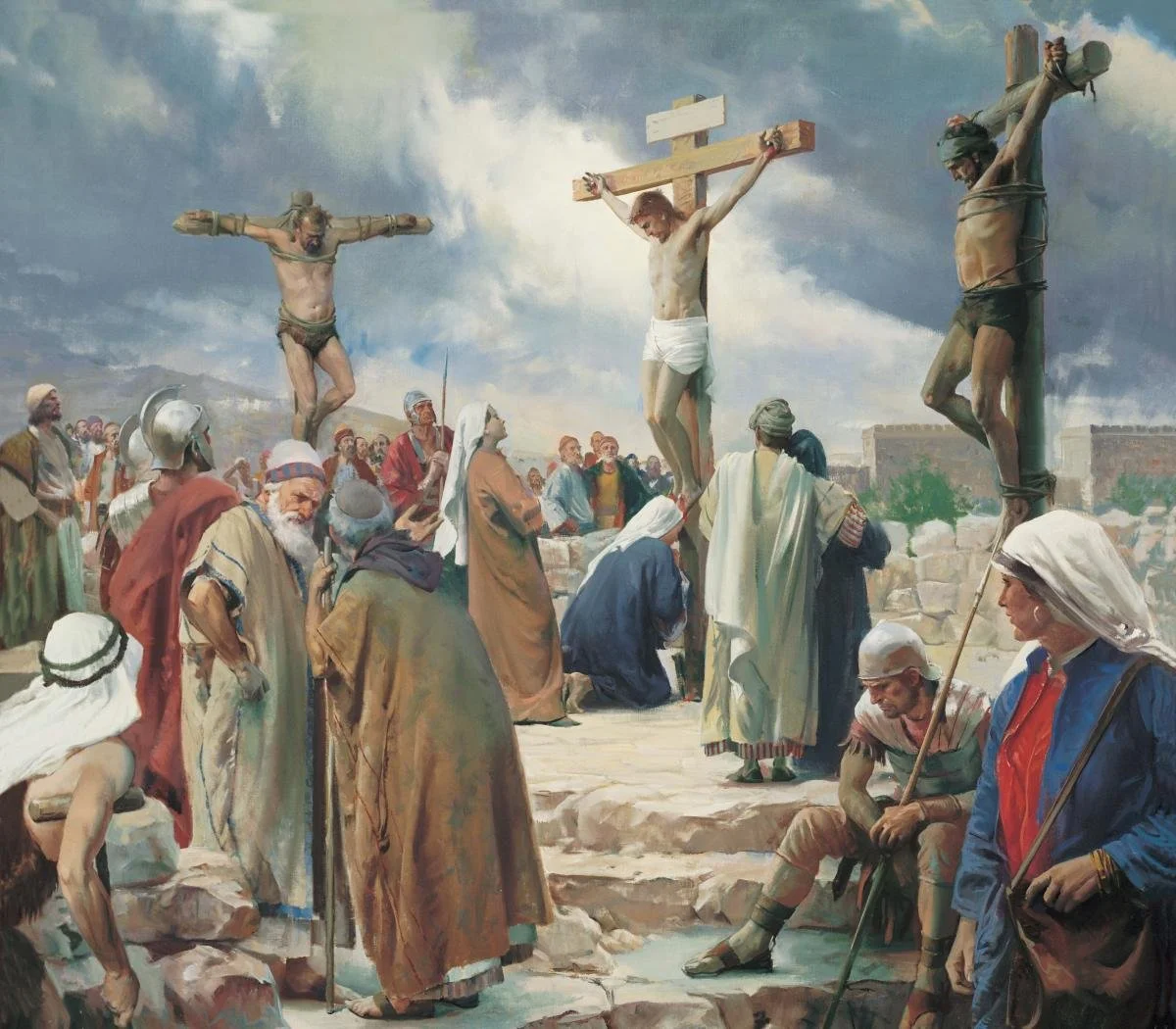
Mark 15:33-38. The Death of Christ
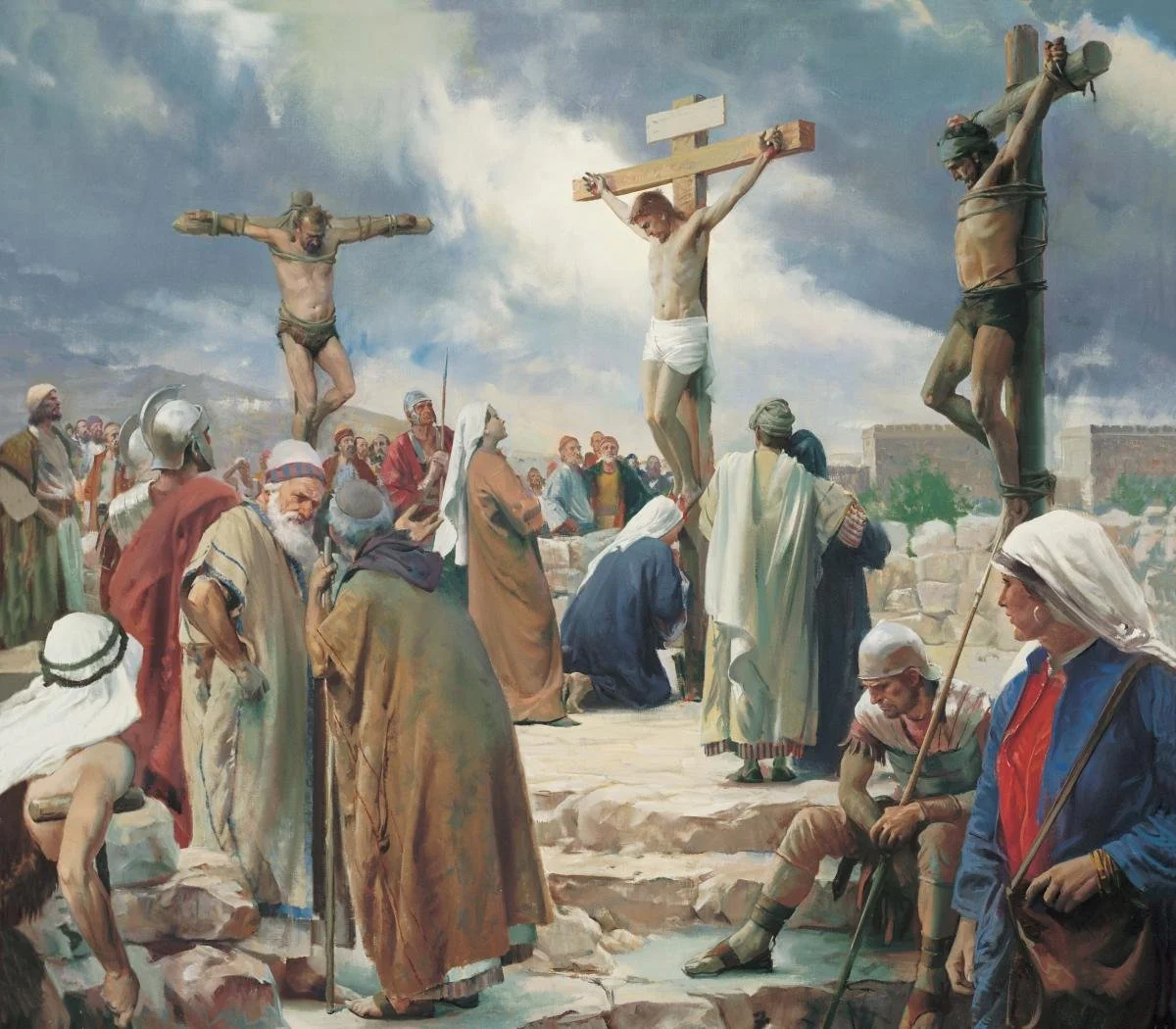
When Jesus died the work of atonement was completed. The ransom for our sin had been paid:
“For even the Son of Man did not come to be served, but to serve, and to give his life as a ransom for many.” Mark 10:45
Two Signs of Significance
Both would grab the attention of all in Jerusalem at that time.
The sun was darkened for 2 hours. v. 33
The darkness reminded all of the serious ness of sin against God. Darkness and evil are often associated. As Jesus took our sin God had to turn away.
“…who have left the straight paths to walk in dark ways.” Proverbs 2:13
“The night is nearly over; the day is almost here. So let us put aside the deeds of darkness and put on the armour of light.” Romans 13:12
Paul calls believers to leave sinful, “dark” behaviour behind as we live in the light of Christ.
“For you were once darkness, but now you are light in the Lord. Live as children of light.” Ephesians 5:8
“Dark paths” symbolise sin, ignorance of God, and moral confusion. But the Bible offers hope: through Jesus, we are called out of darkness into His marvellous light:
“But you are a chosen people, a royal priesthood, a holy nation, God’s special possession, that you may declare the praises of him who called you out of darkness into his wonderful light.” 1 Peter 2:9
This darkness should remind us of the utter darkness reserved for those who reject the Lord Jesus.
“They are wild waves of the sea, foaming up their shame; wandering stars, for whom blackest darkness has been reserved forever.” Jude 13
The darkness at Christ’s death lasted just 3 hours, but those who reject the atonement he won for us will face an eternity of darkness.
2. The Veil in the Temple was torn from top to bottom. v. 38
This taught the end of Jewish ritualism. The way into God’s presence is now available for us all:
“The Holy Spirit was showing by this that the way into the Most Holy Place had not yet been disclosed as long as the first tabernacle was still functioning.” Hebrews 9:8
Now Gentiles and jews can be members of God’s kingdom. May our churches remember that we now worship God ‘in spirit and in truth’ (John 4:24) and not return to altars, sacrifices and a priesthood. Now all followers of Jesus are priests, his representatives in a fallen world.
“You also, like living stones, are being built into a spiritual house to be a holy priesthood, offering spiritual sacrifices acceptable to God through Jesus Christ.” 1 Peter 2:5
“But you are a chosen people, a royal priesthood, a holy nation, God’s special possession, that you may declare the praises of him who called you out of darkness into his wonderful light.” 1 Peter 2:9
Peter applies this priestly language to all believers, showing that every Christian is called to offer worship, prayer, and service to God.
“…and has made us to be a kingdom and priests to serve his God and Father…” Revelation 1:6
Jesus has made believers priests, emphasizing our access to God and calling to serve. Under the New Covenant, there’s no longer a class of priests mediating between God and people like under the Old Testament. Through Christ, every believer has direct access to God and can “offer spiritual sacrifices” like praise, prayer, good works, and evangelism.
“Let us then approach God’s throne of grace with confidence, so that we may receive mercy and find grace to help us in our time of need.” Hebrews 4:16
Jesus became Accursed for us
At the ninth hour Jesus cried out and asked us all to answer his question:
“My God, my God, why have you forsaken me? Mark 15:34
In his agony he felt separated from his Father because he was now bearing our sin. His sacrifice to atone for our sin is the only way to explain this phrase, taken from the opening verse of Psalm 2 that is all about his crucifixion.
“He is the atoning sacrifice for our sins, and not only for ours but also for the sins of the whole world.” 1 John 2:2
The Greek word translated atonement, hilasmos, means propitiation or the means of forgiveness.
“God presented Christ as a sacrifice of atonement, through the shedding of his blood—to be received by faith.” Romans 3:25
Jesus’ death satisfied God’s justice, turning away wrath and making forgiveness possible.
“But he was pierced for our transgressions, he was crushed for our iniquities; the punishment that brought us peace was on him, and by his wounds we are healed.” Isaiah 53:5
Jesus did bear the penalty for our sin and its punishment in our place.
“…But he has appeared once for all at the culmination of the ages to do away with sin by the sacrifice of himself.” Hebrews 9:26
His sacrifice was once for all, sufficient and final. The New Testament consistently teaches that Christ’s death was substitutionary, sufficient, and necessary to atone for sin, bringing forgiveness, reconciliation, and peace with God.
Forsaken but still loved
The relationship with his father was never broken. Jesus still addressed him as ‘My God’. Even when forsaken he was still the beloved Son of God and his Father was pleased with what he had done. We also may feel at times deserted by God and not feel his presence but that does not change the fact that if we are members of his Kingdom he still loves us deeply.
We should therefore never give way to despair. We should look at our lives to see if there is anything coming between us and our Lord. Thus Job could say:
“Though he slay me, yet will I hope in him; I will surely defend my ways to his face.” Job 13:15
We will also all face difficulties at times but the bible urges us to remain true to our Lord:
“Who among you fears the Lord and obeys the word of his servant? Let the one who walks in the dark, who has no light, trust in the name of the Lord and rely on their God.” Isaiah 50:10
Psalm 42 describes a person going through a stage of depression. He feels rejected by God. This psalm also uses the same words as Jesus on the cross:
“I say to God my Rock,“Why have you forgotten me? Why must I go about mourning, oppressed by the enemy?” My bones suffer mortal agony as my foes taunt me, saying to me all day long, “Where is your God?” Psalm 42:9-10
The the psalmist reminds us all:
“Why, my soul, are you downcast? Why so disturbed within me? Put your hope in God, for I will yet praise him, my Saviour and my God.” Psalm 42:11
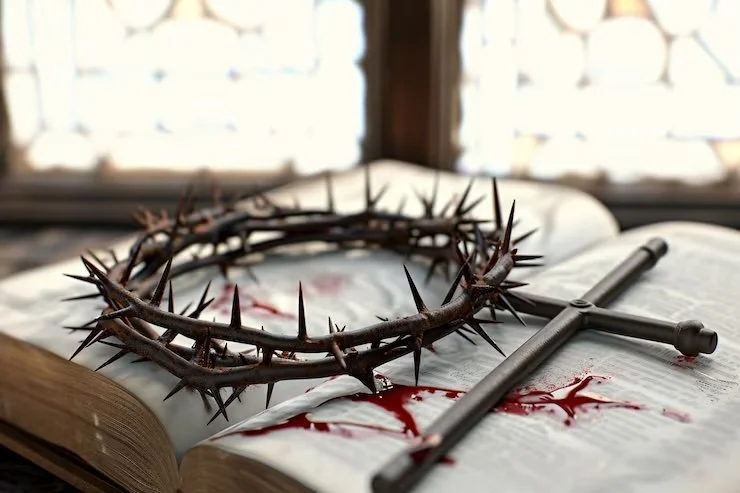
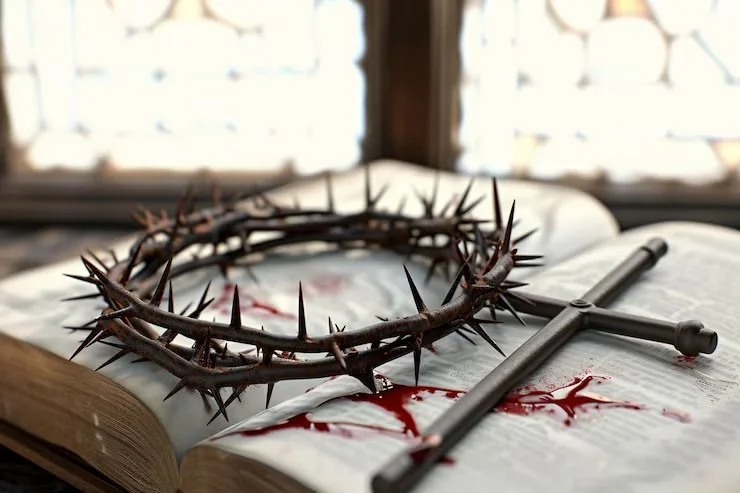
Mark 15:16-31. The Suffering of Jesus
The more the Bible is studied it becomes apparent that the stories included have been carefully selected for a purpose. In Mark’s description of the suffering and death of Jesus he has chosen to emphasise those aspects that teach us something about the gospel.
1. The timing of Jesus’ death
Mark has emphasised that Jesus’ death took place at the time of the Passover festival (Mark 14:1, 12). John emphasised that after the raising of Lazarus from the dead many came to recognise that Jesus came from God and that this really concerned the Jewish authorities. They were determined to kill Jesus (John 11:53). Jesus then withdrew with his disciples away from Jerusalem, only to return as the Passover approached (John11:55). He and his disciples all knew he was going to Jerusalem to die. Jesus was to die as the ultimate Passover lamb. His death was to gain peoples freedom, just as the first Passover was the final miracle that won the Israelites freedom form being slaves in Egypt. His death was planned by God to win people’s freedom from the captivity of sin and enable them to be right with God.
2. The suffering of Jesus for us
Jesus voluntarily went through this grotesque ordeal for you and me!
“The love of Christ surpasses knowledge.” Ephesians 3:19
“But God demonstrates his love for us in this: that while we were still sinners, christ died for us.” Romans 5:8
These verses highlight God's unconditional love and sacrifice for humanity, even when they were in a state of sin and unworthiness. They emphasise that God's love is not conditional on our actions or merit, but a free and gracious gift.
What did Jesus’s death achieve?
“For Christ also suffered once for sins, the righteous for the unrighteous, to bring you to God..” 1 Peter 3:18
Mark stresses how situations were reversed. He took our place in order that we could stand in his. He suffered as a criminal so we could be set free. He, before whom the whole world will stand in judgment allowed himself to be unjustly sentenced by evil men to a cruel death. He did this to free us from hell. Much of Mark’s account describes a reversal of situations for a reason.
3. Insulted by Roman soldiers v. 17
They clothed him with purple and put a crown of thorns on his head, struck him on the head with a reed and spat on him. They mocked him as if he were the King of the Jews. He was treated as ‘the scum of the earth’ just as the early apostles were (1 Corinthians 4:13). This is a parody. Jesus is the Messiah, which means ‘God’s chosen King’, spoken about in the Old Testament. He was a direct descendant of King David, he was born in Bethlehem, he did do many remarkable miracles and he was to die by crucifixion and rise again.
He did all this so that we, vile as we are, might have glory and honour with him because we belong to him. We will receive the crown of glory that is imperishable that he has won for us:
“Everyone who competes in the games goes into strict training. They do it to get a crown that will not last, but we do it to get a crown that will last forever.” 1 Corinthians 9:25
“And when the Chief Shepherd appears, you will receive the crown of glory that will never fade away.” 1 Peter 5:4
4. Stripped and crucified naked v. 24
He did this so that we, who have no righteousness of our own might be clothed in perfect righteousness and not stand naked and ashamed before Almighty God. We will be given a white wedding garment that permits us to remain in God’s presence.
“Let us rejoice and be glad and give him glory! For the wedding of the Lamb has come, and his bride has made herself ready. Fine linen, bright and clean, was given her to wear.” Revelation 19:7-8
“But when the king came in to see the guests, he noticed a man there who was not wearing wedding clothes. He asked, ‘How did you get in here without wedding clothes, friend?’ The man was speechless.” Matthew 22:11-12
“The one who is victorious will, like them, be dressed in white.” Revelation 3:5
All who truly turn to live for the Lord Jesus will be given these righteous clothes. Anyone without Christ’s righteousness will not be admitted into God’s presence, into heaven.
5. Suffered the most ignominious humiliating death
A man executed in this way was considered to be accursed by God.
‘Cursed is everyone who is hung on a pole.’” Galatians 3:13
He did this to remove the curse we all deserve:
“Christ redeemed us from the curse of the law by becoming a curse for us, for it is written: ‘Cursed is everyone who is hung on a pole.’” Galatians 3:13
He became a curse for us so that we can be blessed by God.
6. Reckoned as a sinner. v. 27
“With him they also crucified two robbers.”
He who had done no sin was ‘numbered with the transgressors’ This phrase was used in the famous prophecy about the death and resurrection of the Messiah in Isaiah 53:
“Therefore I will give him a portion among the great, and he will divide the spoils with the strong, because he poured out his life unto death, and was numbered with the transgressors.” Isaiah 53:12
Jesus explicitly applied this prophecy to Himself:
“It is written: ‘And he was numbered with the transgressors’; and I tell you that this must be fulfilled in me. Yes, what is written about me is reaching its fulfilment.” Luke 22:37
When I was at school, I remember an English master, who had just become a Christian, reading from one of Luther’s commentaries. It shocked me. Jesus took responsibility for our sin and so became the world’s worst murderer, adulterer, and thief. Paul wrote:
“Christ redeemed us from the curse of the law by becoming a curse for us” Galatians 3:13
In his ‘Lectures on Galatians’ (1531), Martin Luther said of this verse:
“Therefore Christ was not only crucified and died for us, but He also bore sin itself—our sin, the sin of all men, saying: I have committed the sins that all men have committed. Thus Christ was made the sin of all men, thief, robber, murderer, adulterer, and so forth.”
Luther is expressing the depth of Jesus’ substitutionary atonement. Jesus took on Himself the guilt of humanity’s sin as if they were His own. He became the legal bearer of sin before God’s judgment, though He remained personally sinless.
7. Mocked as he died. v. 29-32
Some Christians, when they suffer and are dying are attacked with thoughts that come from Satan. We have been promised that Jesus was tempted in every way as we are and can follow the example of Jesus through great trials with great assurance.
“Even though I walk through the darkest valley, I will fear no evil, for you are with me;” Psalm 23:4
How much we owe to the Lord Jesus. Through his death we are acquitted. What love our creator has for each of us. What greater incentive is there to turn our backs on the very sin that sent Jesus to the cross and daily live, not for ourselves but for him. Let the cross be our motif.
BVP
Mark 14:12-26. The Last Supper and the Lord’s Supper
Mark chapter 14 focuses on the desertion of Jesus by those around him.
The chapter begins with the determination of the Chief Priests to find a way to arrest and kill Jesus (v.1-2). Then we read that Judas went to the chief priests to betray Jesus to them for money (v.10-11) Sandwiched in between these two accounts, in a style typical of Mark, is the account of the one faithful unnamed woman who loved Jesus and anointed his head with a jar full of expensive perfume whilst he was dining in the home of Simon the Leper. Judas was upset at this waste of money, but we read in John’s gospel that he was a thief (John 12:6), to prosper in this world meant more to him than anything else. Later in the chapter we read that Peter himself would deny any association with Jesus three times, that Peter, James and John failed to support Jesus in his distress, that Judas would bring the temple guard to arrest Jesus in the Garden of Gethsemane, and finally all the disciples fled, including a young man, possibly Mark himself who ran away naked from Jesus after nearly being caught by the soldiers. The chapter continues with details of Jesus’ first trial before the antagonistic High Priest in which he affirms that he is ‘the Christ, the Son of the Blessed One’ for which he was condemned. The final story in the chapter are the denials of Jesus by Peter. This is one of the most depressing chapters in the gospels. Yet throughout all this, Jesus remained faithful. In Paul’s final letter to Timothy he picks up on this persistent faithfulness of Jesus in contrast to the way his followers so often behave.if we are faithless.
“. . . if we are faithless, he remains faithful, for he cannot disown himself.” 2 Timothy 2:13
The next story that Mark includes in this chapter on betrayal and desertion is his brief account of the last supper, the Passover feast. This annual feast was a highpoint in the Jewish year when they celebrated the manner in which the Lord had rescued them from captivity in Egypt. The economy of words used in the description of all that happened suggests a deliberate selection to emphasise what is important.
During that day Jesus had sent Peter and John into Jerusalem to prepare for the Passover feast that evening (Luke 22:8). They were to meet a man carrying a jar of water. This would have been unusual as it was normally a woman’s job. This man showed them a large upper room where the
feast was to be eatenThis account tells us how we should understand this feast in its context as this has great applications to how we should worship God today.
The Old Testament original Passover
In Exodus 12, God gives Moses and Aaron instructions for the first Passover, just before delivering the Israelites from slavery in Egypt. This was the last of the ten plagues inflicted on the Egyptians.
Each Israelite family was to select a spotless lamb and bring this into the family for a week. Then it was to be slaughtered and its blood smeared on their doorposts of the house as a sign for God’s angel of death to “pass over” their homes. They were to roast the lamb and eat it with unleavened bread and bitter herbs, symbolizing their quick departure and the bitterness of slavery.
You can imagine the oldest son of the family pestering the father, ‘Have you smeared the blood on the doorposts yet? Any answer such as ‘I’ll get around to it soon’, would be met with anguish. That blood really mattered to him.
At midnight, God struck down all the firstborn in Egypt, but He spared the Israelites who had obeyed His instructions. They were saved by the blood. This final plague led Pharaoh to allow the Jews to be freed from slavery. The Jews were repeatedly told to celebrate this event in perpetuity:
“This day shall be for you a memorial day, and you shall keep it as a feast to the Lord; throughout your generations, as a statute forever, you shall keep it as a feast.” Exodus 12:14
“And you shall observe the Feast of Unleavened Bread, for on this very day I brought your hosts out of the land of Egypt; therefore, you shall observe this day, throughout your generations, as a statute forever.” Exodus 12:17
“You shall observe this rite as a statute for you and for your sons forever. And when you come to the land that the Lord will give you, as he has promised, you shall keep this service.” Exodus 12:24-25
Leviticus 23:4-8 reaffirms the command to celebrate Passover annually and Deuteronomy 16:1-8 gives details about how the Israelites should observe Passover when they settle in the Promised Land. This command was meant to remind future generations of God’s deliverance of his people rom Egypt.
After the Israelites settled in the Promised Land, sacrifices were made at the Temple in Jerusalem (Deuteronomy 16:5-6). Following Passover night, the Feast of Unleavened Bread lasted a full week (Exodus 12:15-20).
The Jewish Haggadah
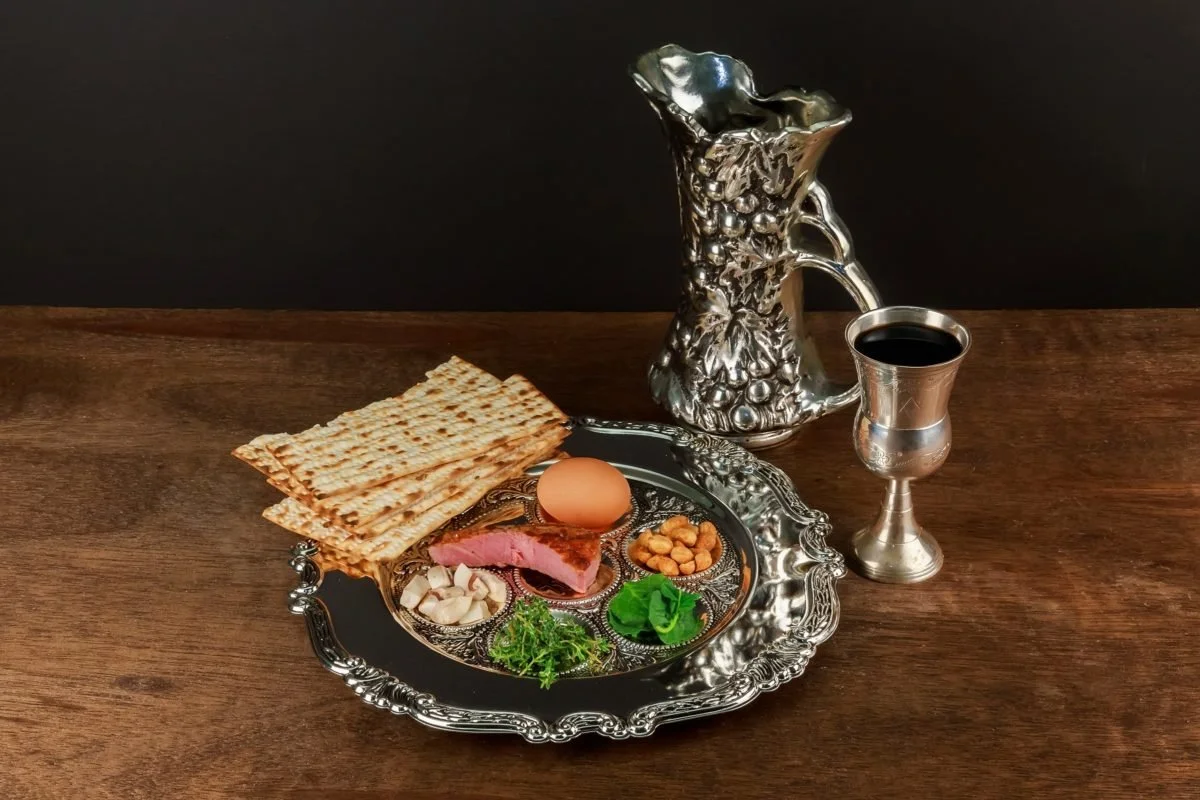
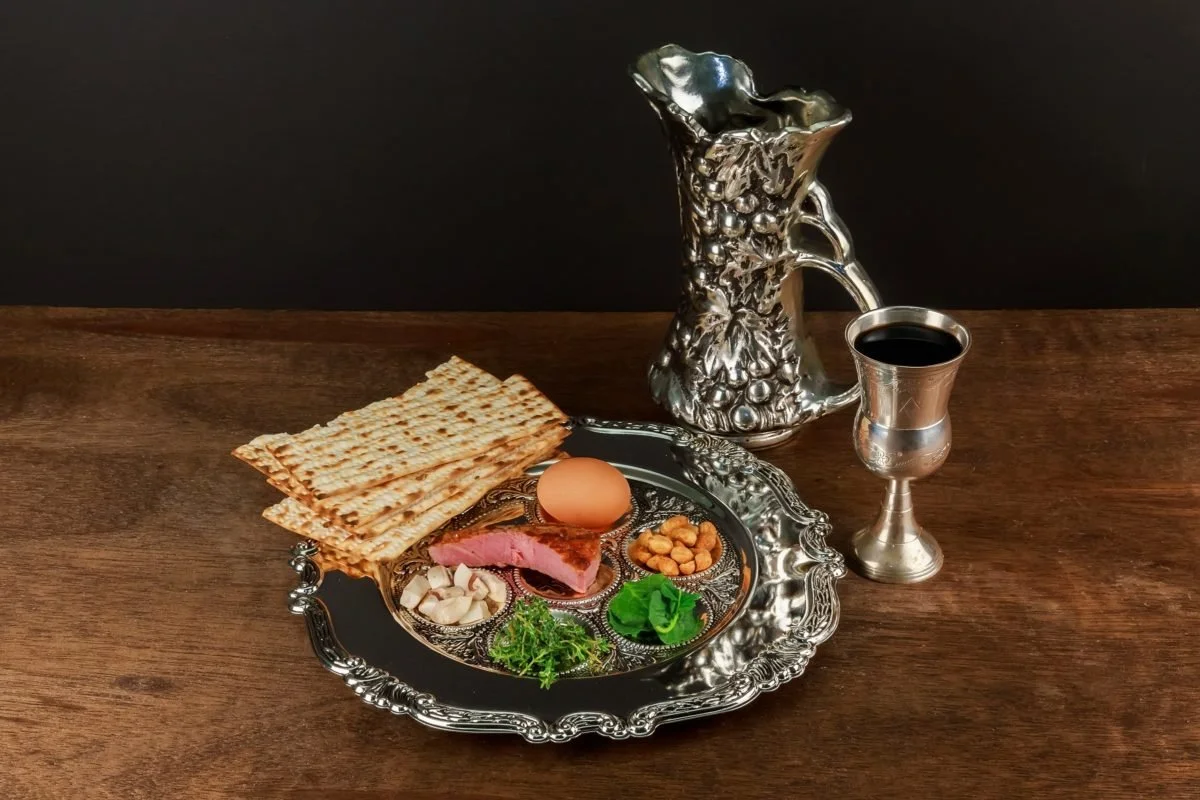
The modern seder meal involves the use of many symbols to help people to remember what God did for his people in the past. Many elements of the Haggadah, a Jewish text that guides the Passover Seder or meal, foreshadow Jesus’ Last Supper, which was a Passover Seder. Jesus likely followed a version of the Haggadah before instituting Communion (Luke 22:19-20) although their Haggadah would have involved eating the flesh of the Passover lamb. In a modern Jewish Passover, since the Temple was destroyed (70 AD), the Passover lamb is no longer sacrificed. Instead of a lamb sacrifice, Jewish families hold a Seder, a ritual meal with symbolic foods. The following are the symbols used
Matzah – Unleavened bread, as in biblical times.
Maror – Bitter herbs (often horseradish) to symbolize slavery.
Charoset – A sweet mixture representing mortar for brick-making.
Zeroa (Shank Bone) – A reminder of the sacrificial lamb.
Karpas (Vegetable, e.g., parsley) – Dipped in saltwater to symbolize tears.
Beitzah (Egg) – A symbol of mourning and new life.
Four Cups of Wine - Represent the four promises of redemption in Exodus 6:6-7.
Families read from the Haggadah (Hebrew: הַגָּדָה, “telling”). It fulfils the Biblical command to teach future generations about God’s deliverance from Egypt (Exodus 13:8) retelling the Exodus story and asking the “Four Questions” about why this night is different.
The modern Haggadah contains
1. Opening Blessings & Kiddush (Sanctification of the Wine). The Seder begins with a blessing over the first cup of wine.
2. The Four Questions (Ma Nishtana). The youngest at the table asks: “Why is this night different from all other nights?” These questions highlight Passover’s unique customs.
3. The Maggid is the telling the Exodus Story from Exodus 12 with midrash (commentary).
It quotes Deuteronomy 26:5-8, summarizing Israel’s slavery and deliverance and explains the symbolic foods (matzah, bitter herbs, etc.).
4. The Four Sons is a parable describing four types of children (Wise, Wicked, Simple, and One Who Does Not Know How to Ask), teaching different ways to engage in Passover discussion.
5. The Ten Plagues. Participants recite each plague while dipping a finger in wine, symbolizing reduced joy.
6. Dayenu (“It Would Have Been Enough”) is a song listing God’s miracles and expressing gratitude.
7. Pesach, Matzah, and Maror in which the significance of the Passover Lamb, Unleavened Bread, and Bitter Herbs are explained.
8. Hallel (Psalms of Praise) when Psalms 113-118 are sung to praise God for redemption and the final Cups of Wine
9. The Seder Meal is then a full meal followed by Afikoman (dessert matzah).
10. Closing Prayer: “Next Year in Jerusalem!” a hope for future redemption and the rebuilding of the Temple.
The whole of the Haggadah was to remind Jewish families of the redemption God won for them. Constant repetition is an excellent way to help people to remember the past and anticipate the future God has in store for his people. Earl Edmunds wrote in his commentary on Luke:
“The passover was a celebration of two events. It commemorated the deliverance from Egypt long ago and anticipated the coming Messianic deliverance in the future. As with the Lord’s supper, it looked back and looked forward.
It is a great experience to witness a Jewish Passover and see the father recount the old Exodus story and answer his children’s questions. In the Haggadah the father then says these words as he breaks the bread:
“This is the bread of affliction which our forefathers ate in the land of Egypt. All who are hungry let them come and eat. All who are needy let them come and celebrate the passover with us. Now we are here. Next year may we be in the land of Israel. Now we are slaves. Next year may we be free.”
Jesus’ interpretation of the Passover meal
It is likely that Jesus would have said words such as these at that Passover feast. But notice how he used these words but applied them to himself:
“Then Jesus declared, “I am the bread of life. Whoever comes to me will never go hungry, and whoever believes in me will never be thirsty.” John 6:35
“Come to me, all you who are weary and burdened, and I will give you rest. Take my yoke upon you and learn from me, for I am gentle and humble in heart, and you will find rest for your souls. For my yoke is easy and my burden is light.” Matthew 11:28-30
Jesus saw himself as the Messiah, God’s Chosen King, who fulfilled all the Old Testament stories and prophecies. During the Haggadah Jesus changed the usual text:
“While they were eating, Jesus took bread, and when he had given thanks, he broke it and gave it to his disciples, saying, “Take it; this is my body.”
His body and blood were still there in that upper room. Thomas Cranmer wrote in his book ‘Controversies’ that this meant the bread and wine could only be symbolic terms. The elements were not actually his body and blood.
Just as the elements in the Haggadah were representative reminders of past events so their use in the future would commemorate the past event of the death of Jesus. Marcus Barth , a Swiss theologian has concluded:
“The eucharist is not a passion play like a mass. Christ’s death is preached and his dying re-enacted.”
This is what the apostle Paul taught:
“For whenever you eat this bread and drink this cup, you proclaim the Lord’s death until he comes.” 1 Corinthians 11:26
Jesus did not mean when breaking the bread,
‘This is my person, my whole person.”
Dr. R.T France, a renowned New Testament scholar, referred to the above quote by Cranberry:
“Cranberry rightly argues that the use of soma is a deliberate reference, not so much to the person of Jesus as to his death.”
He suggests a better translation would be:
“This is my corpse.”
In my surgical practice I have seen many people who have had horrendous motor-bike accidents. They often come into the Accident and Emergency Department as corpses, covered with blood. This is the effect of a violent death and it is always a very difficult scene to come to terms with. This is surely what Jesus means when he separates his corpse from his blood. His violent death is imminent. He is about to become the final sacrificial lamb of the passover. By his blood, his death on our behalf, we are saved.
When David was fleeing from the persecution of King Saul, David became very thirsty. Three of his mighty men broke into the Philistine camp at the risk of their lives to draw water from the well of Bethlehem. When they brought this back to David, he refused to drink the water,
“He poured it on the ground as an offering to the Lord. David said, “Lord, I cannot drink this water. It would be like drinking the blood of the men who risked their lives for me.” This is why David refused to drink the water.” 2 Samuel 23:16-17
We too might hesitate to drink the blood of the Lord Jesus literally but when we remember that is is by his death for us that we are saved, we should be thrilled to be reminded that it is by Christ’s death that our sins can be forgiven and we are very grateful indeed. These are some key verses that stress this apostolic understanding:
1. “But God demonstrates his own love for us in this: While we were still sinners, Christ died for us. Since we have now been justified by his blood, how much more shall we be saved from God’s wrath through him!” Romans 5:8-9
2. “For if, while we were God’s enemies, we were reconciled to him through the death of his Son, how much more, having been reconciled, shall we be saved through his life!” Romans 5:10
3. “For what I received I passed on to you as of first importance: that Christ died for our sins according to the Scriptures.” 1 Corinthians 15:3
4. “He himself bore our sins” in his body on the cross, so that we might die to sins and live for righteousness; “by his wounds you have been healed.” 1 Peter 2:24
5. “For Christ also suffered once for sins, the righteous for the unrighteous, to bring you to God. He was put to death in the body but made alive in the Spirit.” 1 Peter 3:18
The Biblical concept of remembrance
For the Jews the Passover was a day of remembrance:
“This is a day you are to commemorate; for the generations to come you shall celebrate it as a festival to the Lord – a lasting ordinance.” Exodus 12:14
As we have seen, this is the apostles understanding of the Lord’s supper, it is to help people to remember what Jesus has done:
“For whenever you eat this bread and drink this cup, you proclaim the Lord’s death until he comes.” 1 Corinthians 11:26
Some have resented that this reduces the Communion service as ‘mere memorialism’! Would they say that about Guy Fawkes night on November 5th, someone’s birthday party, VE,VJ day or Christmas day ?
Robert Atwell, who later became Bishop of Exeter once asked a congregation:
“What is the most frequent commandment in the Bible?”
Some suggested ‘Love God’, others ‘Love your neighbour’ and other ‘obey God’. To everybody’s surprise it is ‘Remember’. This word comes about 130 times in the New International Version and around 160 times in the English Standard Version. The phrase ‘Do not forget’ comes a further 19 times in the New International Version. These verses are timeless:
“Only be careful, and watch yourselves closely so that you do not forget the things your eyes have seen or let them fade from your heart as long as you live. Teach them to your children and to their children after them.” Deuteronomy 4:9
“. . . be careful that you do not forget the Lord, who brought you out of Egypt, out of the land of slavery.” Deuteronomy 6:12
This is why Jesus said,
“Do this in remembrance of me.” Luke 22:19
Just as the Passover feast was instituted so the Jews would never forget what God did to free his people from slavery in Egypt, so the Christian equivalent, the Lord’s supper is to remind us that our salvation is utterly dependant on what Jesus has done to free us from sin and so allow us to become members of his kingdom.
If we forget who Jesus is and all he has done for us we are in real peril. In Robert Atwell’s address he went on to say:
“Memory is the matrix of identity which is why Alzheimer’s is so terrifying. When memory fragments the soul is lost. We no longer know who others are or who we are. As the wife of a former colleague said to me of her demented husband, ‘The light is still on but there’s no-one at home.”
Authentic Christian ministry is a ministry of remembrance. We remember the completed word of God and the completed work of Christ. Both lie in the past. We live in the light of what God has done for us. In our homes, in our pulpits and in Communion services we look back to hear God’s timeless word for today and to rest in Christ’s once for all sacrifice. These give us access into the Father’s presence both now and in eternity.
What is not needed is a new word from God or a new work of Christ or a re-offering of his once for all sacrifice at an altar by a modern priest. To do such things will take us away from what Jesus did once for all, they will take us away from Scripture, the Word of God, and will demean the preaching of the cross as our only hope of becoming right with God and members of his kingdom. We must say no to new prophets and priests who put themselves as intermediaries between us and our Lord. These can replace the historic Lord Jesus and result in a different spirit and a different gospel. Institutions and individuals take over from the pre-eminence of the Lord Jesus.
So, at the Lord’s supper we are invited to:
Look back in thankfulness to the Lord’s cross.
Look in with repentance and self examination.
Look up to the throne of God and our advocate there with the Father.
Look around at the family of God – the body of Christ.
Look forward to the great marriage supper of the lamb and a reunion with all the saints.”
Jesus wants us to centre our lives on him, to remember all he has done and still does for us, in other words to be committed to living with and for him, our Lord and Saviour.
BVP
February 2025
Mark 4:1-20 A Hope and Purpose in Life
The existential psychiatrist Viktor Frankl (1905–1997) lived an influential life. His best-selling book ‘Man’s Search for Meaning’ chronicled his experiences as a prisoner in the concentration camps of Auschwitz and Dachau. He had been sent there by the Nazi regime because he was Jewish. He realised that those who had a purpose and hope in life always coped better, even under very trying circumstances, than those without hope. Freidrich Nietzsche famously said,
“He who has a ‘why’ to live for, can bear almost any ‘how’.”
Viktor Frankl often quoted this. He also taught that it is through the ‘whys’ in people’s lives—their goals—that they establish a sense of meaning.
His experiences in the concentration camps had confirmed this view that it is through a search for meaning and purpose in life that individuals can endure hardship and suffering. He had a profound problem however. Although he was Jewish, he was also an existentialist, a movement which teaches that there is no purpose or meaning in our existence - we just are. His problem was how can hope and meaning be found in a world that has essentially no purpose and no God. He found meaning in families and the possibility of something wonderful happening to us but clearly death snuffs out such personal hopes.
‘Cabaret’ was a musical, starring Lisa Minnelli, about Germany between the two World Wars. It was based on the book ‘Cabaret’ by Christopher Isherwood. Both the book and the musical wrestle with the question of hope. He wrote:
“There is only one question worth asking each other, and we rarely ask each other because it is such a brutal question. What is the quest that we rarely ask each other? It is this, “How do you carry on. What keeps you going amidst the various turmoils, griefs and pains of life?”
It is a brutal question that confronts us all. The non-Christian has a problem as the only answers they can give are short-lived. Suffering and death, in some form or other awaits us all. The problem is also there for a Christian, particularly if we are active for Christ. We will face rejection and even persecution so we all need a substantial ‘hope’!
Hope can be erased so easily by the problematic realities of life. What keeps us going can be so artificial – even for Christians. You hear some Christians saying glibly,
“Keep looking up, brother!”
We can so easily be full of cliches when what we really need is to be sure of the future, a realistic substantiated hope that all will be well in the end.
The Parable of the Sower
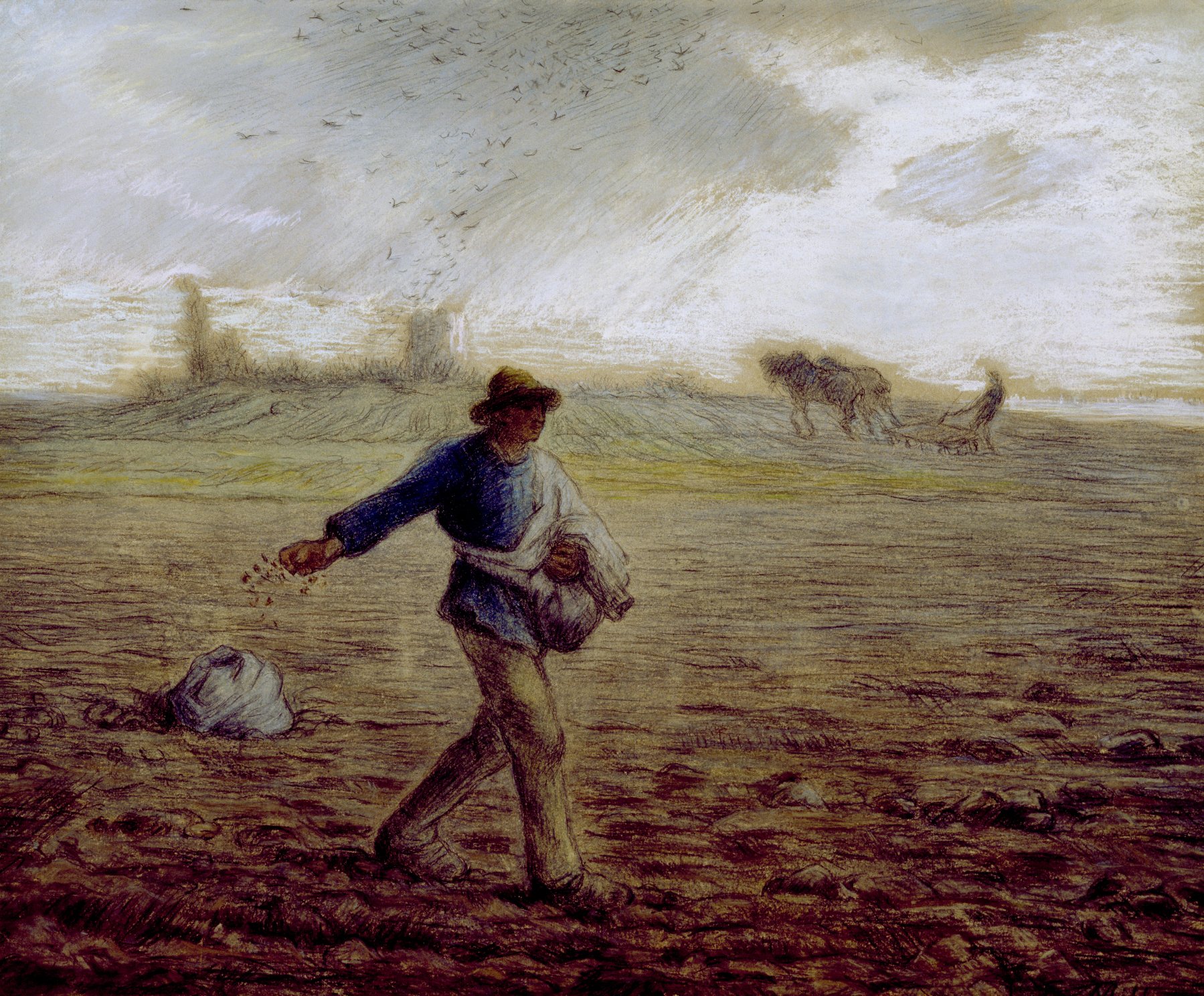
This, the first parable in Mark’s gospel, is so realistic and is here to give us all real hope. We have to think hard about Jesus’ parables. Jesus loved to put the unknown in the context of the known so that the unknown might be known! Everyone listening to Jesus would have known something about farming in those days, what was unknown were the spiritual truths about God’s kingdom.
Bear Grylls has become known worldwide as one of the most recognized faces of survival and outdoor adventure. representing courage, kindness and never giving up. He is a Christian who was trained in the SAS. Grylls has shared how his Christian faith has been ‘a real backbone’ and a ‘secret of strength’ in those difficult moments which abound in his life. He jumps out of aeroplanes, hikes, eats frogs, worms snakes and spiders! What is extraordinary is that nothing ever seems to go wrong for him. He always seems to succeed, always gets to the end of his journey unscathed. A Christian should surely be ashamed of presenting such a viewpoint. He should fail occasionally because all the rest of us do!
This passage is written by Mark in the form of a sandwich with the top layer being chapter 4:1-9, the filling being 4:10-12 and the bottom slice being 4:13-20. Mark loves to use this technique to stress a point.
Top Slice
This parable can be read with different emphases:
1. We are called to sow
This approach focuses on us as the sowers. This parable is nothing like Bear Grylls, this is much more realistic, stressing that failure is to be expected – the majority will not respond to the message as God wants. The New International Version of the Bible calls this story, ‘The Parable of the Sower’, and this keeps the emphasis on the sower who keeps spreading the seed because only as he sows will there be a harvest. This is certainly not wrong. Jesus is the great sower and so should his followers be. That is a major priority in life and suggests we should be moving away from self absorbing hobbies and constant television and get sowing. It is so easy for Christian leaders to be so absorbed in administration and organisation that they do little sowing themselves. At one conference, attended by sixty Christians involved in university mission, they were asked how many had they help to become Christians that year. The answer was none. They were all too busy doing other things! The speaker said to them,
“You all need to come face to face with unbelievers.”
They determined to do this and in the next month twelve people became Christians.
We are all called to be sowers.
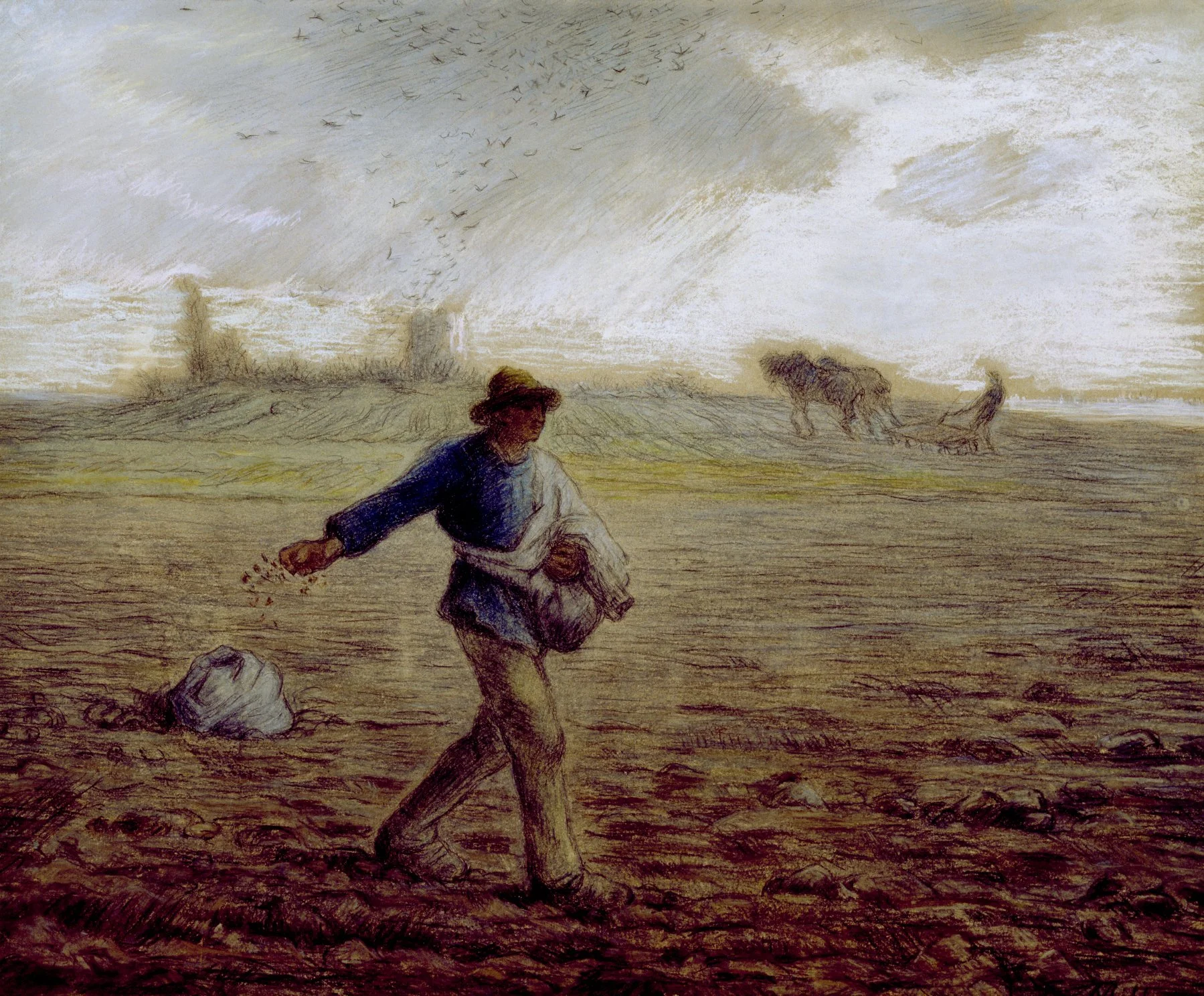
“Listen! A farmer went out to sow his seed.” Mark 4:3
Farmers have contact with the soil. Sometimes this will cause them to get dirty but that can easily be washed off. However this doesn’t matter to him. You can feel the determination in the wording, ‘He went out to sow’.
2. The focus is on the seed
“The farmer sows the word.” Mark 4:14
Our message is about God’s eternal kingdom and how people can be admitted into this by submitting to the rule of the king. This change in direction is called repentance. The fate of the seed is variable.
a. This seed can be immediately whisked away by Satan
b. Some seed has a short-lasting effect, they acknowledge the king until it begins to cost something.
c. Some seed is choked. These people come to Jesus on their terms so do not last.
d. Some seed produces a massive harvest which makes the work of sowing so worthwhile.
The seed must remain the true seed. No-one should change Jesus’ message to make it more palatable! The lesson is clear, we should expect failures but we must have expectations. The Christian life is not like Bear Grylls expectations. As we sow the seed some will produce a good harvest and that is exciting so we keep sowing.
3. The focus is on the soils
This does seem to be Jesus’ emphasis, the seed falls in different places:
v. 4 along the path
v. 5 on rocky places
v. 7 amongst thorns
v. 8 on good soil
The way the seed is received depends on the each person’s reaction to the message. Note that this parable was told to the masses, they must all hear this message. Jesus wanted everyone to realise the meaning of what he is saying. The key word ‘hear’ keeps being repeated:
v. 9 “Whoever has ears to hear, let them hear.”
v. 12 “. . . so that, ‘they may be ever seeing but never perceiving, and ever hearing but never understanding; . . .”
v. 16-17 “Others, like seed sown on rocky places, hear the word and at once receive it with joy. But since they have no root, they last only a short time.”
v. 18 “Still others, like seed sown among thorns, hear the word; but . . .”
v. 20 “Others, like seed sown on good soil, hear the word, accept it, and produce a crop . . .”
v. 23 “ If anyone has ears to hear, let them hear.”
v. 24 “Consider carefully what you hear,”
Clearly what is important is how we receive the seed of God, how we hear! Paul later wrote:
“. . . faith comes from hearing the message, and the message is heard through the word about Christ.” Romans 10:17
For anyone to be saved, and to be admitted into the Kingdom of God, they need to hear the message about the real Jesus and this comes from learning from the Bible the first-hand witnesses about what he did and taught.
The emphasis of this parable is mainly on the soils. Several of my wife’s relatives bought farms in Kenya. Some were wise and bought farms where the ground was fertile. Others bought stony infertile land. The farmers put in equal work in preparing the ground and sowing the seed but some land was simply not good at producing good crops!
In verses 3-9 Jesus says ‘listen and hear”. Seed on the path has no chance. In verse 5 there is thin soil so the seed germinates but the sun rises and the seedling quickly perishes. In verse 7 the weeds choke the young in faith so they also die. In verse 8 the seed in the good soil multiplies 30, 60 or 100 times. The lesson to us all is ‘Be careful how you hear.’ We are each responsible for how we listen and respond to God.
When this brilliant story is recounted it would be possible to think it emphasises what I ought to do. However, remember this account is another sandwich. The story is separated in the middle by another story about parables. So verses 10-12 should be our guide on how to understand the whole.
The filling
When Jesus was alone with his disciples sitting around him, they ask him the meaning of the parable. He replies:
“The secret of the kingdom of God has been given to you. But to those on the outside everything is said in parables so that, ‘they may be ever seeing but never perceiving, and ever hearing but never understanding; otherwise they might turn and be forgiven!’” Mark 4:11-12
For outsiders the parable reveals their hardness of heart. This parable is an instrument of judgment. They see but don’t really see, they hear but don’t really understand. If anyone does not respond to God’s offer of admission into his kingdom this parable will harden their heart. To those outside the kingdom this is just a good yarn, whereas to those who are engaged with him this is thrilling.
Only once on my evangelistic walks with my evangelistic dog have I had a complete rebuttal. I was chatting amicably with a man and his wife and I asked if I coukd give him one of my articles. I explained that it is to try and encourage people to think about the big issues of life such as what we are here for. His reaction was startling - he turned from being amicable to saying abruptly,
“Don’t talk to me about God. I don’t believe in him and I don’t want to talk about him.”
He then walked away. I suppose that that is like seed sown on stoney ground.
David Cook, the Australian Bible teacher and evangelist was at a school reunion. One old classmate asked him what he was doing now.
“I work in a Bible College.”
“Oh is that what you do, you teach people to cut hair.”
He obviously heard ‘Barber College’
“No, Bible College!”
His reply was typical of many,
“Oh, I believe everybody has their own right to believe whatever they want.”
At this point he turned and walked away. He had the opportunity to ask more questions but he demonstrated a judgment on himself.
God always shows mercy to genuine enquirers but judges those with a hardness of heart. Hearing this parable gives people an opportunity to change direction in life and to want to produce fruit for God. Where there is no response it confirms a person in their unbelief and that they are under God’s judgment. So we must be careful how we respond.
Verse 12 is a problem for some:
“. . . so that, ‘they may be ever seeing but never perceiving, and ever hearing but never understanding; otherwise they might turn and be forgiven!’” Mark 4:12
Is Jesus really saying that he is deliberately keeping people from being saved?
Certainly not. Jesus is quoting from the book of Isaiah. This reads:
“Then I heard the voice of the Lord saying, “Whom shall I send? And who will go for us?” And I said, “Here am I. Send me!” He said, “Go and tell this people: “‘Be ever hearing, but never understanding; be ever seeing, but never perceiving.’ Isaiah 6:8-9
God is sending out his prophet to warn people. There is an opportunity of receiving mercy because that is what God longs to give us. The following chapters in Isaiah describe the hope that there is because God is going to come into this world as a Saviour, a son is going to be born:
“For to us a child is born, to us a son is given, and the government will be on his shoulders. And he will be called Wonderful Counsellor, Mighty God, Everlasting Father, Prince of Peace.” Isaiah 9:6
There is always hope for those willing to turn but only judgment for those who are hard of heart.
The second slice
Notice how the seed that is sown is the ‘word’. This is obviously an emphasis of Jesus:
v. 14 “The farmer sows the word”
v. 15 “The word is sown.” Then “ Satan comes and takes away the word that was sown in them.”
v. 16 “Others . . . hear the word”
v. 17 “When trouble or persecution comes because of the word . . .”
v. 18 “Others . . . hear the word”
v. 19 “but the worries of this life, the deceitfulness of wealth and the desires for other things come in and choke the word, making it unfruitful.”
v. 20 “Others . . . hear the word”
The seed is the ‘Word of God’. The repeated use of the word stresses this. It is the message about Jesus, the Word of God that is revealed in the whole Bible, which is also called the ‘Word of God’. The vital difference between people is how they respond to God’s message:
v. 15 Some hear but it goes in one ear and out of the other.
v. 16-17 These people respond superficially but ‘troubles and persecution’ make this commitment no longer fashionable or cool so they are lured away from Christ to their peril.
v. 18-19 these people also start living with God but ‘worries of this life, the deceitfulness of wealth and the desire for other things come in and choke the word.’
It is striking that in the Greek all these sentences so far use the aorist tense, it happened once – they fell away. This is stark realism. In contrast verse 20 uses the present continuos tense:
“Others, like seed sown on good soil, hear the word, accept it, and produce a crop—some thirty, some sixty, some a hundred times what was sown.” Mark 4:20
They go on hearing the word. Those who continue to feed on the word are the ones who produce a remarkable harvest. Paul emphasises this same truth:
“Let the word of Christ dwell in you richly, teaching and admonishing one another in all wisdom . . .” Colossians 3:16
As we feed on God’s word the information we learn will lead to transformation, just as hearing leads to adhering. Psalm 119 is a remarkable psalm in that nearly every verse speaks about the word of God, using different words for this. For example:
“How can a young person stay on the path of purity? By living according to your word. I seek you with all my heart; do not let me stray from your commands. I have hidden your word in my heart that I might not sin against you.” Psalm 119:9-11
Application for Christians
1. God is the director of his farm
If the sower knew precisely where the good soil was he wouldn’t waste his seed elsewhere. We certainly do not know who will respond and who won’t and we have been told to spread the word around widely. Solomon understood this need to be active in spreading the message widely:
“Ship your grain across the sea; after many days you may receive a return. Invest in seven ventures, yes, in eight; you do not know what disaster may come upon the land. . .
Sow your seed in the morning, and at evening let your hands not be idle, for you do not know which will succeed, whether this or that, or whether both will do equally well.” Ecclesiastes 11:1-2, 6
When Paul was in Corinth God said to him,
“ ‘For I am with you, and no one is going to attack and harm you, because I have many people in this city.’ So Paul stayed in Corinth for a year and a half, teaching them the word of God.”
Indiscriminate scattering of the word of God was his practice. There is a time however to move on. Jesus said to his disciples when they were on their trainee missions:
“If anyone will not welcome you or listen to your words, leave that home or town and shake the dust off your feet.” Matthew 10:14
The Gideons have distributed 2.5 billion Scriptures since they were founded in 1863. Their Bibles are placed in hotels and hospitals throughout the world. Although many of those have ended up in the dustbin or burned, some have helped people to faith in the Lord Jesus. Understanding God’s word leads some to eternal life by leading them to become followers of Jesus.
2. The right seed needs to be sown
The Bible, from beginning to end, is all about how God saves individuals to become his servants. In contrast ‘religion’ is all about what man should do to impress God. When we share the news about the grace of God seen in Jesus, some will respond and turn to Christ. We mustn’t have unreal expectations, like Bear Grylls, but we must continue sowing the word in the knowledge that God will act in peoples lives through our doing this. Ordinary activity will bring about extraordinary results.
The right seed is teaching what the Bible teaches and nothing else. Ministry is all about sharing the Word with people. Discipleship is all about being in the Word. What a disaster it is that so many churches have moved away from being known as Bible teaching centres.
Ministry of the Word is far from easy. We need to be studying the Bible every day and learning how to communicate its message in a fascinating and exciting way. Jesus used stories and so should all who want to share the Word with others effectively.
I have a friend who is a professional golfer who plays off scratch. When I asked what I was doing wrong and how I might improve he simply replied,
“There’s nothing fundamentally wrong, you’ve just got to practice six days a week, year in and year out.”
I wanted a short cut, something easy, but to be effective for Christ is not easy. Anyone can preach a poor sermon which, although the theology is orthodox, influences no-one.
3. The key to entering the Kingdom of God is to come to Jesus
Belonging to God comes in no other way. Trying to please God by being religious saves no-one. Being a recognised, baptised, confirmed, ordained, consecrated person does not save anyone.
Bishop Taylor-Smith was a corpulent Chaplain General to the Forces. One Sunday morning he was preaching in Salisbury Cathedral on this passage. In order to emphasise this necessity of the new birth he said,
“My dear people do not substitute anything for the new birth. You may be a member of a church, but church membership is not new birth. Jesus said, ‘Except a man be born again, he cannot see the kingdom of God’.”
On his left sat the Archdeacon in his stall. Pointing directly at him the Bishop said,
“You might even be an Archdeacon, like my friend in his stall, and not be born again. Remember, ‘Except a man be born again he cannot see the kingdom of God’.
A day or two later he received a message from the Archdeacon.
“My dear bishop, you have found me out. I have been a clergyman for over thirty years, but I have never known anything of the joy that Christians speak of. I never could understand. Mine has been a hard legal service. I did not know what the matter was with me, but when you pointed directly at me and said, “You might even be an Archdeacon and not be born again; I knew in a moment what the trouble was. I had never known anything of the new birth.”
Next day the Archdeacon and the bishop met up and they went through the Bible together. Then the Archdeacon knelt before his Lord and Saviour, Jesus Christ, and took his place as a sinner who desperately needed Christ’s MERCY.
George Whitfield was an eighteenth century evangelist who often preached on this same verse especially to religious people. Someone complained to him,
“Why do you preach on this text so often?”
He answered, “Because you must be born again!”
A personal submission to Jesus as your Saviour and Lord is essential if you are to be accepted by God. There is no other way. Christians need to get into the word, learn it and sow it indiscriminately. Resist the word, have little or nothing to do with it, or respond in a superficial, temporary way and your eternal future is in dire peril. This is the message of Jesus in his parable of the sower, the seed and the soils.
BVP

Questions based on Mark 6:1-6 sermon, ‘Jesus polarises people’

This sermon was given at Christchurch Baldock and can be seen on YouTube. These questions are to encourage discussion:
1. What is the key verse of this passage?
2. How many conflict stories are there in Mark chapter 2?
3. In this show trial, who is in the dock?
4. Who takes control of the proceedings?
5. What details are there in this story that shows it was a real historical event?
6. What is so brilliant about Jesus’ question in verse 4?
7. Why is healing a paralysed arm so astounding?
8. Why do you think Mark doesn’t tell us about the man’s reaction to being healed?
9. Why are people always resistant to change?
10. Did Jesus know that he would be despised, rejected and killed?
11. Who has the right to be called a child of God?
12. Why is it hard to stand up for Jesus at work, at college or at school today?
13. Who is naturally hostile to God?
14. If we are not part of the solution, what are we?

Mark 2:1-12. What is most important?

On May 23rd 2001 Tony Blair, the Prime Minister, launched his party’s manifesto prior to the general election that won him his second term in office,
“Our top priority was, is, and always will be education, education, education.”
Jesus had much to say about what man’s greatest need is.
1 A few days later, when Jesus again entered Capernaum, the people heard that he had come home. 2 They gathered in such large numbers that there was no room left, not even outside the door, and he preached the word to them. 3 Some men came, bringing to him a paralysed man, carried by four of them. 4 Since they could not get him to Jesus because of the crowd, they made an opening in the roof above Jesus by digging through it and then lowered the mat the man was lying on. 5 When Jesus saw their faith, he said to the paralysed man, “Son, your sins are forgiven.”
6 Now some teachers of the law were sitting there, thinking to themselves, 7 “Why does this fellow talk like that? He’s blaspheming! Who can forgive sins but God alone?”
8 Immediately Jesus knew in his spirit that this was what they were thinking in their hearts, and he said to them, “Why are you thinking these things? 9 Which is easier: to say to this paralysed man, ‘Your sins are forgiven,’ or to say, ‘Get up, take your mat and walk’? 10 But I want you to know that the Son of Man has authority on earth to forgive sins.” So he said to the man, 11 “I tell you, get up, take your mat and go home.” 12 He got up, took his mat and walked out in full view of them all. This amazed everyone and they praised God, saying, “We have never seen anything like this!” Mark 2:1-12
In this momentous account Jesus is telling us what man’s greatest need is.
The Prime need – Forgiveness
It is probable that both the paralysed man and his friends thought that healing was his greatest need, but Jesus realised that there was greater problem – his sin. Sin is fundamentally the way we treat God and our failure to do what he wants. Such sin inevitably results in particular sins such as hatred, stealing, lying, pride, lust and promiscuity as well our failing to do what is right. There is therefore no-one who is not a sinner. When Jesus talks about sin he means both the root cause and its effects.
There is no suggestion given in the text that this man was a greater sinner than any others, even though Jesus recognised that illness and death are the work of Satan. There will be no illness or death in heaven. These problems will affect all of us and our families in one way or another, whether we are Godly Christians or not.
This paralysed man was just a normal person who had great medical and social needs which was what people could see. Only after people are converted does the truth become apparent – our greatest problem is our sin, we are naturally on the wrong road. The world cannot see this, so we need to keep reminding everybody that most are on “the broad road that leads to destruction”, on the road to hell, and have missed ‘the small gate and the narrow way’ that leads to life (Matthew 7:13-14).
His friends passed the paralysed man down through the hole in the roof so that he lay at the feet of Jesus. Can you imagine how aghast the ‘teachers of the Law’ would have felt when Jesus said to the man,
“Son, your sins are forgiven.” Mark 2:5
They instantly saw what Jesus was claiming:
“Why does this fellow talk like that? He’s blaspheming! Who can forgive sins but God alone?” Mark 2:7
This is exactly who Jesus is claiming to be, the very incarnate Son of God that the Jewish Scriptures had repeatedly said would be coming to his world. It is a major mistake to miss this. To forget God is the greatest mistake anyone can ever make. What does God think when we turn our backs on our creator and Saviour? People don’t know this so it is our job to remind them of it.
What is a tragedy it is to see pastors of churches forsaking the teaching of God’s word about Christ and the forgiveness he offers, Too many focus instead on what the world wants churches to emphasise, such as social care, poverty, political issues and the like. These suggest that it is what we do that can make us acceptable to God but this is a heathen idea. Common sense tells us that going round after people clearing up the messes without addressing the root cause in not a brilliant solution. Similarly it is not wise to treat an early skin cancer with a plaster covering!
Some years ago, when taking a mission in Ramsgate, we went for a stroll one afternoon along the seafront. Also out for a stroll were a group of about thirty nuns, members of Mother Theresa’s ‘Sisters of Mercy.’ We started to talk and I asked them how they would describe the Christian gospel. One nun replied by quoting from the parable of the Sheep and Goats that Jesus told. The sheep and goats were separated, the sheep for heaven and the goats for hell. One nun thought the gospel is the good things Christians do for others and said,
“For I was hungry and you gave me something to eat, I was thirsty and you gave me something to drink, I was a stranger and you invited me in. I needed clothes and you clothed me, I was sick and you looked after me, I was in prison and you came to visit me.” Matthew 25:34-36
This nun mistakenly thought that these activities of Christians were the gospel and that people who do them will go to heaven. That is not Christ’s message. These good actions are the result of the gospel changing peoples’ lives. People become Christians by being accepted into God’s family. It is as members of God’s family that we are given an eternal inheritance as a free gift when we submit to the rule of Jesus Christ – it is not earned at all.
“Come you who are blessed by my Father; take your inheritance, the kingdom prepared for you since the creation of the world.” Matthew 25:34
Jesus goes on to explain,
“The King will reply, ‘I tell you the truth, whatever you did for the least of these brothers of mine, you did it for me.” Matthew 25:40
Throughout the Bible the phrase ‘Christ’s brothers’ always refers to fellow Christians, male and female. A real evidence that we have been adopted by Christ is seen in how we live. The evidence that Christ is in us is that we will love Christ, love his word, love holiness and love his people.
I then politely asked the nun how the life and death of Jesus fitted into her gospel. At this point a senior nun intervened and rightly explained to us all,
“The gospel is surely the news about Jesus and who he is, that he is God who came to this world to die for our sin so we can become acceptable to God. The good news is that those who turn to him as their Lord and Saviour are forgiven all their sin. How we live is a reflection of this faith.”
I have just received an email from the evangelist Roger Carswell saying that Jesus himself summarised what the essential gospel is. According to Luke, the last thing Jesus said to his disciples, after his resurrection, was:
“Then he opened their minds so they could understand the Scriptures. He told them, ‘This is what is written: The Christ will suffer and rise from the dead on the third day, and repentance and forgiveness of sins will be preached in his name to all nations, beginning in Jerusalem.’” Luke 24:45-47
Sin really is our greatest problem. Anselm, an Archbishop of Canterbury in the eleventh century said to his contemporaries:
“You have not yet considered the seriousness of sin.”
The only remedy for the disastrous consequences of sin is Jesus himself. He alone can forgive our sin and empower us through his Holy Spirit to overcome sin. He said to people of his day something that is just as relevant to our society today,
“Yet you refuse to come to me to have life.” John 5:40
When Jesus spoke to the paralytic he is saying to us that man’s greatest need is to have our sin forgiven so that we can start to live a new life.
I was puzzled why Jesus said to the crowd,
“Which is easier: to say to the paralysed man, ‘Your sins are forgiven,’ or to say, ‘Get up and walk’? But I want you to know that the Son of Man has authority to forgive sins.” Mark 2:8-10
Then it dawned on me. Was it easy for Jesus to be able to forgive our sins? No - he had to die a horrific death on that cross. The miracle of this paralysed man rising up was just a foretaste of the greatest miracle of all, the death and subsequent resurrection of Jesus. It is because of this that we can be forgiven our sin against God.
The man’s subsequent healing was to make it clear to everyone just who Jesus is. If he is not the one true God he could not have immediately and completely healed such a man. If he is not God he cannot truthfully forgive our sin against God.
Why did Jesus say he had come to his world? On one occasion Jesus passed through the old city of Jericho and crowds collected to see him. A small tax collector named Zacchaeus had found it too difficult to push through the mass of people so he climbed up a sycamore-fig tree in order to get a good view. You can imagine the shock he got as Jesus passed by. Jesus looked up into the tree and spoke directly to Zacchaeus,
“Zacchaeus, come down immediately. I must stay at your house today.”
When they met Jesus explained his purpose,
“For the Son of man came to see and to save the lost.” Luke 19:10
People are lost when they are on the wrong path, going their own way, but Jesus longs to change that. Sin is going our own way, not God’s.
So our prime need is for forgiveness, but . . . . secondly,
2. The priority of Word ministry
The setting of this story was that Jesus had just returned to Capernaum, a small fishing town at the north end of the Sea of Galilee. People quickly heard that he had come and a large crowd gathered. Whatever their motives, perhaps it was to see a few miracles, but what they received was a sermon.
“He preached the word to them.” Mark 2:2
In the chapter, as Sam taught us last week, we read that preaching the gospel was Jesus’ priority, even more important than miracle-working. After a day when he was inundated with people wanting to be healed, he went off to pray about what he should do. He decided to leave the crowds who were gathering, to go elsewhere to fulfil his primary purpose.
“‘Let us go somewhere else – to the nearby villages – so that I can preach there also. That is why I have come.’ So he travelled throughout Galilee preaching in their synagogues and driving out demons.” Mark 1:38
Preaching, or prophesying, is passing on God’s message about the kingdom of God and the forgiveness that Jesus alone can give us. This can be done in one to one conversations, using literature or by inviting people to come and hear someone explain the way of salvation. If we are Christians, we have also been chosen to do this. In Paul’s final letter to Timothy he said this,
“In the presence of God and of Christ Jesus, who will judge the living and the dead, and in view of his appearing and his kingdom, I give you this charge: Preach the Word . . . For the time will come when men will not put up with sound doctrine. Instead, to suit there own desires, they will gather around them a great number of teachers who will say what their itching ears want to hear.” 2 Timothy 4:1-3
This charge is just as relevant to each of us today when so few are finding ways to share the gospel with others. Any who question this priority may like to read ‘The Duty of a Disciple’ which contains an overview of what the Bible emphasises.
Whenever Jesus preached the gospel there was opposition. We see it in this story of the healed paralytic.
“Now some teachers of the law were sitting there, thinking to themselves, ‘Why does this fellow talk like that?’” Mark 2:6
The phrase ‘this fellow’ is very derogatory, they despised Jesus. Whenever ‘the Word of God’, the message of the salvation that Jesus has won for us, is faithfully preached this opposition raises its ugly head, either from the traditional religious people or from secular authorities. Satan has his workers everywhere, even within churches!
Jesus was willing to stand against the traditions of the religious in order that God’s message should be heard. Mark’s gospel contains many conflict stories between Jesus and evil. They start with Satan tempting Jesus in the wilderness (Mark 1:12-13). The book of Acts is similarly full of conflict stories and constant battles between the Jewish and secular authorities and the church of God. Paul reminded us,
“Our struggle (hard work) is not against flesh and blood, but against the rulers, the authorities, against the powers of this dark world and against the spiritual forces of evil in the heavenly realms.” Ephesians 6:12
If any readers have not experienced this struggle, they should ask themselves, ‘Am I really in the battle for Christ and his rule?’
3. The importance of faith
Jesus is looking for all people to have faith in himself.
“When Jesus saw their faith, he said to the paralysed man, ‘Son, your sins are forgiven you.’” Mark 2:5
Occasionally Jesus performed miracles after seeing people’s faith. Thus, when the woman who had had heavy bleeding for twelve years, touched the hem of his garment when Jesus was being hassled by a heavy crowd, he said to her,
“Daughter, your faith has healed you.” Mark 5:34
In most instances of Jesus healing people there is no mention of faith in the recipients. The healing comes simply because of God’s love for the suffering, because of his grace.
The faith Jesus is looking for in all of us is a real personal faith in him as God’s chosen king, his Messiah, who can save people from their sin for eternity. Finding this faith may be triggered through a wide number of means, an illness, bereavement, suffering, job problems, relationship problems or just an inner uncertainty, but whatever the trigger the way someone becomes a Christian is always by being taught the gospel. People need to learn who Jesus is, what he has done to save us and the reasons that we know this to be true.
Faith in Jesus opens the door to the kingdom of heaven. Without faith in Jesus no-one will be saved. Jesus said,
“I am the way, the truth and the life. No-one comes to the Father except through me.” John 14:6
When Peter and John were on trial for their life before the Sanhedrin, Peter boldly said,
“Salvation is found in no-one else, for there is no other name given to mankind by which we must be saved.” Acts 4:12
Real faith will always radically change our lives so that we become obedient servants of the Lord Jesus. James, the brother of Jesus said,
“Faith without works is dead.” James 2:26
We were recently on holiday in Croatia and got talking with a very pleasant middle-aged couple and had given them a copy of the article ‘Mistakes, Minor, Major and Catastrophic’ which explains part of Jesus’ teaching (This article is available on this website). She met us later and said,
“That article was very interesting, I must discuss this with my mother-in-law, who is a Christian.”
My wife then asked her,
“Are you a Christian yourself or aren’t you sure about these things?”
“Well, I was baptised as a baby.”
Rosy smiled,
“Are you involved in a church now?”
To this came the encouraging reply,
“I haven’t been for years but I’m going to start’
“That’s great. Please keep in touch.”
Our prayer is that this seed planting will go on to result in them becoming strong Christians who bear fruit for Christ.
Just as Jesus saw the faith in those who brought the paralysed man to him, he can also see the heart of each one of us. He knows whether we have a real, life-changing, personal faith in him.
This same Jesus, the Son of Man and Son of God, who healed the paralytic man will be returning to earth one day in triumph, ‘Coming with the clouds of heaven.’ That time will not be to share the gospel of salvation but to pronounce God’s judgment on all of us, the living and the dead. At that judgment we will either be acquitted because we have been obedient to Christ or we will be condemned because we have rejected him and all the evidence for his claims.
Jesus always had God’s authority. He said to the man,
“I tell you, get up, take your mat and go home.” Mark 2:10
The man recognised this authority of Jesus and he obeyed.
“He got up, took his mat and walked out in full view of them all.” Mark 2:12
What an amazing miracle. The muscles had atrophied and contracted, the nerves no longer functioned, yet suddenly he is able to walk normally. Incredible except many witnessed it.
Can you imagine the scene? The healed man must have had a broad grin on his face whereas the crowds standing there would have had their mouths open, astonished. Has our meeting with Jesus had the effect of thrilling us?, resulting in an enthusiastic smile on our faces and in our hearts? Can we say,
“Jesus has healed me, he has changed me.”
The man wasn’t ashamed at all. He had met and had been saved by the Son of God, the Saviour of the world. Do you think he could keep this story to himself. Mark summarises the crowd’s reaction,
“This amazed everyone and they praised God, saying, ‘We have never seen anything like this.’” Mark 2:12
Mark deliberately leaves the question about who they were praising open. ‘They praised God’, did this mean they praised Jesus?
Listen to this description of the effect the gospel had on William Tyndale, the sixteenth Bible translator who was burned at the stake for doing this, it was,
“. . . good, merry, glad and joyful news that makes a man’s heart glad and makes him sing, dance and leap for joy.”
4. The persistence of faithful friends
The text says,
“When Jesus saw their faith . . .” Mark 2:5
The obvious question is, ‘Whose faith is he talking about?’ Surely it must be the persistent faith of the paralysed man’s friends. They wanted their friend to meet Jesus, knowing that he alone could help him. However there were real obstacles:
1. The crowd prevented them from getting to Jesus, so they had to use their initiative. They went round the back, up the outside staircase onto the flat roof.
2. The roof was a problem. Thy dismantled part of this by lifting up the palm branches and dried mud, leaving a gaping hole. Nothing mattered so much as getting their friend to meet Jesus.
3. The criticisms of the religious people who were sitting there in the front row as they saw the man being lowered down through the hole would have been difficult. This is not how things should be done! It could have got these friends into serious trouble.
Yet when Jesus saw their faith he acted. Firstly he treated the man’s greatest problem, his sin and then he healed his body, both out of compassion and to show everyone who he is.
Do we have such a persistent faith that will move mountains to enable our friends and members of our families to come to Christ? Do we,
a. Keep praying for them?
b. Keep speaking with them and encouraging them?
c. Find different ways to help them find Christ, perhaps by inviting them for meals to keep the friendship close, perhaps by giving them books or articles, possibly by inviting them to come to church, or your home group or to a Christianity Explored group?
Surely one great application of this story for us is that we should emulate the faith of the paralysed man’s friends and keep on persisting until people meet Jesus and are saved by him.
Summary
This wonderful passage reminds us:
1. The prime need we all have is to be forgiven by God.
2. The priority of Jesus and of his church is to teach about the kingdom of God and how the cross of Jesus allows us to be admitted into it.
3. The necessity of having a personal faith if we are to be eternally blessed by God.
4. The persistence of the faithful in bringing others to Christ.
It is only by hearing and accepting this good news about Jesus, that people can be put right with God, and so given passports into his eternal kingdom. There can be no greater blessing.
BVP