Jesus and His Apostles Use of Scripture
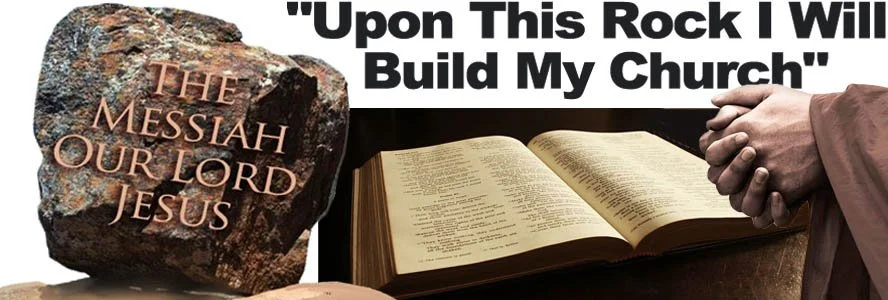
Throughout the New Testament both Jesus and his apostles repeatedly use the Old Testament to substantiate the claim of Jesus to be the foretold Messiah. On the day of His resurrection, Jesus explained on two known occasions how the Old Testament Scriptures pointed to Him as the Messiah.
Jesus walked with with Clopas and his companion to Emmaus which was seven miles from Jerusalem.
“He said to them, ‘How foolish you are, and how slow to believe all that the prophets have spoken! Did not the Messiah have to suffer these things and then enter his glory?’ And beginning with Moses and all the Prophets, he explained to them what was said in all the Scriptures concerning himself. Luke 24:25–27
Later that same day Jesus appeared to His disciples in the Locked upper room
“He said to them, “This is what I told you while I was still with you: Everything must be fulfilled that is written about me in the Law of Moses, the Prophets and the Psalms.” Then he opened their minds so they could understand the Scriptures.
He told them, “This is what is written: The Messiah will suffer and rise from the dead on the third day, and repentance for the forgiveness of sins will be preached in his name to all nations, beginning at Jerusalem.” Luke 24:44–47
These passages show that Jesus used all parts of the Hebrew Scriptures—the Law (Torah), the Prophets (Nevi’im), and the Psalms (Writings or Ketuvim)—to explain that His suffering, death, and resurrection were foretold.
We are told some of these references in the gospel records.
Jesus' Use of Old Testament Prophecies to Prove He Is the Messiah
Jesus trained his disciple to show them how the Scriptures were fulfilled in Himself.
1. Isaiah 61:1–2
Quoted in: Luke 4:17–21
"The Spirit of the Sovereign Lord is on me, because the Lord has anointed me to proclaim good news to the poor. He has sent me to bind up the brokenhearted, to proclaim freedom for the captives and release from darkness for the prisoners, to proclaim the year of the Lord’s favour."
Jesus said, "Today this scripture is fulfilled in your hearing."
2. Psalm 118:22–23
Quoted in: Matthew 21:42
"The stone the builders rejected has become the cornerstone; the Lord has done this, and it is marvellous in our eyes."
3. Jonah (Sign of Jonah)
Referenced in: Matthew 12:40
"For as Jonah was three days and three nights in the belly of a huge fish, so the Son of Man will be three days and three nights in the heart of the earth."
4. Zechariah 13:7
Quoted in: Matthew 26:31
"I will strike the shepherd, and the sheep of the flock will be scattered."
5. Isaiah 53 (Suffering Servant)
Alluded to throughout the Gospels (especially in Luke 22:37)
"It is written: ‘And he was numbered with the transgressors’; and I tell you that this must be fulfilled in me. Yes, what is written about me is reaching its fulfillment."
These verses show how Jesus Himself used prophecy to demonstrate His identity as the Messiah and the fulfillment of God’s promises.
These passages were central to both Jesus’ own teaching and the apostolic preaching in Acts, showing continuity between the Old Testament promises and the life, death, and resurrection of Jesus Christ.
The Apostles’ Use of Old Testament Prophecies to Prove Jesus is the Messiah
The apostles also use the Old Testament to prove that Jesus is God’s Messiah, his Chosen King. In Peter’s first Pentecostal sermon he quotes from the old testament three times:
1. Joel 2:28–32
Quoted in: Acts 2:17–21
"‘In the last days, God says, I will pour out my Spirit on all people. Your sons and daughters will prophesy, your young men will see visions, your old men will dream dreams. Even on my servants, both men and women, I will pour out my Spirit in those days, and they will prophesy. I will show wonders in the heavens above and signs on the earth below, blood and fire and billows of smoke. The sun will be turned to darkness and the moon to blood before the coming of the great and glorious day of the Lord. And everyone who calls on the name of the Lord will be saved.’" Message: The Holy Spirit's outpouring marks the beginning of the Messianic age.”
2. Psalm 16:8–11
Quoted in: Acts 2:25–28
"I saw the Lord always before me. Because he is at my right hand, I will not be shaken. Therefore my heart is glad and my tongue rejoices; my body also will rest in hope, because you will not abandon me to the realm of the dead, you will not let your holy one see decay. You have made known to me the paths of life; you will fill me with joy in your presence."
Jesus was resurrected; as the Scriptures had foretold. He did not see decay.
3. Psalm 110:1
Quoted in: Acts 2:34–35
"‘The Lord said to my Lord: "Sit at my right hand until I make your enemies a footstool for your feet.”’"
Jesus is exalted at God's right hand as Lord and Messiah.
When Peter gave his second sermon to a gathered crowd after a crippled beggar was healed he again uses quotes from the Jewish Scriptures to support his claim about Jesus:
4. Deuteronomy 18:15
Quoted in: Acts 3:22–23
"The Lord your God will raise up for you a prophet like me from among your own people; you must listen to everything he tells you. Anyone who does not listen to him will be completely cut off from their people."
Peter affirms that Jesus is the prophet like Moses.
5. Genesis 12:3; 22:18
Quoted in: Acts 3:25
"Through your offspring all peoples on earth will be blessed."
Jesus fulfils the blessing to all nations promised to Abraham.
6. Psalm 118:22
Quoted in: Acts 4:11
When Peter and John were arraigned before the Sanhedrin, the same body that had agreed to have Jesus crucified, they boldly said:
"‘The stone you builders rejected, which has become the cornerstone.’"
At the risk to their lives they affirmed that Jesus fulfilled this prophecy and that he is the cornerstone rejected by Israel but chosen by God.
Stephen's Defence
Stephen also confidently used the Scriptures when speaking about his faith in Jesus.
7. Deuteronomy 18:15
Quoted in: Acts 7:37
"God will raise up for you a prophet like me from your own people."
The people rejected Jesus just as they did with Moses, the prophet like him.
Philip and the Ethiopian
Philip was also well trained in the use of the Scriptures to prove Jesus’ claim. He recognised that the eunuch was reading from Isaiah 53 and explained to him how this was fulfilled in Jesus:
“Then Philip began with that very passage of Scripture and told him the good news about Jesus.: Acts 8:35
8. Isaiah 53:7–8
Quoted in: Acts 8:32–33
"He was led like a sheep to the slaughter, and as a lamb before its shearer is silent, so he did not open his mouth. In his humiliation he was deprived of justice. Who can speak of his descendants? For his life was taken from the earth." Message: Jesus is the suffering servant who gave His life for others.
Paul's Sermon in Pisidian Antioch
9. Psalm 2:7
Quoted in: Acts 13:33
"‘You are my son; today I have become your father.’" Message: Jesus' resurrection affirms His divine Sonship.
10. Isaiah 55:3
Quoted in: Acts 13:34
"I will give you the holy and sure blessings promised to David."
Jesus inherits the eternal, faithful promises given to King David, Jesus’ direct ancestor.
11. Psalm 16:10
Quoted in: Acts 13:35.
“ . . .because you will not abandon me to the realm of the dead,
nor will you let your faithful one see decay.”
This passage was used to prove the resurrection (as in Acts 2).
Paul’s teaching at Berea
As was his custom, Paul first visited and taught in the synagogue when he arrived in Berea on his second missionary journey:
“. . . they received the message with great eagerness and examined the Scriptures every day to see if what Paul said was true. As a result, many of them believed. . . “ Acts 17:11-12
The Jews already recognised the authority of Scripture so confirming that these did force the coming of Jesus the Messiah was a an important stepping stone to discovering the truth about Jesus.
Paul’ talk in Athens
Although Paul did not quote the Scriptures as his authority when speaking to intelligent secular Athenians he does include an argument that was taken from the Song of Moses (Deuteronomy 32:8) which describes how the Most High God apportioned the nations, dividing up humankind and setting boundaries for the peoples according to the number of the sons of God. It highlights God's role in establishing the boundaries and inheritance of different nations.
Jesus rose from the dead; His body did not decay.
These passages were central to apostolic preaching in Acts, used to show continuity between the Old Testament promises and the life, death, and resurrection of Jesus Christ. Jesus and his apostles used this approach to help persuade and convince people that he really is the Saviour of the world. It is clear that Jesus trained his disciples so they could understand and repeat these prophecies about himself to others and they passed on this understanding to subsequent Christians such as Stephen and Philip.
How many Christians are being as well trained in our churches today?
Old Testament Prophecies
The Messiah Would Be the Son of David
This is important as Jews knew from their Scriptures that the Messiah would be a direct descendent of King David. Jesus is called the Son of David 17 times in the New Testament. It emphasises His royal lineage and rightful claim to the throne of Israel as the promised Messiah from David’s line.
Here are notable examples:
Matthew 1:1 — “This is the genealogy of Jesus the Messiah the son of David, the son of Abraham.”
Matthew 9:27 — Two blind men: “Have mercy on us, Son of David!”
Matthew 12:23 — “Could this be the Son of David?”
Matthew 15:22 — Canaanite woman: “Lord, Son of David, have mercy on me!”
Matthew 20:30–31 — Blind men shout: “Lord, Son of David!”
Matthew 21:9 — Triumphal entry: “Hosanna to the Son of David!”
Matthew 21:15 — Children in the temple: “Hosanna to the Son of David!”
Mark 10:47–48, Luke 18:38–39 — Blind Bartimaeus: “Jesus, Son of David, have mercy on me!”
Luke 1:32 — Angel Gabriel to Mary: “The Lord God will give him the throne of his father David.”
Paul also uses this title about Jesus:
Romans 1:3 — “…who as to his earthly life was a descendant of David.”
These are the major examples of the Old Testament prophecies
1. 2 Samuel 7:12–13, 16 — The Davidic Covenant
"When your days are over and you rest with your ancestors, I will raise up your offspring to succeed you, your own flesh and blood, and I will establish his kingdom. He is the one who will build a house for my Name, and I will establish the throne of his kingdom forever."
"Your house and your kingdom will endure forever before me; your throne will be established forever."
This covenant established God's promise that the Messiah would come from David’s lineage and reign eternally.
2. Isaiah 9:6–7 — The Government on David’s Throne
"For to us a child is born, to us a son is given, and the government will be on his shoulders. And he will be called Wonderful Counselor, Mighty God, Everlasting Father, Prince of Peace. Of the greatness of his government and peace there will be no end. He will reign on David’s throne and over his kingdom, establishing and upholding it with justice and righteousness from that time on and forever. The zeal of the Lord Almighty will accomplish this."
This passage clearly connects the birth of the Messiah to the throne of David and a kingdom of eternal peace and justice.
3. Isaiah 11:1–2 — A Shoot from Jesse’s Stump
"A shoot will come up from the stump of Jesse; from his roots a Branch will bear fruit. The Spirit of the Lord will rest on him—the Spirit of wisdom and of understanding, the Spirit of counsel and of might, the Spirit of the knowledge and fear of the Lord."
Jesse was the father of David. This prophecy speaks of a future leader from Jesse's lineage empowered by the Spirit of the Lord.
4. Jeremiah 23:5–6 — The Righteous Branch from David
"The days are coming," declares the Lord, "when I will raise up for David a righteous Branch, a King who will reign wisely and do what is just and right in the land. In his days Judah will be saved and Israel will live in safety. This is the name by which he will be called: The Lord Our Righteous Savior."
This messianic prophecy emphasizes righteousness, kingship, and salvation, all connected to David's line.
5. Ezekiel 34:23–24 — David the Shepherd-King
"I will place over them one shepherd, my servant David, and he will tend them; he will tend them and be their shepherd. I the Lord will be their God, and my servant David will be prince among them. I the Lord have spoken."
Though David had long since died, this passage refers to a future, ideal shepherd-king—interpreted as the Messiah—who would lead God’s people.
These prophecies lay a strong Biblical foundation for the belief that the Messiah would be a descendant of David.
They also emphasise the understanding that God speaks to people through his inspired Word, which is both the inspired Scriptures and Jesus himself.
BVP