Is God more powerful than Satan?
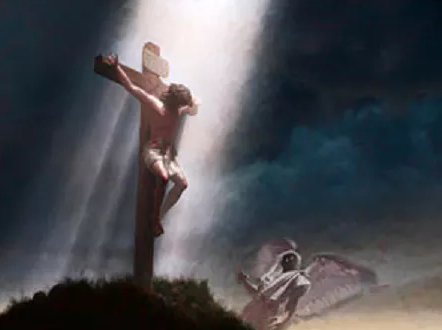
When you look at the atrocities that occur in war it would be simple to say that God has little power today. Evil seems to be triumphing. However, the Bible clearly teaches that God is far more powerful than Satan. Scripture consistently portrays Satan as a created being who is ultimately subject to God’s authority. While Satan exercises limited power, God’s omnipotence, sovereignty, and ultimate victory are central to biblical teaching. Below are key themes and verses that affirm this:
1. God is the Creator; Satan is a created being
Colossians 1:16: “For in him all things were created: things in heaven and on earth, visible and invisible, whether thrones or powers or rulers or authorities; all things have been created through him and for him.”
This verse emphasizes that everything, including angelic beings (even fallen ones like Satan), were created by God and are under His authority.
Ezekiel 28:15 (often understood as referring symbolically to Satan’s origin): “You were blameless in your ways from the day you were created till wickedness was found in you.”
Satan has power, but it is limited and granted by God, who is the source of all authority.
2. God’s Sovereignty over Satan’s Actions
Even when Satan acts, it is only with God’s permission, showing God’s ultimate control.
Job 1:12: “The Lord said to Satan, ‘Very well, then, everything he has is in your power, but on the man himself do not lay a finger.’”
Here, Satan cannot harm Job without God’s express permission, highlighting that Satan’s power is subordinate to God’s will.
Luke 22:31-32: Jesus tells Peter, “Simon, Simon, Satan has asked to sift all of you as wheat. But I have prayed for you, Simon, that your faith may not fail.”
Satan must ask permission to test believers, and Jesus’ prayer reflects His authority over Satan’s plans.
3. Christ’s Victory over Satan and Evil
The Bible teaches that Christ has decisively defeated Satan through His death and resurrection.
Colossians 2:15: “And having disarmed the powers and authorities, he made a public spectacle of them, triumphing over them by the cross.”
This verse emphasizes that Christ has already achieved victory over the forces of evil.
1 John 4:4: “You, dear children, are from God and have overcome them, because the one who is in you is greater than the one who is in the world.”
The “one who is in you” refers to God’s Spirit, who is far more powerful than Satan (“the one in the world”).
Revelation 20:10: “And the devil, who deceived them, was thrown into the lake of burning sulfur… and will be tormented day and night for ever and ever.”
This passage describes Satan’s ultimate defeat, affirming that God will exercise final judgment over him.
4. Satan’s Defeat is Certain
The Bible teaches that Satan’s power is temporary, and he will be destroyed. Until that time, believers are called to resist him with the power of God.
Romans 16:20: “The God of peace will soon crush Satan under your feet.”
This verse points to the inevitable end of Satan’s influence.
James 4:7: “Submit yourselves, then, to God. Resist the devil, and he will flee from you.”
Even believers have power over Satan through God’s grace and strength.
The Bible makes it clear that God is infinitely more powerful than Satan, who is a created being and subject to God’s control. While Satan is an adversary with some influence in the world, his power is limited, temporary, and ultimately defeated by God through Jesus Christ. Believers can trust in God’s victory and authority over all spiritual forces.
The story of Betsie ten Boom and her sister Corrie ten Boom provides a powerful example of trusting in God’s power even in the midst of unimaginable evil. Betsie and Corrie were Dutch Christians who, along with their family, helped hide Jews from the Nazis during World War II. They were eventually arrested and sent to the Ravensbrück concentration camp, where they experienced great suffering, but also found strength in their faith.
Betsie, in particular, demonstrated a remarkable ability to see God’s goodness even in the darkest circumstances. One of the most well-known moments between the sisters highlights Betsie’s faith in the power of God over evil.
The Fleas at Ravensbrück
One profound example of Betsie’s perspective on God’s power occurs when they were assigned to a filthy, flea-infested barracks. Corrie was disgusted by the situation, but Betsie insisted that they thank God for everything, even the fleas.
Betsie quoted 1 Thessalonians 5:18:
“Give thanks in all circumstances; for this is the will of God in Christ Jesus for you.”
At first, Corrie struggled to see how they could possibly be grateful for fleas. However, later they discovered that the guards avoided entering their barracks because of the fleas, allowing them to hold Bible studies and prayer meetings without interference. What seemed like a curse was actually a blessing, revealing that God’s power can work even in the most unlikely ways.
Betsie’s Faith in God’s Power Over Evil
Throughout their time in Ravensbrück, Betsie often spoke of God’s love being stronger than the hatred and evil surrounding them. She believed that no darkness, no matter how deep, could extinguish the light of Christ. One of Betsie’s most famous statements to Corrie was:
“There is no pit so deep, that God’s love is not deeper still.”
Betsie firmly believed that God’s power transcended the evil of the concentration camp. Even as they endured starvation, brutality, and death all around them, she reminded Corrie that God was still in control and that His love could reach even the most broken places. Betsie also told Corrie that they must be willing to forgive their captors, recognizing that God’s grace could transform even the hardest hearts.
Betsie’s Death and Legacy
Betsie’s unwavering faith never faltered, even as her health deteriorated. Shortly before she died in the camp, she shared a vision with Corrie:
“We must tell people what we have learned here. We must tell them that there is no pit so deep that He is not deeper still. They will listen to us, Corrie, because we have been here.”
Her faith in God’s ultimate power over evil inspired Corrie, who survived the war and spent the rest of her life traveling the world, sharing their story and preaching about God’s forgiveness and love.
Conclusion
Betsie’s conversations with Corrie in Ravensbrück reflect a profound belief in the power of God even in the presence of evil. She understood that, despite their suffering, God’s light and love were greater than the darkness surrounding them. Her faith encouraged Corrie to hold on to hope and forgiveness, even when it seemed impossible. Their story continues to inspire people today, demonstrating that God’s power and love can triumph over the greatest evils.