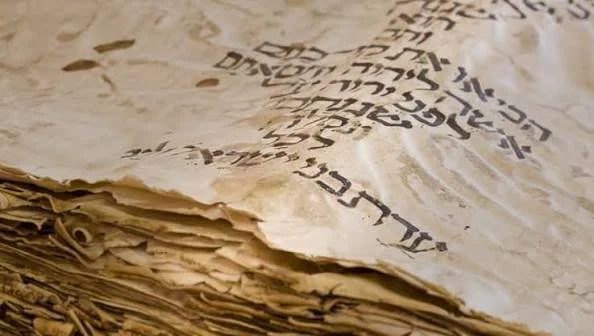
Several Old Testament prophecies foretold that the Messiah would be a descendant of Jesse, the father of King David, and a direct descendant of David himself. These prophecies emphasise the Messiah's royal lineage and connect him to the covenant God made with David to establish his throne forever.
Prophecies concerning the descendant of Judah
Biblical passages indicating that the Messiah would be Jewish and from the tribe of Judah.
Jacob prophesoed about the royal line coming through Judah. This prophecy speaks of a sceptre and ruler's staff remaining with Judah until a specific individual arrives.
“The scepter will not depart from Judah, nor the ruler’s staff from between his feet, until he to whom it belongs shall come and the obedience of the nations shall be his.” Genesis 49:8-10
Balaam prophesied about a star and scepter rising out of Jacob/Israel, suggesting a future kingly figure.
““I see him, but not now; I behold him, but not near. A star will come out of Jacob: a sceptre will rise out of Israel. He will crush the foreheads of Moab, the skulls of all the people of Sheth.” Numbers 24:17
Micah gave a prophecy identifying Bethlehem, located within Judah, as the birthplace of the ruler over Israel. Herod’s advisors, when he was visited by the Wise Men recognised that this was about the coming Messiah, his birthplace would be Bethlehem, the small city of David:
““But you, Bethlehem Ephrathah, though you are small among the clans of Judah, out of you will come for me one who will be ruler over Israel, whose origins are from of old, from ancient times.” Micah 5:2
The New Testament links these prophecies to Jesus. For instance, Revelation 5:5 refers to Jesus as the "Lion of the tribe of Judah", and Hebrews 7:14 states that "our Lord descended from Judah".
Prophecies concerning the descendant of Jesse
Isaiah used imagery of a stump to describe the Messiah's emergence from Jesse's family line. He speaks of a "shoot" and "Branch" coming from the "stump of Jesse," on whom the Spirit of the LORD will rest, bringing wisdom and understanding. The "stump of Jesse" indicates a new heir from David's seemingly dormant royal line, suggesting the Messiah's humble beginnings and divine anointing.
“A shoot will come up from the stump of Jesse; from his roots a Branch will bear fruit. The Spirit of the Lord will rest on him - the Spirit of wisdom and of understanding, the Spirit of counsel and of might, the Spirit of the knowledge and fear of the Lord.” Isaiah 11:1-2
Prophecies concerning the descendant of David
Other prophets focused on a future king from David's lineage who would establish an eternal kingdom. God's covenant with David formed the basis for later messianic prophecies. He was promised:
“When your days are over and you rest with your ancestors, I will raise up your offspring to succeed you, your own flesh and blood, and I will establish his kingdom. He is the one who will build a house for my Name, and I will establish the throne of his kingdom forever.” 2 Samuel 7:12-13
The ‘house for my name’ could either be the temple or, as Jesus taught, the people of God
Another well-known prophecy presents a child born to Israel who is given divine titles, including ‘Mighty God,’ ‘Everlasting Father,’ and ‘Prince of Peace.’ The passage emphasises that this child will reign over a righteous kingdom for ever.
“For to us a child is born, to us a son is given, and the government will be on his shoulders. And he will be called Wonderful Counsellor, Mighty God, Everlasting Father, Prince of Peace.Of the greatness of his government and peace there will be no end. He will reign on David’s throne and over his kingdom, establishing and upholding it with justice and righteousness from that time on and forever. The zeal of the Lord Almighty will accomplish this.” Isaiah 9:6-7
Following the imagery of the ‘stump of Jesse, another passage portrays the Messiah as ‘the Root of Jesse’ who will serve as ‘a banner for the peoples. It foretells that this descendant of Jesse would have worldwide influence.
“In that day the Root of Jesse will stand as a banner for the peoples; the nations will rally to him, and his resting place will be glorious.” Isaiah 11:10.
Jeremiah foresaw that the Messiah would be a ‘righteous’ descendant of David who would reign wisely and justly, he would be known as "The LORD is Our Righteousness”.
“The days are coming,” declares the Lord, when I will raise up for David a righteous Branch, a King who will reign wisely and do what is just and right in the land.In his days Judah will be saved and Israel will live in safety. This is the name by which he will be called: The Lord Our Righteous Saviour.”Jeremiah 23:5-6
In a promise of future restoration for Israel, the people of God, Jeremiah refers to a future, resurrected ruler from David's line who will lead the people in righteousness.
“Instead, they will serve the Lord their God and David their king, whom I will raise up for them.” Jeremiah 30:9
Jeremiah repeated the promise of a ‘righteous Branch’ for David who would be an eternal Righteous Saviour of His people and who would bring justice and righteousness to the land.
“In those days and at that time I will make a righteous Branch sprout from David’s line; he will do what is just and right in the land. In those days Judah will be saved and Jerusalem will live in safety. This is the name by which it will be called: The Lord Our Righteous Saviour.’ For this is what the Lord says: ‘David will never fail to have a man to sit on the throne of Israel.’” Jeremiah 33:15-17
Another prophecy of Ezekiel tells us of a united kingdom under the eternal rule of the Davidic Messiah echoing Jeremiah's message.
“My servant David will be king over them, and they will all have one shepherd. They will follow my laws and be careful to keep my decrees.They will live in the land I gave to my servant Jacob, the land where your ancestors lived. They and their children and their children’s children will live there forever, and David my servant will be their prince forever.” Ezekiel 37:24–25
The prophet Hosea looks forward to the day when God’s people will return to God under a restored Davidic kingship in the ‘latter days’.
“Afterward the Israelites will return and seek the Lord their God and David their king. They will come trembling to the Lord and to his blessings in the last days.” Hosea 3:5:
Another remarkable prophecy narrows the Messiah's origins to the small town of Bethlehem, where David himself came from. Herod’s advisors knew that this passage referred to the coming Messiah:
“But you, Bethlehem Ephrathah, though you are small among the clans of Judah, out of you will come for me one who will be ruler over Israel,
whose origins are from of old, from ancient times.” Micah 5:2
Zechariah referred to the Messiah, who, though a divine figure, would suffer a piercing wound. It points to the sorrow and repentance of the people who recognise the wrongfulness of their actions.
“And I will pour out on the house of David and the inhabitants of Jerusalem a spirit[a] of grace and supplication. They will look on me, the one they have pierced, and they will mourn for him as one mourns for an only child, and grieve bitterly for him as one grieves for a firstborn son.” Zechariah 12:10
New Testament confirms this pedigree about Jesus
The New Testament connects Jesus to these prophecies, highlighting his lineage through David and Jesse as evidence of his role as the Messiah.
The genealogy of Jesus in Matthew 1:1 identifies him as ‘the son of David, the son of Abraham’.
Mary is told by Gabriel that she, although a virgin, would have a Son, the Son of God, who will rule like his ancestor David,.
“You will conceive and give birth to a son, and you are to call him Jesus. He will be great and will be called the Son of the Most High. The Lord God will give him the throne of his father David, and he will reign over Jacob’s descendants forever; his kingdom will never end.” Luke 1:31-33
Paul states Jesus "was descended from David according to the flesh".Romans 1:3
In Acts 13:22-23 Paul preached that Jesus, a descendant of David, was the promised Saviour.
John refers to Jesus as the ‘Lion of the tribe of Judah”. Revelation 5:5
Hebrews 7:14 states that ‘our Lord descended from Judah’.
Prophecies about the Messiah’s Death
Prophecies about the death of the Messiah, primarily found in the Hebrew Scriptures detail the manner, timing, and sacrificial purpose of His death. These ancient texts describe the Messiah as a "Suffering Servant" who would be betrayed for 30 pieces of silver, endure intense physical torment and public mocking, and be executed alongside criminals.
The specific prophetic details and their fulfilments include:
It was prophesied that the Messiah would be betrayed by a close, trusted friend for 30 pieces of silver. This betrayal took place immediately after Judas had shared a passover meal with Jesus and the other disciples.
“Even myclose friend, someone I trusted, one who shared my bread, has turned against me.” Psalm 41:9
“So theypaid me thirty pieces of silver. And the Lord said to me, ‘Throw it to the potter’ the handsome price at which they valued me! So I took the thirty pieces of silver and threw them to the potter at the house of the Lord. Zechariah 11:12-13
It was foretold that the shepherd would be struck and the sheep (His followers) would be scattered:
“Strike the shepherd, and the sheep will be scattered, and I will turn my hand against the little ones.” Zechariah 13:7
2. TheTrial
The Messiah would be oppressed and afflicted, yet like a lamb led to the slaughter, He would not open His mouth in His own defence:
“He was oppressed and afflicted, yet he did not open his mouth; he was led like a lamb to the slaughter, and as a sheep before its shearers is silent, so he did not open his mouth.” Isaiah 53:7
The prophet Isaiah foretold that the Messiah would give His back to those who struck Him and His cheeks to those who pulled out His beard, enduring shame and spitting:
“I offered my back to those who beat me, my cheeks to those who pulled out my beard; I did not hide my face from mocking and spitting.” Isaiah 50:6
3. The Execution
Psalm 22is a remarkable psalm which is all about the death of the Messiah. It begins with the famous words that Jesus cried out from the cross
“My God,my God, why have you forsaken me? Why are you so far from saving me, so far from my cries of anguish?” Psalm 22:1
The reason why God permitted this to happen to his righteous Son is because he was intended to be the final sacrifice for our sin.
The piercing of the Messiah's hands and feet was foretold centuries before crucifixion was a known method of execution:
“My mouth is dried up like a potsherd, and my tongue sticks to the roof of my mouth; you lay me in the dust of death. Dogs surround me, a pack of villains encircles me; they pierce my hands and my feet. All my bones are on display;
people stare and gloat over me.” Psalm 22:16
The samePsalm prophesied that onlookers would hurl insults, wag their heads, and mock the Messiah by saying He should trust in the Lord to rescue Him:
“All whosee me mock me; they hurl insults, shaking their heads. “He trusts in the Lord,” they say, “let the Lord rescue him. Let him deliver him, since he delights in him.” Psalm 22:7-8
The soldiers would divide His clothing among themselves and cast lots (gamble) for His seamless undergarment:
“They divide my clothes among them and cast lots for my garment.” Psalm 22:18
4. His Death and Burial
The Messiah would die and be assigned a grave alongside the wicked. Despite dying the death of a criminal, He would be buried with the rich.
“For he was cut off from the land of the living; for the transgression of my people he was punished.He was assigned a grave with the wicked, and with the rich in his death, though he had done no violence, nor was any deceit in his mouth.” Isaiah 53:8-9
It was prophesied that not one of the Messiah's bones would be broken, even though the Romans normally broke the legs of the crucified to hasten death, as happened to the thieves crucified either side of Jesus.:
“He protects all his bones, not one of them will be broken.” Psalm 34:20
Zechariah prophesied that the Messiah would be pierced:
“. . . the people would look on "the one they have pierced” Zechariah 12:10
Ultimately, the Messiah's death was foretold to serve as a substitutionary sacrifice for the sins of many people:
“But he was pierced for our transgressions, he was crushed for our iniquities;
the punishment that brought us peace was on him, and by his wounds we are healed. We all, like sheep, have gone astray, each of us has turned to our own way; and the Lord has laid on him the iniquity of us all.” Isaiah 53:5-6
The Messiah’s death was to be the fulfilment of all the symbolic animals sacrifices that symbolically atoned for man’s sin. This was the real thing.
Prophecies about the Resurrection
The Hebrew Scriptures (Old Testament) contain several key prophecies that foretell the resurrection of the Messiah, which the New Testament explicitly states were fulfilled by Jesus Christ.
The Holy One Will Not See Decay
“Becauseyou will not abandon me to the realm of the dead, nor will you let your faithful one see decay.” Psalm 16:10
This prophecy is explicitly claimed as fulfilled by Jesus' resurrection in two separate sermons in the Book of Acts. The Apostle Peter quotes this Psalm and explains that King David died and was buried, so he was not speaking of himself, but
“. . . seeing what was to come, he spoke of the resurrection of the Messiah, that he was not abandoned to the realm of the dead, nor did his body see decay. God has raised this Jesus to life, and we are all witnesses of it.” Acts 2:25–32
“The Apostle Paul also utilises this verse, stating,
"So it is also stated elsewhere: ‘You will not let your holy one see decay.’ Now when David had served God’s purpose in his own generation, he fell asleep... But the one whom God raised from the dead did not see decay.” Acts 13:35–37
2. TheSuffering Servant Will Prolong His Days
Isaiah 53 predicts the "Suffering Servant" who will be killed as a guilt offering for sins, but will afterward live again and be exalted.
“Yet it was the Lord’s will to crush him and cause him to suffer, and though the Lord makes his life an offering for sin, he will see his offspring and prolong his days, and the will of the Lord will prosper in his hand. After he has suffered, he will see the light of life and be satisfied . . .” Isaiah 53:10–11
The New Testament applies the sacrifice and subsequent vindication of the Servant directly to Jesus. He clarified the message of the Old Testament to His disciples, saying,
“This iswhat is written: The Messiah will suffer and rise from the dead on the third day. . . “ Luke 24:46
Paul links the death and life of Jesus directly to this servant theology, writing,
“He was delivered over to death for our sins and was raised to life for our justification.” Romans 4:25
3. The Rebuilding of the Rejected Stone
This prophecy says that the Messiah will ultimately prosper after being completely rejected.
“The stone the builders rejected has become the cornerstone.” Psalm 118:22
Peter spoke boldly to the Sanhedrin, stating,
"It is by the name of Jesus Christ of Nazareth, whom you crucified but whom God raised from the dead... Jesus is ‘the stone you builders rejected, which has become the cornerstone.’ Acts 4:10–11:
4. The Sign of Jonah
The New Testament treats historical events in the Old Testament as prophetic models (‘types’) that point to the Messiah's timeline.
“Now theLord provided a huge fish to swallow Jonah, and Jonah was in the belly of the fish three days and three nights.” Jonah 1:17
Jesus explicitly calls this a prophecy of His upcoming resurrection.
"For as Jonah was three days and three nights in the belly of a huge fish, so the Son of Man will be three days and three nights in the heart of the earth.” Matthew 12:40
Jesus’ Predictions of His Own Resurrection
During His earthly ministry, Jesus predicted His death and subsequent resurrection multiple times. Jesus used both explicit language and symbolic metaphors to prepare His disciples.
1. The Explicit Predictions given in the three Synoptic Gospels
Jesus foretold His resurrection plainly to His disciples on at least three distinct occasions during their journey to Jerusalem.
The First Prediction:
“From that time on Jesus began to explain to his disciples that he must go to Jerusalem and suffer many things at the hands of the elders, the chief priests and the teachers of the law, and that he must be killed and on the third day be raised to life.” Matthew 16:21 (Parallel passages: Mark 8:31, Luke 9:22)
The Second Prediction:
“When they came together in Galilee, he said to them, 'The Son of Man is going to be delivered into the hands of men. They will kill him, and on the third day he will be raised to life.' And the disciples were filled with grief.” Matthew 17:22–23 (Parallel passage: Mark 9:31)
The Third Prediction:
“We are going up to Jerusalem, and the Son of Man will be delivered over to the chief priests and the teachers of the law. They will condemn him to death and will hand him over to the Gentiles to be mocked and flogged and crucified. On the third day he will be raised to life!” Matthew 20:18–19 (Parallel passages: Mark 10:33–34, Luke 18:31–33)
2. The Metaphor of the Temple in the Gospel of John
Early inHis ministry, Jesus used the imagery of the physical temple to predict His resurrection, a statement that was later used against Him at His trial.
“Jesus answered them, ‘Destroy this temple, and I will raise it again in three days.’. . . But the temple he had spoken of was his body.” John 2:19, 21
The Disciples' subsequently understood what he meant.
“After he was raised from the dead, his disciples recalled what he had said. Then they believed the scripture and the words that Jesus had spoken.” John 2:22
Jesus emphasised that His death and resurrection were entirely under His divine authority, not a defeat.
“The reason my Father loves me is that I lay down my life—only to take it up again. No one takes it from me, but I lay it down of my own accord. I have authority to lay it down and authority to take it up again.” John 10:17–18
The Theological Arguments Used by the Apostles
When preaching to both Jewish and Gentile audiences in the Book of Acts and the Epistles, the Apostles used specific theological frameworks to connect Old Testament verses to the resurrection:
The Apostles argued that God made an absolute, unbreakable promise to King David that one of his descendants would rule on an eternal throne (2 Samuel 7). The logic that they used was simple, David died, decayed, and remained in his tomb. Therefore, for the throne to be eternal, the ultimate ‘Son of David’ (the Messiah) could not remain dead. Peter argue in his first Pentecost sermon that because David was a prophet and knew God's oath, David was looking forward specifically to the Messiah's resurrection, as a dead king cannot rule an eternal kingdom.
“Fellow Israelites, I can tell you confidently that the patriarch David died and was buried, and his tomb is here to this day. But he was a prophet and knew that God had promised him on oath that he would place one of his descendants on his throne. Seeing what was to come, he spoke of the resurrection of the Messiah, that he was not abandoned to the realm of the dead, nor did his body see decay.” Acts 2:29-31
In Jewish thought, dying on a cross/tree carried a divine curse:
“. . . you must not leave the body hanging on the pole overnight. Be sure to bury it that same day, because anyone who is hung on a pole is under God’s curse.” Deuteronomy 21:23
The religious authorities argued Jesus' death proved He was a false prophet. The apostles argued that the resurrection was God the Father's public, legal reversal of the Sanhedrin’s verdict. By raising Jesus, God vindicated Him, proving He was righteous and that His sacrifice was accepted. Paul argues Jesus’ resurrection was the ultimate divine stamp of approval.:
“. . . through the Spirit of holiness was appointed the Son of God in power by his resurrection from the dead.” Romans 1:4
The Apostles connected the resurrection to the Jewish agricultural Feast of Firstfruits (the first harvest dedicated to God, guaranteeing that the rest of the harvest is coming). They taught that Jesus' resurrection was not just a miracle for Him; it was the launch of a new creation and a guarantee of the future resurrection of all believers who are committed to be a holy people. Paul writes:
“But Christ has indeed been raised from the dead, the firstfruits of those who have fallen asleep.” 1 Corinthians 15:20:
The Role of the Messiah
Old Testament prophecies concerning the role of the Messiah offer a man who will be the Saviour of the world. He will serve as a prophet, a suffering servant, an eternal king, and a priest. These scriptures were written across hundreds of years, and they present a variety of functions, ranging from an eternal king, a spiritual liberator of God’s people to a figure who would endure immense suffering to atone for the sins of humanity.
Prophet, Priest and Teacher
Moses explicitly stated that God would raise up a prophet like him, and that the people should listen to this man.
“The Lord your God will raise up for you a prophet like me from among you, from your fellow Israelites. You must listen to him.” Deuteronomy 18:15
The apostles were taught and passed on that this was fulfilled in the coming of Jesus:
“Repent, then, and turn to God, so that your sins may be wiped out, that times of refreshing may come from the Lord, and that he may send the Messiah, who has been appointed for you—even Jesus. Heaven must receive him until the time comes for God to restore everything, as he promised long ago through his holy prophets. For Moses said, ‘The Lord your God will raise up for you a prophet like me from among your own people; you must listen to everything he tells you. Anyone who does not listen to him will be completely cut off from their people.’ Indeed, beginning with Samuel, all the prophets who have spoken have foretold these days.” Acts 3:19-24
The prophet Isaiah declared that the Messiah would be anointed to "bring good news to the poor," "bind up the brokenhearted," and "proclaim liberty to the captives".
“The Spirit of the Sovereign Lord is on me, because the Lord has anointed me to proclaim good news to the poor. He has sent me to bind up the brokenhearted, to proclaim freedom for the captives and release from darkness for the prisoners.” Isaiah 61:1
Jesus taught that he was the fulfilment of this:
“. . . He unrolled the scroll and found the place where it is written: 'The Spirit of the Lord is on me...' Then he began by saying to them, 'Today this scripture is fulfilled in your hearing.’” Luke 4:18-21
King David, writing in the Psalms, stated that the Messiah would be a "priest forever in the order of Melchizedek," bridging the roles of earthly king and heavenly intercessor.
“The Lord has sworn and will not change his mind: 'You are a priest forever, in the order of Melchizedek.” Psalm 110:4
The Apostles recognised that Melchizedek was a picture of Jesus:
“… So Christ did not take on himself the glory of becoming a high priest. But God said to him . . . ‘You are a priest forever, in the order of Melchizedek.’" Hebrews 5:5-6
The mainstream priesthood at the time was seen as mainly political and corrupt. Some groups, like the Essenes at Qumran, expected two distinct Messiahs: a political King (Messiah of David) and a separate, pure spiritual High Priest (Messiah of Aaron).
The Suffering Servant
One of the most profound and specific roles is that of the "Suffering Servant," as detailed primarily in the writings of Isaiah.
Isaiah prophesied that the Messiah would be ‘despised and rejected by mankind,’ a man familiar with suffering.
“He was despised and rejected by mankind, a man of suffering, and familiar with pain. Like one from whom people hide their faces he was despised, and we held him in low esteem.” Isaiah 53:3
This prophecy reveals that the Messiah's role was to take on the punishment for the sins of the people as the ultimate sacrifice that all the animal sacrifices symbolised. Isaiah famously noted that the Messiah would be ‘pierced for our transgressions’ and ‘crushed for our iniquities’.
“But he was pierced for our transgressions, he was crushed for our iniquities; the punishment that brought us peace was on him, and by his wounds we are healed.” Isaiah 53:5
This is the reassuring teaching of Scripture, Jesus is the ultimate sacrifice who pays the price of sin for those who follow him.
“He himself bore our sins in his body on the cross. . . . by his wounds you have been healed.” 1 Peter 2:24
In both Isaiah and the Psalms, it is prophesied that the Messiah would endure false accusations, beatings, and even a torturous execution without opening His mouth to defend Himself.
“He was oppressed and afflicted, yet he did not open his mouth; he was led like a lamb to the slaughter, and as a sheep before its shearers is silent, so he did not open his mouth.” Isaiah 53:7
This was precisely what happened at the trial of Jesus. He did not even try to justify his actions as he already knew and had accepted his fate.:
“When he was accused by the chief priests and the elders, he gave no answer.” Matthew 27:12
The Eternal King
A major expectation in the Old Testament is that the Messiah would be a descendant of King David, tasked with bringing justice and righteousness to the world.
The prophet Jeremiah spoke of the Messiah as a "righteous Branch" who would reign wisely as king on David’s throne.
“'The days are coming,' declares the Lord, 'when I will raise up for David a righteous Branch, a King who will reign wisely and do what is just and right in the land.” Jeremiah 23:5
When Gabriel told Mary about her coming pregnancy he said about the child:
“The Lord God will give him the throne of his father David, and he will reign over Jacob’s descendants forever…” Luke 1:32-33
This king will reign forever, which limits the fulfilment of this prophecy to just one person.
Isaiah foretold that the government would rest on the Messiah's shoulders, and He would have divine titles.
“For to us a child is born, to us a son is given, and the government will be on his shoulders. And he will be called Wonderful Counsellor, Mighty God, Everlasting Father, Prince of Peace.” Isaiah 9:6
The shepherds looking after sheep near Bethlehem were told that the Messiah had just been born and they went to worship him:
“Today in the town of David a Saviour has been born to you; he is the Messiah, the Lord.” Luke 2:11
The book of Daniel describes the Messiah as a real man, ‘one like a son of man’ being presented before God, receiving an ‘everlasting dominion’ and a kingdom that will never be destroyed, bringing all peoples and nations under His service.
“He was given authority, glory and sovereign power; all nations and peoples of every language worshiped him. His dominion is an everlasting dominion that will not pass away, and his kingdom is one that will never be destroyed.” Daniel 7:14
The Victorious Deliverer
The Messiah was also assigned the role of the judge of all people at the end of time and as a military-style victor who would ultimately defeat evil. The very first prophecy in Genesis hints that the "seed of the woman" will strike the serpent (Satan) on the head, meaning He will ultimately destroy the power of evil.
“And I will put enmity between you and the woman, and between your offspring and hers; he will crush your head, and you will strike his heel.” Genesis 3:15
Jesus came to destroy sin. In heaven there will be no sin and God’s people are now training themselves to defeat sin both is themselves and in their society.
“The reason the Son of God appeared was to destroy the devil’s work.” 1 John 3:8
“The God of peace will soon crush Satan under your feet.” Romans 16:20
The Psalms frequently depict the Messiah as a ruler who will inherit the nations, possess the ends of the earth, and establish a reign of flawless justice.
“Ask me, and I will make the nations your inheritance, the ends of the earth your possession.” Psalm 2:8
What is extraordinary is that God’s kingdom now includes people of every nation.
These differing roles (e.g., a suffering servant vs. a triumphant king) need to be reconciled. The New Testament teaches that these roles are fulfilled by one Messiah visiting the earth twice - first to suffer as a lamb as the ultimate sacrifice for sin, and later to return to rule as a king.
God is both Judge and Saviour
The Bible constantly presents God as holding both roles simultaneously, executing perfect justice while providing complete salvation.
Isaiah brings both natures together
“For the Lord is our judge, the Lord is our lawgiver, the Lord is our king; it is he who will save us." Isaiah 33:22
“Declare what is to be, present it—let them take counsel together. Who foretold this long ago, who declared it from the distant past? Was it not I, the Lord? And there is no God apart from me, a righteous God and a Saviour; there is none but me.” Isaiah 45:21
The Lord is a holy God who hates rebellion and sin:
“And the heavens proclaim his righteousness, for he is a God of justice.” Psalm 50:6
“Save us, Lord our God, and gather us from the nations…” Psalm 106:47
New Testament Passages
Too often God is presented just as a God of love and his awesome judgmental role can be overlooked.
“There is only one Lawgiver and Judge, the one who is able to save and destroy. But you—who are you to judge your neighbour?” James 4:12
“For God did not send his Son into the world to condemn the world, but to save the world through him. Whoever believes in him is not condemned, but whoever does not believe stands condemned already because they have not believed in the name of God’s one and only Son.” John 3:17-18
Judgment is a constant them of the apostles:
“. . . Christ Jesus, who will judge the living and the dead. . . “ 2 Timothy 4:1
This is balanced by:
“The Lord will rescue me from every evil attack and will bring me safely to his heavenly kingdom." 2 Timothy 4:18
The Intersection at the Crucifixion of Jesus
The crucifixion of Jesus is the ultimate demonstration of God acting simultaneously as a just judge and a merciful saviour.
As a righteous judge, God cannot simply ignore or dismiss sin but he has provided a rescue:.
“. . . for all have sinned and fall short of the glory of God, and all are justified freely by his grace through the redemption that came by Christ Jesus.” Romans 3:23
Paul repeats this balance three chapters later:
“For the wages of sin is death, but the gift of God is eternal life in Christ Jesus our Lord.” Romans 6:23
On the cross, God's judgment against sin was fully executed. Jesus took the legal guilt of humanity upon himself, satisfying the demands of divine justice.
Simultaneously, by taking that punishment, God provided salvation for humanity. God is righteous, so he cannot overlook sin, it must be paid for. God sent his righteous son to do just this:
“. . . he did it to demonstrate his righteousness at the present time, so as to be just and the one who justifies those who have faith in Jesus.” Romans 3:26
Jesus came as the Saviour for all people in the world, but he only saves those who are committed to following him. Without this on-going commitment their is no salvation.
In the Hebrew Bible, the concepts of judging and saving are closely related, often viewed as two sides of the same coin.
In the Old Testament Book of Judges, the leaders raised up by God were called ‘judges’, but their primary role was to save Israel from oppressors:
“Then the Lord raised up judges, who saved them out of the hands of these raiders.” Judges 2:16
Judgment for the oppressor meant salvation for the oppressed.
The New Testament uses precise legal and rescue terminology to show how Jesus fulfils both offices. Jesus tells us:
“The Father judges no one, but has entrusted all judgment to the Son.” John 5:22
In the New Testament, however, the Judge and the Saviour are the same person. Thus Jesus acts as the defence advocate for his people, defending believers before the Father's judgment seat using His own sacrifice as the payment.
“My dear children, I write this to you so that you will not sin. But if anybody does sin, we have an advocate with the Father - Jesus Christ, the Righteous One.” 1 John 2:1
We all have naturally made the decision to go our own way and forget the claims of Christ. That is to go on the broad road that leads to destruction. The alternative is to change direction and live with Christ. This way leads to ‘life’.
“Enter through the narrow gate. For wide is the gate and broad is the road that leads to destruction, and many enter through it. But small is the gate and narrow the road that leads to life, and only a few find it.” Matthew 7:13-14
Christians are all warned that following Jesus will be tough for those who openly acknowledge him as their Lord and the only way for others to be right with God
“Remember those earlier days after you had received the light, when you endured in a great conflict full of suffering. Sometimes you were publicly exposed to insult and persecution; at other times you stood side by side with those who were so treated. You suffered along with those in prison and joyfully accepted the confiscation of your property, because you knew that you yourselves had better and lasting possessions. So do not throw away your confidence; it will be richly rewarded. You need to persevere so that when you have done the will of God, you will receive what he has promised.” Hebrews 10:32-36
Jesus himself told his followers, and he based this on a prophecy by Micah:
“Whoever acknowledges me before others, I will also acknowledge before my Father in heaven. 33 But whoever disowns me before others, I will disown before my Father in heaven. Do not suppose that I have come to bring peace to the earth. I did not come to bring peace, but a sword. For I have come to turn ‘a man against his father, a daughter against her mother, a daughter-in-law against her mother-in-law, a man’s enemies will be the members of his own household.’ (Micah 7:6)” Matthew 10:32-36
The Old and New Testaments have a united message, what the Old looked forward to was fulfilled by Jesus who is both our judge and Saviour.
BVP