2 Corinthians 4:1-6 Knowing the Glory of God

This article is based on a talk given in Christchurch Baldock. There was a short talk for the whole family, after which the children left and the main talk was given.
Part 1. Family time
There were two small tables on the platform, the contents being covered with cloths. the table on the left represents what and who we tend to admire or glory in.
Table One
What is it that causes us to admire other people.? Think what it is about those in your school or those at work that people admire or gloryify. I remember when I was at school being full of admiration for those who boys who played in the 1st XV at rugby, or the 1st XI at cricket or the 1st VI at tennis. They were the ones who won the cups at Sports Day. A large silver prize cup is uncovered on a table to the left of the speaker.

Then there were those who did really well at different subjects. We all knew they would get 9s in the exams and get to a good university. A school certificate is shown and put on this table.

Another group were those who were good at music and could play the piano, violin or some other instrument brilliantly. A violin is then shown and put on the table

But more than that there were those people who were just very pleasant, kind, generous people who always seemed to have time for me. Those people deserve the greatest glory. A picture showing a smiling pleasant person is shown.

All these attributes are clearly admirable and we should encourage each other in gaining these skills. They are the skills that people glory in.
A very small electric candle was then placed at the front of this table to show that in God’s eyes these are not that bright.

Table Two
Although we all admire people who have these skills and we glory in them, these attributes in other people are very limited compared to the glory of God. This table on my right represents God’s glory. There is one person who has everything. He created the whole universe. He made this world and you and me. He is Jesus. God wants us to glory in him more than anything or anyone else.
When Moses had led the Children of Israel out of Egypt he was told to come and see something of the glory of God on Mount Sinai. No-one else was allowed even to go onto the base of the mountain because God’s glory was so glorious and people fall so far short of him and his standards. Even Moses was not allowed to see the face of God.

When Jesus came to his earth he showed his glory to three disciples, Peter, James and John. They were overawed by his glory. The realised that the glory of God is so much better that the glory of men and their lives were radically changed.
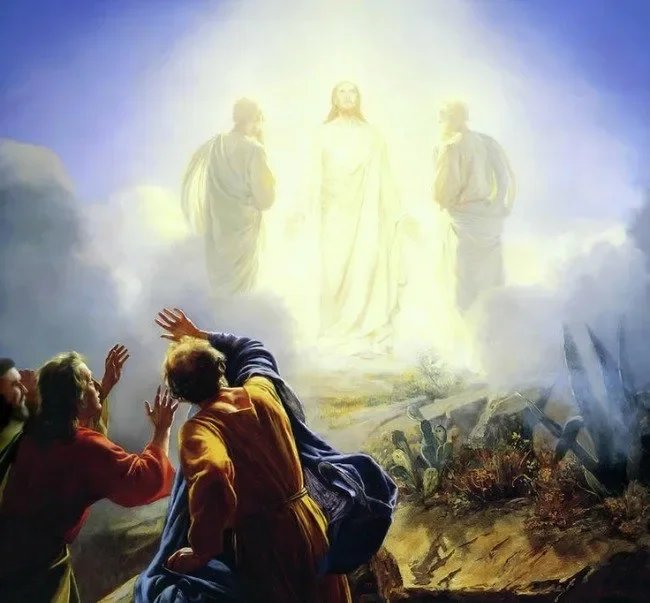
We admire people who are kind but Jesus was not only so powerful but he was also so gracious. So gracious that he was willing to die on that cross because of his love for you and me.
At this point a large cross, sitting on the table, was uncovered. It represents the glory of God.

Powerful torches, held by youngsters in the congregation, were then shone on the cross to illustrate that the light of the glory of God, which is seen in Jesus, is so much greater that the light of men. It is because of the love of Jesus that we can be accepted by God and can be God’s chosen people. Jesus is the creator God who has entered this world as a baby and grew up to become our Saviour.
In eternity people will see the glory of Jesus and there everyone will be full of praise for their glorious God, saying:
“You are worthy, our Lord and God, to receive glory, honour and power, for you created all things and by your will they were created and have their being.” Revelation 4:11

It is much more important to glory in God, in the Lord Jesus, than just to glory in our football team, in other people or in what we have achieved.
Part 2 Knowing the Glory of God

A man told me this week that he couldn’t understand why some Christians get so excited about Christianity. Paul answers this in his letter to the troubled church at Corinth. Corinth was a very busy city with large ports and as always happens the city became renowned for debauchery. Not surprisingly the church also became tainted in many ways both with sexual immorality and the quest for exciting supernatural gifts. It is to such a church that Paul wrote. Paul had spent about 18 months establishing the church in Corinth during his second missionary journey, around 50–52 AD and that had not been easy.
Today there are many parts of secular England and elsewhere in the world that establishing a church is not easy and in such situations it is very tempting to try short cuts and offer promises that cannot be delivered and use different means to entertain people. Why do so many people buy into the ‘Prosperity Gospel? One man suggested:
“They want to worship a God who will validate their every whim no matter how small or grand.”
Paul also found ministry hard, people were not responding to the gospel in large numbers. He faced similar temptations to try other ways to draw people into the young Christian communities but his response in our passage is clear:
“Therefore, since through God’s mercy we have this ministry, we do not lose heart. Rather, we have renounced secret and shameful ways; we do not use deception, nor do we distort the word of God.” 2 Corinthians 4:1-2
Many churches use deceptive means today to draw people in, lively musical entertainment or mysterious, ornate, sacramental, high church services - all this has been tried. Paul however insists that it is only the clear teaching of the word of God that will turn people’s hearts to the Lord. It is easy for preachers to say they are using the Bible but just select verses that will suit what they want to say and that will appeal to people.
That is so dangerous - the plain sense of all the word of God must never be distorted. It wasn’t just their personalities that built up the church, though their determination must have been inspiring, it was their careful teaching of the Word of God that convicted people and led to permanently changed lives as they submitted to God’s authority. Paul and his team were not primarily concerned with being popular.
Any other means of building up a church is short-lasting; a falling out between people, different opinions about how best to do things, or better attractions elsewhere will cause people to drift away. It is what God thinks that matters. When we realise that we all have to give an account of how we have lived we will be much less concerned about what man thinks. The next chapter reminds all of us:
“For we must all appear before the judgment seat of Christ, so that each of us may receive what is due us for the things done while in the body, whether good or bad.” 2 Corinthians 5:10
Paul stresses that his job is not to share his own opinions but to teach the Word of God. It is the truth of God that impacts on people’s minds and souls. He says this again in our passage:
“For what we preach is not ourselves, but Jesus Christ as Lord, and ourselves as your servants for Jesus’ sake.” 2 Corinthians 4:5
Paul sees himself not only as a minister of Christ but as Christ’s servant and because of that, he sees that he must also be a servant of others in the church. He is the lowly schoolmaster whose job is to educate people concerning what God has taught in his Word so that we will all see the glory of God. This knowledge matters much more than algebra or geometry or any other subject; the eternal destiny of all people depends on whether they accept of reject the message that Jesus embodies the glory of God.
The light has shone
Paul is very concerned that his listeners will see the gospel as good news. There are now many people who just aren’t interested. Look at verse 4:
“The god of this age has blinded the minds of unbelievers, so that they cannot see the light of the gospel that displays the glory of Christ, who is the image of God.”
The ‘god of this age’ could either be Satan or those gods that we put as substitutes for the real God, our family, careers, sports or hobbies. They become all important and stop us seeing the glory of God in Jesus. He is the embodiment of the one eternal God. What can be better news?
We sometimes use the phrase ‘The light has dawned’ and this phrase comes from the Bible. In the coming of the Lord Jesus the light has fully come into this world, Jesus says:
“I am the light of the world. Whoever follows me will not walk in darkness, but will have the light of life.” John 8:12
But too many cannot see this, even though the light is so bright. They must be blind, and yes, they are blind. They prefer to walk in darkness, in ignorance of the truth. A man told me this week:
“My mind is made up. I’m not interested in evidence.”
Can’t people see the great disadvantage of living in the dark without a clear light about the purpose of life and the advantage of having the way ahead made clear and bright.
I remember taking a student conference in Denmark and in the evening we were taken on a walk through a forest. I have never seen such blackness. You couldn’t see anything. We all had to hold on to the person in front of us to show us the way, otherwise we would undoubtedly have become hopelessly lost:
“For God, who said, “Let light shine out of darkness,” made his light shine in our hearts to give us the light of the knowledge of God’s glory displayed in the face of Christ.” 2 Corinthians 4:6
This verse describes our natural state, we are all walking in the dark until we see the light. One senior doctor suggested to me this week that a Christian is someone who has chosen to live by the ethics of the Bible. No. No. No. A Christian is someone who has seen that in Jesus is the glory of God and consequently submitted to his rule in their livest.
In a church funeral service attended by many non-Christians, the minister’s talk emphasised how loving that church was and people might like to come and experience this. The attraction of the church must surely be the message that Jesus, his prophets and apostles give and the attraction of seeing people who have responded to that message and are living for Jesus. Look again at what Paul says:
“God . . . made his light shine in our hearts to give us the light of the knowledge of God’s glory displayed in the face of Christ.” 2 Corinthians 4:6
The light is the knowledge of God’s glory. Anyone who has seen the glory of God will inevitably live to please God. Consequently Paul can say:
“ For we preach not ourselves, but Christ Jesus the Lord.” 2 Corinthians 4:5
What a wretched situation churches get into when their message is themselves, their love, their lively music, their solemnity, their brilliant oratory. Our message is Jesus Christ who is the Lord God. Don’t forget that when the word ‘Jehovah’ appears in the Old Testament it is translated as ‘LORD’ using capital letters. When these verses are quoted in the New Testament the Greek word ‘Kyrios’ is used. So here we could read ‘Jesus Christ, Jesus God’s chosen eternal king is Jehovah, God himself’.
When Peter James and John witnessed the transfiguration of Jesus they witnessed something that was life changing. He wrote, shortly before he was executed:
“For we did not follow cleverly devised stories when we told you about the coming of our Lord Jesus Christ in power, but we were eye-witnesses of his majesty. He received honour and glory from God the Father when the voice came to him from the Majestic Glory, saying, ‘This is my Son, whom I love; with him I am well pleased.’ ” 2 Peter 1:16-18
The three of them literally witnessed the glory of God in Jesus. John wrote at the beginning of his gospel:
“The Word became flesh and made his dwelling among us. We have seen his glory, the glory of the one and only Son, who came from the Father, full of grace and truth.” John 1:14
Simeon, when baby Jesus was presented in the temple recognised the Glory of God in this child:
“For my eyes have seen your salvation, which you have prepared in the sight of all nations: a light for revelation to the Gentiles, and the glory of your people Israel.” Luke 2:30-32
The message of the church is simple, this glorious God has visited his world and the tragedy is that he has not been recognised by many.
Can We Know God’s glory?
Jesus came so we could learn about and experience the glory of God:
“God . . . made his light shine in our hearts to give us the light of the knowledge of God’s glory displayed in the face of Christ.” 2 Corinthians 4:6
What is the ultimate goal of Christianity? It is to bring each of us to a knowledge of God’s glory displayed in the face of Christ.’
Is this not why society is so weak and why churches are so weak - we have forgotten this. We have become so subjective. We start with ourselves and end with ourselves. We focus on our problems. God becomes an agency we turn to when we need help.
I well remember picking up a hitch-hiker who told me that he had been a soldier in the Falkland war. He and his company were descending down Tumbledown hill towards Port Stanley when then came under intense machine gun fire. They immediately lay down and dug in as best they could. He then said.
‘My friend next to me was shot in the head and died immediately.’
Then he added, ‘We all prayed.’
‘What even the atheists?’ I asked
‘Yes, everyone prayed’
‘Do you still pray now?’
‘No, I don’t need to pray any more.’
If we are unhappy or have problems, then it is common turn to God for help only to forget him later. We longed for God to help us then. Isn’t this a major reason why we know so little about the joy of the Christian life? We understand so little of God’s glory.
Paul wasn’t like this. For him the glory of God meant everything, ever since he had witnessed this on the road to Damascus, when a brilliant light from heaven flashed around him and he was temporarily blinded. He fell down and then heard the voice of the risen Jesus speak to him. He saw the glory of the awesome God displayed in the face of Christ and it radically changed his life. Problems not only continued but even became worse for Paul because he now longed to share this knowledge about Jesus with others. Read the rest of chapter 4; he was hemmed in with trials and tribulations but they were now in perspective:
“For our light and momentary troubles are achieving for us an eternal glory that far outweighs them all.” 2 Corinthians 4:17
This knowledge of the glory of God changed Paul and it is what everyone needs to understand. This knowledge is life changing. Of all our needs, this is the greatest. At root all our problems, family rows, getting angry with others, job tensions and political tensions have, at root, selfishness, my desires, my lusts, my wanting what others have.
How we all need to see the glory of God, it is life changing. Man is a creature created by God and we are utterly dependant on him. Reject him and the result is inevitably discord and we will lose his blessing. When we sin against God we put ourselves under the wrath of God. Surely this explains the state of our world at the moment.
This is what we see in the news and read about in the papers. There are great scientific advances but we still suffer because we are ignorant of the glory of God. One of the greatest statements outside the Bible was made by Augustine who said at the beginning of his book ‘Confession’:
“You have made us for Yourself, and our hearts are restless till they find their rest in You.” Augustine, Confessions, 1.1.1.
How can we find God’s glory?
If man’s problems are due to this ignorance of the Glory of God then a real knowledge of the Glory of God will be the solution. If all people are living for Jesus above all else, trusting God our own lives will be utterly different. Do you remember that famous proverb:
“The fear of the Lord is the beginning of wisdom, and knowledge of the Holy One is understanding.” Proverbs 9:10
Reason can take us some way to realising there must be a God. Even logic is a God-given gift. The medieval philosophers used logic to show that their must be a God. Our instincts tell us that God’s values are in-built into all of us. We have consciences and value truth, and recognise right over wrong.
Science shouts that there has to be a designer who set the constants of the universe precisely right so that the world can exist. Someone wrote the precise language of DNA. It cannot have appeared randomly out of primordial soup!
The British philosopher Professor Anthony Flew turned from atheism to a belief in an intelligent creator, largely due to the DNA argument for design. Flew had been a prominent atheist for over half a century often advocating his views before announcing his change of mind in 2004.
But such arguments will never bring us to a true knowledge of the glory of God. God is infinite and wholly glorious, he is omniscient and omnipresent, so how can we selfish people ever come near him. The Children of Israel could not even touch Mount Sinai where God came to give Moses the Ten Commandments. When Isaiah had a glimpse of God he was deeply humbled,
‘Woe to me!’ I cried. ‘I am ruined! For I am a man of unclean lips, and I live among a people of unclean lips, and my eyes have seen the King, the Lord Almighty.’ Isaiah 6:5
When John had a vision of Jesus in glory, when he was a captive on Patmos, he fell down as dead!
Saul fell down blinded when he looked onto the face of Christ. The glory of God seen in Jesus is overwhelming, he is so magnificent.
Jesus is utterly different, he created this universe and he alone is Holy. He never sinned, though tempted in every way just as we are. He taught sublimely, he healed many people, he hated the hypocrisy of sin but most of all he was willing to take our place and die as a substitute for our sin.
The problem God had was how can he receive sinful men and still remain holy. His answer was to send his only Son into the world to take on himself the penalty for our sin. God punishes his Son for you and me. But because he is God he rose again having born our punishment. God has delivered a way to reconcile people like you and me to himself. We could never save ourselves.
In this way he would become the first of a new humanity. The old humanity were descendants of Adam but he came supernaturally, born of a virgin, to become responsible for our sin and create a new humanity, the people of God. Look on to the next chapter, to 2 Corinthians 5:17
“Therefore, if anyone is in Christ, he is a new creation; the old has gone, the new has come!”.
It signifies a profound spiritual transformation where a believer's past life is replaced by a new life in Jesus, marked by forgiveness, new desires, and a renewed purpose, moving from an old sinful state to a new holy one, empowered by God.
This knowledge of the glory of God in Christ is life changing
Doesn’t this fill you with gratefulness. We who have seen the glory of God in Christ can never be the same. We have to pass this message on so that others can be saved. Read on in Chapter 4 and all of 5 and we read of the effect this knowledge will inevitably have on believers:
“It is written ‘I believed; I have spoken.’ Since we have that same spirit of faith, we also believe and therefore speak,” 2 Corinthians 4:13
“Since, then, we know what it is to fear the Lord, we try to persuade others.” 2 Corinthians 5:11
“For Christ’s love compels us,” 2 Corinthians 5:14
“And he died for all, that those who live should no longer live for themselves but for him who died for them and was raised again.” 2 Corinthians 5:15
“And he has committed to us the message of reconciliation.” 2 Corinthians 5:19
“We are therefore Christ’s ambassadors, as though God were making his appeal through us.” 2 Corinthians 5:20
It is important to stress that when we are judged what God will ask is simply whether we have lived for the glory of God. The obvious question that Paul is asking us, ‘Do we have this same understanding?’ Can we each say:
“Yes, God has made his light shine in my heart. The Lord has given me an understanding of God’s glory displayed in the face of Christ. My life will be radically different because of this.”
It is so good to read of Christians who live for the glory of God. I have just been reading a short biography of James Hervey, a Christian in the 17th century who was a close friend of John and Charles Wesley and George Whitefield. He died when just 45 years old. The great evangelical of that day, Mr William Romaine, said of him:
“Mr Hervey never let an opportunity slip of speaking of the love of Christ. He would take occasion from the most common incident, and yet it would not appear forced; for he had a wonderful talent of spiritualising and improving things. This heart-love to God appeared evidently in every part of his character. . . Mr Hervey walked close after Christ and found that the belief of Christ’s righteousness being imputed to him, was so far from being a licentious doctrine, that it inspired him with the noblest motives to a grateful obedience; his holy life was an excellent recommendation of his principles.”
I have just heard from Peter Seccombe and Margaret who, having been the pastor of Spicer Street Chapel in St Alban’s, came and helped us in Christchurch Baldock before Chris Jenkins joined us. Life is not easy for them now, Margaret has Parkinson’s disease and needs a carer four times a day. Peter wrote in his Christmas letter:
“A number of the carers are from Zimbabwe. They have taken to calling me ‘Pastor’. Recently Margaret asked one of them: ‘Do you believe in Jesus?’ The carer responded ‘Yes, I do. Do you love Jesus?’ To which Margaret responded ‘More than ever!’ That warmed my heart and we pray that the Lord will use it. Another carer asked me if I could get her a Bible and she described it as the best gift she had ever received.”
May every one of us here be hungry to know the glory of God that is in Jesus Christ and so become like him with his ambition that others will come to love him too.
BVP
December 2025