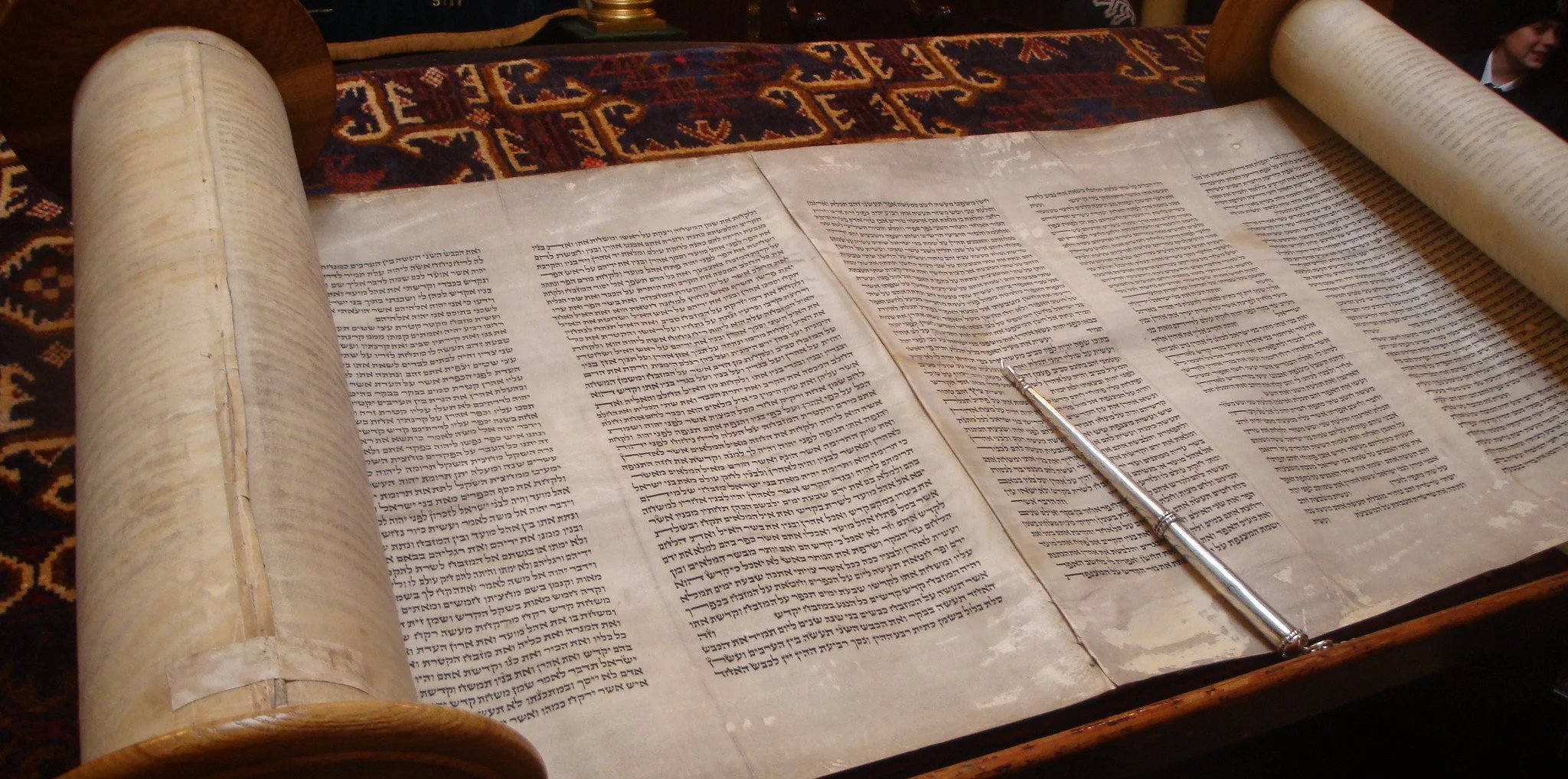
Moses and the Prophets
The phrase "Moses and the prophets" is foundational to Christian theology as a whole, not a sporadically used term. It is used in the New Testament to signify the entire Hebrew Scriptures (the Old Testament) and establish that the whole of this sacred text foretells and supports the coming of Jesus as the Messiah.
This idea is most explicitly and frequently articulated in the New Testament by Jesus and the early apostles.
Key Biblical instances
Luke 24:27: After his resurrection, Jesus explains to two disciples on the road to Emmaus, "beginning with Moses and all the Prophets," how all the scriptures concerned him.
Luke 24:44: Jesus reiterates this point to a larger group of disciples, stating that "everything written about me in the Law of Moses and the Prophets and the Psalms must be fulfilled".
Luke 16:29, 31: In the parable of the rich man and Lazarus, the character Abraham tells the rich man that his brothers have "Moses and the Prophets" and should listen to them. This emphasises the sufficiency of the Old Testament scriptures to provide all necessary instruction for a righteous life.
John 5:46: Jesus confronts Jewish leaders, stating, "If you believed Moses, you would believe me, for he wrote about me".
The phrase and concept of "Moses and the prophets" appear in several other strategic places in the Book of Acts to support the message of Jesus. It is a recurring rhetorical and theological framework used by the apostles to demonstrate that Jesus is the fulfilment of the Hebrew scriptures.
This framework is utilised in several key instances:
In Peter's sermon (Acts 3)
Following the healing of a lame man, Peter addressed a crowd, linking Jesus to the Old Testament prophetic tradition. He referenced Moses' prophecy from Deuteronomy 18:15–19, stating that God would raise up a prophet like Moses, and identifying Jesus as the fulfilment of this. Peter also emphasised that all prophets from Samuel onwards had foretold these days.
In Stephen's defence (Acts 7)
During his defence before the Sanhedrin, Stephen recounted Israel's history and echoed Peter's sermon by presenting Moses as a foreteller of Jesus. He quoted Moses saying that God would raise up a prophet like him, and people should listen to him. Stephen used this to connect Jesus to the foundation of Israel's law and contrast the nation's historical rejection of God's messengers with their rejection of Jesus.
In Paul's testimony before King Agrippa (Acts 26)
Paul defended his beliefs before King Agrippa II and Festus by explaining that his teaching was rooted in Jewish scriptures. He stated that he was saying nothing beyond what the Prophets and Moses had said would happen concerning the Messiah's suffering and resurrection, who would bring light to both Jews and Gentiles. This demonstrated that his gospel was in harmony with Old Testament expectations.
In Paul's preaching in Rome (Acts 28)
While under house arrest in Rome, Paul continued to preach to Jewish leaders. He attempted to convince them about Jesus by reasoning from both the Law of Moses and the Prophets, showing the consistency of the Christian message with Jewish tradition.
Broader theological significance
The Sadducees only accepted the Torah, the writings of Moses as authoritative. This group were the political leaders in Israel at the time of Jesus and the early church, They did not accept that there would be any resurrection and that this world was all that mattered. Hence the importance that The doctrine of the resurrection and of a messiah are found in the torah as well as the whole Talmud.
Beyond these specific verses, the concept of "Moses and the prophets" serves as a key interpretive framework for reading the Old Testament in a Christ-centred way. It is a theological conviction that runs throughout Christian history and is frequently cited in sermons, theological texts, and catechisms to prove Jesus's identity.
In summary, the phrase and the concept it represents are not used "often" in the sense of a casual expression, but rather are central and repeatedly emphasized within the Bible and in the continuous theological tradition of Christianity.