God’s ‘Son’ in the Old Testament
Christian’s claim that there is a great unity between the Old and New Testaments. Christians also claim that the Messiah is the divine Son of God. Is this what the Old Testament teaches also?
Many Jews in Jesus’ time were actively looking for a Messiah, primarily expecting a political and military liberator descended from King David who would free Israel from Roman occupation, restore national sovereignty, and usher in an era of peace. These views were based on many Old Testament prophecies. Multiple ancient Hebrew manuscripts containing messianic prophecies were found in the Qumran caves (commonly associated with the Essenes), most notably the Great Isaiah Scroll and several Sectarian Anthologies specifically compiled to track messianic predictions. Because the "books" of that era were written on animal skins or papyrus and rolled into scrolls, archaeologists found thousands of fragments rather than modern bound books.
The most important discoveries regarding messianic prophecy from the manuscripts found in the Qumran caves include:
The Great Isaiah Scroll
Discovered in Cave 1, this is the most famous, complete, and well-preserved biblical scroll found at Qumran. It contains the entire Book of Isaiah from the 1st or 2nd century BC - long before the birth of Jesus. It contains major messianic passages, including the virgin birth prophecy (Isaiah 7:14), the "Prince of Peace" passage (Isaiah 9:6–7), the "Branch of Jesse" (Isaiah 11), and the highly detailed "Suffering Servant" prophecy of Isaiah 53. There is therefore no doubt that these prophecies are unchanged.
2. The Messianic Anthology
Found in Cave 4, this is a single sheet of leather containing a meticulously compiled list of Old Testament texts that the Essenes believed pointed to the end times and future messianic figures.
It grouped together critical proof-texts, including the "Prophet like Moses" (Deuteronomy 18:18–19), the Royal Sceptre prophecy (Numbers 24:17), and Joshua’s curse. It explains what the community was looking forward to.
3. The Florilegium
This manuscript is a commentary that joins various Old Testament verses to explain the arrival of the Messiah. It explicitly links 2 Samuel 7:11–14 (the Davidic Covenant) with the "Branch of David" who will arise with the "Interpreter of the Law" to save Israel in the last days.
4. The Pierced Messiah Text / War of the Messiah
These fragments describe a great end-times battle led by a figure called the "Leader of the Congregation”. It references Isaiah 11 and speaks of a Messianic figure from the line of David. These suggest that this community actually expected two distinct Messiahs: a ‘Messiah of Aaron’ (a priestly saviour who would purify worship) and a ‘Messiah of Israel’ (a royal, Davidic military leader who would overthrow Rome).
Old Testament Passages Used by Jews with Messianic Expectations
First-century Jewish expectations drew from several key Old Testament (Hebrew Bible) passages that spoke of a royal, conquering deliverer:
2 Samuel 7:12–16 (The Davidic Covenant): God’s promise to King David that his house and kingdom would be established forever. This formed the bedrock for anticipating a royal descendant (the ‘Son of David’) to rule Israel.
Isaiah 9:6–7: Prophesied a child born to sit on David's throne, ruling with justice and righteousness as the "Prince of Peace.”
Isaiah 11:1–5: Described a "shoot from the stump of Jesse" (David’s father) endowed with the Spirit of the Lord who would judge the poor with righteousness and strike down the wicked.
Numbers 24:17: The prophecy of Balaam mentioning that ‘a star will come out of Jacob and a sceptre will rise out of Israel’, which was interpreted in a royal, martial sense.
Daniel 9:25–26: Spoke of an ‘anointed one’ (Messiah) cut off at a specific historical timeframe, contributing to intense first-century urgency and calculation about the end of foreign oppression.
Psalm 2:2–9: Depicted God's anointed king ruling over the nations with an ‘iron sceptre’ and shattering opposing earthly powers.
It is therefore hard to understand how modern Judaism, tries to interpret these prophecies only in an ancient historical context about Israel and not in terms of God’s Messiah. History suggests that this was not how Jews used to think. The modern view seems to be in response to Christian claims that these prophecies do predict Jesus,
New Testament and early church use of these passages about God’s Son
1. Psalm 2:7, 12 - The psalm describes God scoffing at the nations who have rejected his rule. It says of God’s chosen king,
“You are my son; today I have become your father,”
It later warns onlookers to “kiss the son” or risk his anger. This is the most direct ‘son’ language applied to a royal, anointed figure in the whole Hebrew Bible.
This is the Old Testament ‘son’ text that the New Testament writers lean on most, and it's used in several distinct ways:
Hebrews 1:5 — quotes it directly as part of a chain of OT citations proving the Son's superiority to angels: "You are my Son; today I have become your Father." The author treats this as spoken by God directly to the Son, applying royal enthronement language to Christ's exalted status.
Acts 13:33 — Paul, preaching in Pisidian Antioch, quotes the same line and explicitly ties it to the resurrection: he says God has fulfilled this promise by raising Jesus, and specifically identifies the "today" of Psalm 2:7 with the resurrection event, not Jesus's eternal existence or his birth.
Hebrews 5:5 — quotes Psalm 2 again, this time to establish Christ's qualification for a priestly role, pairing it with Psalm 110:4 ("You are a priest forever, in the order of Melchizedek").
Acts 4:25–26 — the early church, in prayer, quotes the surrounding verses of Psalm 2 (about nations raging against the Lord and his anointed) and applies them to the conspiracy of Herod, Pilate, the Gentiles, and Israel against Jesus at the crucifixion — reading the whole psalm as being about the Messiah, not just the ‘son verse.
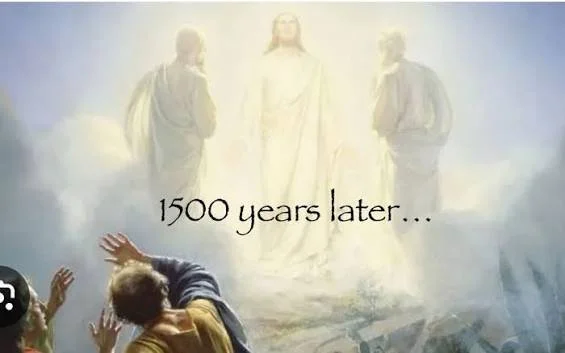
Matthew 3:17 / Mark 1:11 / Luke 3:22 (baptism), and Matthew 17:5 (transfiguration) In all these passages the voice from heaven said,
“This is my Son, whom I love, with him I am well pleased.”
This is widely recognised as echoing the language of Psalm 2:7, blended with Isaiah 42:1's language about God’s servant, ‘in whom I delight’. This is a clear intentional echo at two of the most theologically loaded moments in the gospels.
So the New Testament writers apply Psalm 2:7 directly to Jesus, and they tend to anchor its fulfilment at specific events, his baptism, transfiguration, resurrection, and ascension, rather than treating it as describing Jesus's eternal pre-existence.
2. 2 Samuel 7:14
God's promise to David regarding his descendant/heir:
“I will be his father, and he will be my son.” 2 Samuel 7:14
The immediate context is about Solomon and the Davidic dynasty but it goes on to give an eternal meaning that is beyond the Kings of Israel saying:
“Your house and your kingdom will endure forever before me; your throne will be established forever.” 2 Samuel 7:16
These are where this prophecy is repeated in the New Testament:
Hebrews 1:5 — quotes 2 Samuel 7:14 in the very same breath as Psalm 2:7, as the second half of a parallel pair: "I will be his Father, and he will be my Son." The author of Hebrews reads the original Davidic covenant promise as finding its true referent in Christ, the final and greater Son of David.
Luke 1:32–33 — This is not a direct quotation, but Gabriel's announcement to Mary reads
“He will be great and will be called the Son of the Most High. The Lord God will give him the throne of his father David, and he will reign over Jacob’s descendants forever; his kingdom will never end.”
Mary’s son will be given the throne of his father David and will reign forever; this is a clear allusion to the eternal-dynasty language of the 2 Samuel 7 covenant, applied to Jesus as its ultimate fulfilment.
2 Corinthians 6:18 says:
“‘I will be a Father to you, and you will be my sons and daughters,’
says the Lord Almighty.”
Paul actually applies the same phrase "I will be a Father to you" not just to Christ individually, but collectively to all believers, blending it with covenant promises from Isaiah and Ezekiel to describe the church's relationship to God. This shows that the New Testament writers didn't treat ‘son of God’ language as exclusively about Jesus but in modified form, to describe the adopted sonship for all those who are ‘in Christ’
3. Isaiah 9:6
This prophecy says:
“For to us a child is born, to us a son is given, and the government will be on his shoulders. And he will be called ‘Wonderful Counselor, Mighty God, Everlasting Father, Prince of Peace.’”
A child is described as being born, a son given, with titles including "Mighty God" and "Everlasting Father," and a throne that will last forever.
The New Testament never directly quotes Isaiah 9:6 as a fulfilment reference to Jesus. Matthew, however, who loves to say, ‘this was to fulfil what was spoken’, does quote the surrounding material. Thus Matthew 4:15–16 quotes Isaiah 9:1–2 ("the people living in darkness have seen a great light") to explain why Jesus based his ministry in Galilee but stops short of quoting verse 6 itself. It is frequently seen in the New Testament that the apostles use quotes from the Old Testament when the adjacent verses explain their meaning.
The famous titles, ‘Mighty God,’ ‘Everlasting Father,’ ‘Prince of Peace’, are applied to Jesus constantly in later Christian theology, liturgy, and popular use. ‘Handel's Messiah’ is a famous example.
However this passage was frequently used by the early church.. Justin Martyr cited it in his Dialogue with Trypho as part of his argument for Jesus' identity as the child born who would bear the government on his shoulder. Irenaeus followed Justin in reading ‘government upon his shoulder’ as a prophecy of Christ's cross, and interpreted ‘Angel of Great Counsel’ (the Septuagint's rendering) to be about Jesus. Tertullian cites the passage in three of his works, echoing the same idea that he ‘shouldered’ our sin on that ‘cross’, a reading also found in Justin and Irenaeus
4. Proverbs 30:4
Towards the end of the book of Proverbs Agur poses a rhetorical question: who has established the ends of the earth:
“Who has gone up to heaven and come down? Whose hands have gathered up the wind? Who has wrapped up the waters in a cloak? Who has established all the ends of the earth? What is his name, and what is the name of his son?
He asks what God’s name is, and ‘what is his son's name, if you know it?’ Here the Hebrew Bible directly talks about a ‘son’ of God himself, rather than about a king. This passage is often cited as an intriguing, almost prophetic rhetorical question implying a divine son whose identity would later be revealed. Augustine directly applied the phrase to Christ as being God’s Son,
5. Daniel 3:25
In the account of the fiery furnace, Nebuchadnezzar sees a fourth figure in the fire, whose appearance he describes as like ‘a son of God’. The Hebrew phrase, bar-elahin, is ambiguous and could either mean ‘the Son of God’ in a Christian trinitarian sense or ‘a son of the gods. Most modern translations, including the NIV, actually render it ‘a son of the gods,’ reflecting this uncertainty.
However this passage does clearly teach that God himself intervened in human form in support of his faithful people. He similarly spoke face to face with Adam in the Garden of Eden after he disobeyed, and with Abraham and Moses. The Bible teaches that he is not a distant God but longs to have a relationship with his created people. How different this God is compared with that of Islam.
The early church recognised this figure in Daniel 7 to be referring to Jesus. Irenaeus (Against Heresies I.5.2) identifies the figure with ‘the Son of God’; Tertullian (Against Marcion 4.10 and 4.21) joins Daniel 3:25 with Daniel 7:13, reading ‘Son of Man’ in both, saying that it was Jesus who saved the three young men. Hippolytus went further, addressing Nebuchadnezzar directly and asking him, after he had seen the Son of God, to confess him as such. Later this understanding was shared by Augustine and Hilary.
Summary
The New Testament writers were selective and specific, not broadly sweeping through every Old testament ‘son’ text as fulfilled prophecy. They concentrated almost all their explicit focus on Psalm 2:7 and 2 Samuel 7:14. They used them primarily to argue for Jesus's enthronement and exaltation as the true Davidic king, the Messiah, who was also the Son of God.
This is not an abstruse theological discussion. Our eternal destiny depends on how we treat God’s Son. To reject his rule will have disastrous consequences:
“Serve the Lord with fear and celebrate his rule with trembling. Kiss his son, or he will be angry and your way will lead to your destruction, for his wrath can flare up in a moment. Blessed are all who take refuge in him.” Psalm 2:11-12
The New Testament shares this warning:
“ If anyone acknowledges that Jesus is the Son of God, God lives in them and they in God.” 1 John 4:15
“Whoever believes in the Son has eternal life, but whoever rejects the Son will not see life, for God’s wrath remains on them.” John 3:36
BVP
Bernard can be contacted by e-mail on berniepalmer1@sky.com
Christchurch Baldock is a Bible teaching, gospel centred, local church. More details can be found on its website. It meets every Sunday morning at 10.30 am in Knights Templar School, Baldock