
God’s people, whether the Jews or the Christians have always tended to drift away from being the people God requires and go their own way. As we live in mixed societies we tend to compromise in the way that we live, so that God’s priorities are not really ours. We do live in a non-Christian world and we so easily become immersed in this. There is a magnetic pull drawing us to worldly ways of living and worldly values, to spend our time and our money as they do. The exclusivity of the gospel gets forgotten because what God has told us in his Scriptures is no longer talked about. Our teachers, pastors, ministers or elders are too often ‘shepherds who lack understanding; they all turn to their own way, each seeks his own gain.’ (Isaiah 56:11). Today many who claim to be Christians are so involved in serving their own gods, their careers, their hobbies or even their families and friends that they have become compromisers about God’s priorities. God’s people have been created so that others can recognise the rule of Jesus and hear the gospel about how they too can be saved. If we do not have this as the overriding priority in life we have become compromisers. A recent study of Christians in Bible teaching churches has shown that 80 per cent of us did not explain the gospel or invite someone to come and hear the gospel over six months. To be in the 20 per cent you only had to do this once in the six months!
This warning is a frequent theme of Jesus’ teaching. Luke records what Jesus said elsewhere:
“No one can serve two masters. Either you will hate the one and love the other, or you will be devoted to the one and despise the other. You cannot serve both God and money.” Luke 16:13
John Stott wrote this in his commentary, ‘The Sermon on the Mount’,
“Some people blindly assure us that it is perfectly possible to serve two masters simultaneously for they manage it very nicely themselves. Several possible arrangements and adjustments appeal to them. Either they serve God on Sundays and mammon on weekdays, or God with their lips and mammon with their hearts, or God in appearance and mammon in reality, or God with half their being and mammon with the other half - a popular compromise solution which Jesus says is impossible.”
God can only be served with an exclusive total devotion to himself whilst we work in secular jobs or in our homes. To try to share our loyalty to him demeans him. If God is God, then he is Lord of all. We are here to be concerned for his name, his reputation. We cannot compartmentalise our lives and serve the living Lord with just part of us and serve another substitute god with another part. This is spiritual schizophrenia. Such thinking may fool some, but it certainly does not fool God.
The other extreme are the separatists. They enjoy having like-minded friends in their church and enjoy singing hymns and even praying together. To them, losing their faith and the faith of their children becomes the priority so they only meet with fellow believers. They feel safer that way and after a while feel uncomfortable mixing with others who do not share their beliefs. They would never go to a pub, nor would they eagerly get involved in secular sports societies. In such isolation they feel safer from corruption but the problem is that they become utterly useless for the Lord. In the early church becoming a hermit, living isolated in a cave, carried the reputation of being ‘spiritual’. Such sacrificial living may have led to the admiration of others but such people were no use to God. God wants his people to be for the good of the nations, of all people.
Abraham
In the Biblical narrative, God told Abraham that he would be made into a ‘great nation,’ but this blessing was designed for a global purpose. God indicates that his descendants would be the means of passing on God’s blessing to others.
“ . . .and you will be a blessing.” Genesis 12:2
This core promise is repeated three times, in Genesis 12:3, Genesis 18:18, and Genesis 22:18:
“And all peoples on earth will be blessed through you”.
This promise is understood to mean that the salvation of all nations would come through Abraham’s ‘seed’ (offspring), the Messiah Jesus who entered this world as a Jew. However it also suggests that it is through God’s people that others will be blessed.
This promise meant that while Abraham's descendants would have a special relationship with God, their existence was intended to bring spiritual blessing, knowledge of God, and redemption to the rest of the world.
Abraham's descendants, Israel, were meant to be a "light to other nations," modelling righteousness and justice.
‘A kingdom of priests’ first appears in the Bible in Exodus 19:6, where God promises Israel they will be ‘a kingdom of priests and a holy nation’ if they keep His covenant. This concept represents a community set apart to mediate between God and the rest of the world.
Moses
Moses understood that Israel was to be a ‘holy nation’, set apart to showcase God's power and character to the world.
Moses argued that God should spare Israel so His reputation would not be ruined among the nations, acknowledging that Israel's existence served a broader, global purpose in showing God's strength.
God defines Israel’s global identity to Moses as being his ‘priests’. A priest acts as a mediator between God and people; a ‘kingdom of priests’ implies the entire nation was meant to mediate God's presence to the rest of the world:
“Now if you obey me fully and keep my covenant, then out of all nations you will be my treasured possession. Although the whole earth is mine, you will be for me a kingdom of priests and a holy nation.” Exodus 19:5-6
Moses explicitly instructs the people that keeping God's laws will serve as a direct display of God’s wisdom and righteousness to surrounding societies:
“Observe them carefully, for this will show your wisdom and understanding to the nations, who will hear about all these decrees and say, 'Surely this great nation is a wise and understanding people.' What other nation is so great as to have their gods near them the way the Lord our God is near us…?" Deuteronomy 4:6-8
When God threatened to destroy Israel for making and worshipping a Golden Calf, Moses intervened arguing that Israel's destruction would cause other nations to misinterpret God's character and intentions:
"Why should the Egyptians say, 'It was with evil intent that he brought them out, to kill them in the mountains and to wipe them off the face of the earth’?" Exodus 32:12
Similarly, when the Israelites rebelled against the leadership of Moses and Aaron God thought of again destroying his own people.
"Moses said to the Lord, 'Then the Egyptians will hear about it! . . . If you put all these people to death, leaving none alive, the nations who have heard this report about you will say, 'The Lord was not able to bring these people into the land he promised them. . .’” Numbers 14:13-16
The Lord has always wanted his people to represent him faithfully.
Psalms
The Hebrew words for "nations" and "peoples" appear frequently in the Book of Psalms reflecting the Psalter's focus on God's sovereignty over the world. These are the primary words used to show that the concern of God is clearly to draw all people to himself. ‘Goyim’ means ‘nations’ or ‘Gentiles’ and comes 91 times in the Psalms. It usually refers to politically distinct pagan nations, ‘Ammin’ means ‘peoples’ and comes 85 times and is often used more universally to describe all human groups as they relate to God.. ‘Le’umim’ means ‘nations’ or ‘peoples’ and is found 24 times and Er’etz means ‘earth’ or ‘land’ and comes 188 times in the Psalms. Le'umim is a distinctly poetic term for people of other nations. Of its 35 total appearances in the Old Testament, nearly 70% are found within the Psalms.
One example of how the psalmists understand that the heart of God is for all people, whatever their creed or nationality, is Psalm 67.
1 May God be gracious to us and bless us
and make his face to shine upon us,
2 that your way may be known on earth,
your saving power among all nations.
3 Let the peoples praise you, O God;
let all the peoples praise you!
These opening verse adapt the priestly blessing found in Numbers 6:24-26. There the congregation prays that God’s saving power may be known throughout the world
4 Let the nations be glad and sing for joy,
for you judge the peoples with equity
and guide the nations upon earth.
5 Let the peoples praise you, O God;
let all the peoples praise you!
The psalmist is praying when the Lord’s rule, his judgment, will one day extend to the whole world.
6 The earth has yielded its increase;
God, our God, shall bless us.
7 God shall bless us;
let all the ends of the earth fear him!
This psalm clearly teaches that all peoples will come to ‘fear’ the one true God.
Isaiah
In the Book of Isaiah, a concern for the nations appears even more prominently than in the Psalms. Isaiah is widely considered the most globally minded book of the Old Testament.
The primary Hebrew words for nations, gentiles, and the earth occur at remarkably high frequencies:
Goyim (Nations/Gentiles): ~94 times.
'Ammim (Peoples): ~45 times.
Le'umim (Nations/Peoples): ~13 times.
Er'etz (Earth/Land): ~311 times.
Isaiah uses these words more than any other book in the Hebrew Bible, constantly inferring that God is concerned for people of all nations. In Isaiah, the Gentile nations are not merely an afterthought or an enemy to be destroyed; they are a primary focus of God's redemptive plan. While Isaiah details judgments against foreign empires, the book's overarching theme is that God intends to reconcile, heal, and gather all the nations of the earth to Himself.
1. The temple is for all people
“In the last days the mountain of the Lord’s temple will be established as the highest of the mountains... and all nations (goyim) will stream to it.” Isaiah 2:2–3
God’s ultimate purpose is for people from all ethnic backgrounds, from all over the world, to worship Him. His temple will be the focus of this worship. This is explained by Jesus who said about himself:
“Jesus answered them, ‘Destroy this temple, and I will raise it again in three days.’ They replied, ‘It has taken forty-six years to build this temple, and you are going to raise it in three days?’ But the temple he had spoken of was his body.” John 2:19-21
Jesus is now the focus for prayer, forgiveness, purpose, peace and joy.
2. A Light to the Gentiles
“It is too small a thing for you to be my servant to restore the tribes of Jacob... I will also make you a light for the Gentiles (goyim), that my salvation may reach to the ends of the earth.” Isaiah 49:6
This confirms what God’s intention for his people has always been. God explicitly states that saving Israel alone is ‘too small’ a project for Him. Israel's core Messiah-bearing vocation was always intended to bring the light of the gospel to all people.
3. The Global Banquet
“On this mountain the Lord Almighty will prepare a feast of rich food for all peoples (‘ammim).. . . He will destroy the shroud that enfolds all peoples, the sheet that covers all nations (goyim).” Isaiah 25:6–7
God acts as a host to the entire planet, promising to destroy the universal ‘shroud’ of death and spiritual blindness for every nation, not just Israel.
4. The Inclusion of Foreign Worshippers
“These I will bring to my holy mountain and give them joy in my house of prayer... for my house will be called a house of prayer for all nations (‘ammim)." Isaiah 56:7
Foreigners, who bind themselves to God, are promised full, equal access to His presence. Jesus famously quoted this verse when cleansing the temple.
5. Sending Missionaries to the Distant Coastlands
“I am coming to gather all nations (goyim) and tongues, and they will come and see my glory... They will proclaim my glory among the nations.” Isaiah 66:18–19
In the book Isaiah’s climax, God elects survivors from the nations to go to distant shores—places that ‘have not heard my fame” - to evangelise the rest of the earth on His behalf.
2 Chronicles emphasises that the new temple would be for all people
The book of Chronicles retells the history of God’s people and of the temple to emphasise God’s love is for all people. Solomon’s magnificent temple was destroyed in 586BC when the Babylonians captured and destroyed Jerusalem. When some Jews returned under Zerubbabel a poor imitation temple was built.
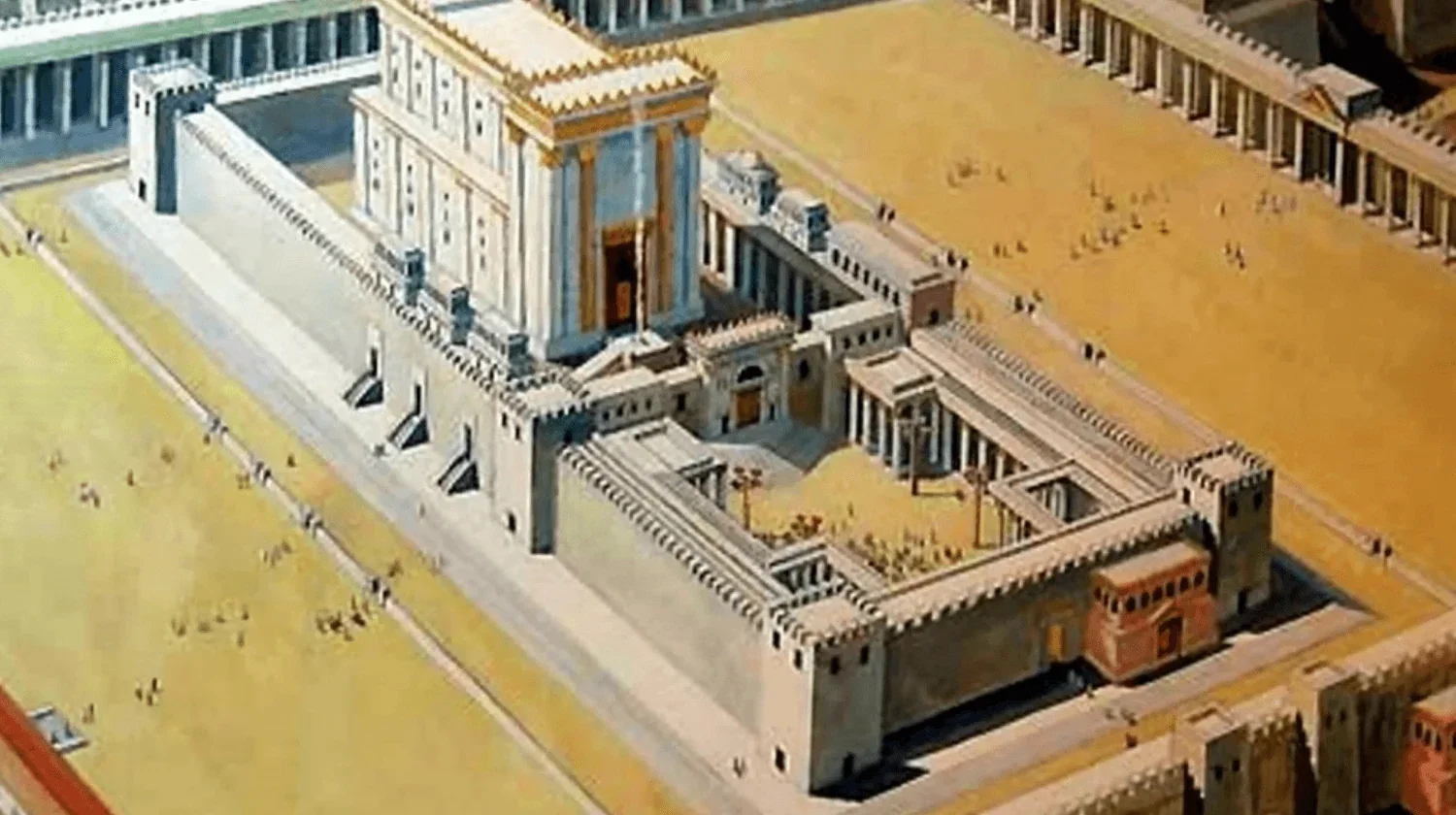
Solomon’s magnificent temple
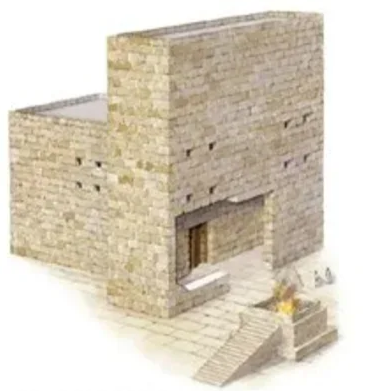
Zerubbabel’s temple
The chronicler was not trying to make the returned Jews feel sad at what they had lost but rather to look forward to that which was to come. It is writing a job description for a future King, God’s Messiah, who, at great cost to himself, would build an even greater temple that would be ‘for the sake of God’s name among the nations’.
The Temple was built for ‘God’s name among the nations’
When Solomon built the magnificent temple in Jerusalem, it was not done for him but for the reputation of the one God who made and controls his world.
“Solomon gave orders to build a temple for the Name of the Lord and a royal palace for himself.” 2 Chronicles 2:1
What mattered most to Solomon was ‘the name of the Lord’. It was not to be named ‘Solomon’s temple’ or ‘Solomon’s Tower’ but the ‘Temple of the Lord’. Solomon longed to promote the reputation of the Lord among all people and all nations.
He gathered a large workforce, more than 150,000 men. In spite of this he still asked what was needed so Solomon wrote to a neighbouring Gentile king for help:
“Solomon sent this message to Hiram king of Tyre:
“Send me cedar logs as you did for my father David when you sent him cedar to build a palace to live in. Now I am about to build a temple for the Name of the Lord my God and to dedicate it to him for burning fragrant incense before him, for setting out the consecrated bread regularly, and for making burnt offerings every morning and evening and on the Sabbaths, at the New Moons and at the appointed festivals of the Lord our God. This is a lasting ordinance for Israel.” 2 Chronicles 2:3-4
Solomon politely reminds Hiram of the friendly relationship Phoenicia had with King David, his father. However the purpose of the temple is to promote the reputation of God. He gives four aspects of the purpose of the temple:
It will be a place to pray. This is represented by the burning of incense.
It will remind people how God provides for his people. This was the purpose of the 12 loaves of show-bread. They were a reminder about how God provided for the physical needs of the 12 tribes as they travelled through the wilderness.
It will be a place of pardon for sin. Twice a day burnt offerings were to be made to God so that he would accept and live with a sinful people.
To be a site for celebration - feasts and festivals were to be a mark of God’s people, they were meant to enjoy the presence of God with them.
These four purposes were not to be just for the Israelites exclusively. When the Ark of the Covenant’, that represented God’s presence with his people, was moved to the temple in Jerusalem, the intention of God was that this temple was to be for God’s glory ‘among the nations’.
Chronicles centres on the temple. Like a magnificent magnet, its purpose was to draw in the nations, so that people of all nations might come to see the depths of God’s love for them.
Solomon must have been tempted to compromise his commitment to the Lord when asking Hiram for help. It would have been so easy to say what Hiram wanted to hear but there is no hint of minimising the Lord’s standing in order to appear more attractive:
“The temple I am going to build will be great, because our God is greater than all other gods. But who is able to build a temple for him, since the heavens, even the highest heavens, cannot contain him? Who then am I to build a temple for him, except as a place to burn sacrifices before him?” 2 Chronicles 2:5-6
In those days deities powers tended to be limited to geographical areas. However Israel’s God is creator of all the world and all people. Solomon rejects the notion that he can be compared in any way to other deities. Local temples contained their local gods but how could the creator of the universe ever be contained or catered for? Other kingdoms used temples to display that kingdom’s worth but Solomon’s attitude is very different. He knows he is unworthy, this temple was to be for God’s glory.
Solomon recognises that no building is worthy of his Creator but all he does for the Lord must be excellent because the Lord is so great and is excellence himself:
“ . . . because the temple I build must be large and magnificent.” 2 Chronicles 2:9
Jesus, God’s Chosen King, did indeed come to both be the true temple of God and to establish God’s people as his temple. On the cross the body of God’s temple was destroyed so that the body of his church might be built up. This final temple will not be built of precious stones but of precious people - people won for God at great cost to himself.
Some years ago my family went on a cheap holiday to Rome. We visited many of the ancient churches and basilicas in that city. When I mentioned another church, my youngest son Andrew would repeatedly remind us all,
“That is not a church, it is a church building”.
How right he was - the church is the people of God. Our purpose is to represent our Lord among the nations and we do this both by the way we live and by what we say about the Lord Jesus and his gospel, to draw others from all groups into God’s family.
Day by day God’s people fulfil what the temple typified. We pray for the lost and their needs. We remember how God has provided for our every need and especially for his becoming the ultimate sacrifice for our sin. Day by day we share with others the news about our Saviour. We also celebrate together, both to encourage each of us and to help others see how much the Lord means to us.
Just as the temple was built for God’s name among the nations, so is his church. Hiram replied:
“Hiram king of Tyre replied by letter to Solomon:
“Because the Lord loves his people, he has made you their king.”
And Hiram added:
“Praise be to the Lord, the God of Israel, who made heaven and earth! He has given King David a wise son, endowed with intelligence and discernment, who will build a temple for the Lord and a palace for himself.’” 2 Chronicles 2:11-12
We do not know if Hiram was truly converted but the Chronicler obviously wants us to recognise that god is for all people. Later we read of how the Queen of Sheba came up to Jerusalem, having recognised the wisdom of the one true God. The ‘Chiasm’ structure of the first 9 chapters of 2 Chronicles makes the point that both this God and this temple was for all nations:
1:1-17 Solomon’s wealth and wisdom came from God
2:1-18 International recognition of Israel’s God and willingness to be involved
3:1-5:1 Building the temple with international help
5:2 - 7:22 Temple filled by God and dedicated to him
8:1-16. Building the temple with international help
8:17 - 9:12 International recognition of Israel’s God and willingness to be involved
9:13-28. Solomon’s wealth and wisdom came from God
Hiram was the ruler of a polytheistic nation but here he recognises that Jahweh, Israel’s God is the supreme over all. He submits to Solomon’s superior wisdom and accepts that God clearly loves his people for giving them a ruler like this.
For Christians it is our King who is so attractive and compelling and he passes some of this attractiveness on to his people. Hopefully those who are not Christians notice the warmth, caring and purpose seen in our churches. This all comes because we have a mindset that we live for the Lord who is Lord of all people and who have grasped:
“He died for all, that those who live should no longer live for themselves but for him who died for them and was raised again.” 2 Corinthians 5:15
Hiram was drawn to Solomon because he saw in him because he recognised in him a concern for the reputation or name of Yahweh, just as today many people turn to Christ because of the caring attractiveness of his people.
This record of the building of the temple differs from that in the book of Kings. The details given in chronicles have significance. Hiram said:
“I am sending you Huram-Abi, a man of great skill, whose mother was from Dan and whose father was from Tyre. He is trained to work in gold and silver, bronze and iron, stone and wood, and with purple and blue and crimson yarn and fine linen. He is experienced in all kinds of engraving and can execute any design given to him. He will work with your skilled workers and with those of my lord, David your father.” 2 Chronicles 2:13-14
Why are we given the details about Huram-abi’s family. He was a Gentile, his father was from Tyre, a Phoenician city. His mother was from the tribe of Dan. When Moses was looking for experts to build the tabernacle he chose Bezalel of Judah and Oholiab of Dan (Exodus 35:30 - 36:1). What an interesting parallel that the two experts were related to the tribe of Dan. Yes Hurum-abi was a Gentile. The temple was not only ‘for the nations’, but was also partly built by people from other nations.
The Chronicler is saying that the King we are waiting for will not only honour God internationally but will include people of all nations to build his temple. Who would be the actual builders of Solomon’s temple? In verse 1 of this chapter we read that Solomon conscripted 153,600 men to build the temple. Look at the interesting detail the chronicler gives now us.
“Solomon took a census of all the foreigners residing in Israel, after the census his father David had taken; and they were found to be 153,600. He assigned 70,000 of them to be carriers and 80,000 to be stonecutters in the hills, with 3,600 foremen over them to keep the people working.” 2 Chronicles 2:17-18
These men were all foreigners! The temple would be built by Gentiles because it is for all people.
Tragically this perspective was to change and the message of inclusion became one of exclusion. God’s people have always had a tendency to become inward looking and separatists and this has certainly happened to Judaism. When excavating in the temple area, archeologists found a stone that had written in Greek, so all visitors could understand these words:
“No foreigner is to enter within the balustrade around the temple and enclosure. Whoever is caught will himself be responsible for his ensuing death.”
When Jesus arrived, the King that the Old Testament had been looking forward to, he tried to redress such erroneous teachings. He included in his disciples those who were not considered the ideals, Galileans, a tax collector and two Zealots including Judas Iscariot, who was to betray Jesus. The name Iscariot is derived from the Sicarri, an underground group of zealots at the time that carried out assassinations on Roman officials. He went out of his way to visit Gentile areas. He significantly went up to Tyre in Phoenicia as well as to the Roman area of Decapolis. Paul emphasised this aspect of Christ’s ambition, to unify Gentiles and Jews:
“His purpose was to create in himself one new humanity out of the two, thus making peace, and in one body to reconcile both of them to God through the cross, by which he put to death their hostility. He came and preached peace to you who were far away and peace to those who were near. For through him we both have access to the Father by one Spirit.” Ephesians 2:15-18
We Gentiles are no longer strangers but are being built together into a temple for our Lord with all its beauty and diversity
I am very grateful to the Rev Andy Palmer, Senior Minister of Christchurch Balham for much of this material on 2 Chronicles chapter 2 given in a sermon in that church.
The New Testament Writers
The New Testament writers saw the expansion of the early Church to the Gentiles not as a new idea, but as the direct fulfilment of Old Testament prophecies. They routinely quoted Isaiah to defend their global mission against critics who believed God's focus was strictly on Israel.
Jesus is now the temple of God
Jesus taught that he was the new, true temple of God, replacing the physical temple in Jerusalem as the place where God dwells among his people. Jesus referred to the temple of his body, declaring,
“Destroy this temple, and in three days I will raise it up,” John 2:19-21
The temple originally represented the dwelling place of God's presence. When Jesus was born, he became the new location of God's presence on earth. Jesus indicated he was now the temple and the only place where people can encounter God and his forgiveness for our sin. He said that he was:
“ . . . one greater than the temple.” Matthew 12:6
Just as the temple facilitated access to God, Jesus makes God fully accessible, removing the need for a physical, separated, ‘Holy of Holies’. The thick dividing curtain that separated God from his people was torn in two when Jesus died. His death opened access to God for all people. Jesus' claim to be the temple also affirmed his divine authority, such as his right to forgive sins, an action previously associated with the temple and the sacrificial system.
Christians are now the temple of God.
According to the New Testament, Christians are called the temple of God because the Holy Spirit of God now lives in them.
“Don’t you know that you yourselves are God’s temple and that God’s Spirit dwells in your midst?” 1 Corinthians 3:16
“Do you not know that your bodies are temples of the Holy Spirit…?” 1 Corinthians 6:19
Peter taught that Christians are all part of this temple, the house of God
“. . . you also, like living stones, are being built into a spiritual house to be a holy priesthood, offering spiritual sacrifices acceptable to God through Jesus Christ.” 1 Peter 2:5
God has now transferred his holy presence from a physical building to a community of believers. God's Spirit lives directly in believers, making their bodies sacred space. Christians are spiritually united to Jesus, who is the original and ultimate temple. God promised to dwell in His people rather than in structures made by human hands.
Jesus offered the final sacrifice, ending the need for a physical temple altar. This is why there is no place for altars in churches as we have no new effective sacrifice to offer, other than the death of christ that he offered ‘once for all time’.
This teaching has several implications. Christians are instructed to honour God with their physical bodies through moral purity. The church must guard its unity, as destroying the community damages God's temple. Worship is no longer tied to a specific geographic location or physical building but is offered wherever Christians are living for Christ.
Use of Isaiah in the New Testament
The New Testament writers frequently use Isaiah to justify including Gentiles in the people of God
Paul’s Mandate to Preach to the Gentiles
God had foreseen that when his Messiah came to earth his ministry would be for all people.
“I will also make you a light for the Gentiles, that my salvation may reach to the ends of the earth.” Isaiah 49:6
When Jewish leaders in Antioch opposed Paul and Barnabas, they boldly preached to the Gentiles. They quoted this verse as a direct, authoritative command from God to take the gospel to non-Jews.
“Then Paul and Barnabas answered them boldly: “We had to speak the word of God to you first. Since you reject it and do not consider yourselves worthy of eternal life, we now turn to the Gentiles. For this is what the Lord has commanded us:
“‘I have made you a light for the Gentiles, that you may bring salvation to the ends of the earth.’” Acts 13:46–47
In the Epistle to the Romans, the Apostle Paul faces a major theological question: How can the Gentile nations be saved if they have never heard of the God of Israel? To answer this, Paul relies heavily on the ‘Suffering Servant’ section of Isaiah (Isaiah 52:13–53:12). While these chapters are famous for predicting Christ's crucifixion, Paul uses them to build a legal and prophetic defence for his pioneering missionary work among unreached nations.
a. Reaching Those Who Have Never Heard
Those ignorant of God will come to understand. Our word ‘pagan’ is now considered perjorative but it is derived from the Latin word ‘pagus’ which simply means village. Similarly our word ‘heathen’ comes from the Anglo-Saxon for heath-men’. These were people who had not had the opportunity to hear the gospel that at first moved around the towns and cities.
“For what they were not told, they will see, and what they have not heard, they will understand.” Isaiah 52:15
Paul uses this verse to define his entire ministry philosophy. He explains that his specific calling is not to preach where churches already exist, but to go to unreached Gentile territories.
“It has always been my ambition to preach the gospel where Christ was not known, so that I would not be building on someone else’s foundation. Rather, as it is written:
“Those who were not told about him will see, and those who have not heard will understand.” Romans 15:20–21
By quoting Isaiah 52:15, Paul proves that God always planned to reveal Himself to people groups who had zero historical or scriptural knowledge of Him.
b. The Tragedy of Human Unbelief
This message from God for all people is crucial:
“Who has believed our message and to whom has the arm of the Lord been revealed?” Isaiah 53:1
In Romans 10, Paul discusses why many people reject the Gospel message. He quotes the very opening line of the Suffering Servant song to show that widespread skepticism and unbelief were explicitly predicted by Isaiah. It shows that human rejection does not mean God’s global plan has failed.
“But not all the Israelites accepted the good news. For Isaiah says, “Lord, who has believed our message?” Romans 10:16
c. How will God’s message spread?
The good news is spread by people travelling around and speaking to people.
"How beautiful on the mountains are the feet of those who bring good news, who proclaim peace . . . ” Isaiah 52:7
Just a few verses before the description of the suffering Messiah, Isaiah describes messengers running across mountains to deliver news of victory. Paul quotes this to establish a logical chain for Gentile inclusion:
“Nations cannot call on a Saviour they do not know. They cannot know Him unless someone preaches to them. No one can preach unless they are sent.” Romans 10:15
Paul uses Isaiah to validate the role of the missionary as a beautiful, prophetic necessity.
Simeon’s Prophecy Over the Baby Jesus
When the baby Jesus was first presented to the temple the elderly prophet Simeon held him in his arms and pronounced that this child was:
“A covenant for the people and a light for the Gentiles.” Isaiah 42:6 & 49:6
In the temple, he praised God using Isaiah's exact vocabulary, declaring that this child would be:
“ . . . a light for revelation to the Gentiles, and the glory of your people Israel.” Luke 2:30–32
God's Purpose was always to Include Foreigners
Jesus was a direct descendant of Jesse, the father of King David. Isaiah said about the Messiah:
“In that day the Root of Jesse will stand as a banner for the peoples; the nations will rally to him.” Isaiah 11:10
In Romans 15, Paul builds a theological legal argument using four Old Testament quotes to prove that Gentiles worshipping God was always the plan. He highlights Isaiah 11 to prove Jesus is the ruler of both Jews and Gentiles.
“And again, Isaiah says, ‘The Root of Jesse will spring up, one who will arise to rule over the nations; in him the Gentiles will hope.” Romans 15:12
Opening the Door of Faith will Bring Justice
The radical new life that Jesus introduced will have ethical and social effects on all societies.
“Here is my servant . . . he will bring justice to the nations... In his name the nations will put their hope.” Isaiah 42:1–4
Matthew quotes this lengthy passage from Isaiah, in full, to explain why Jesus healed crowds indiscriminately. Matthew wanted his Jewish readers to understand that Jesus' ministry was fundamentally designed to extend hope to all people of the world.
There can be no doubt that God’s concern has been and always will be for people of every social class and nation. What a tragedy it is when we forget that the gospel is for the nations and Christians become either compromisers or separatists and consequently fail to pass on this gospel to others. Every Christian should ask themselves, am I reaching out to others outside the church?
BVP