Matthew 8:14-22. Jesus Challenges Us
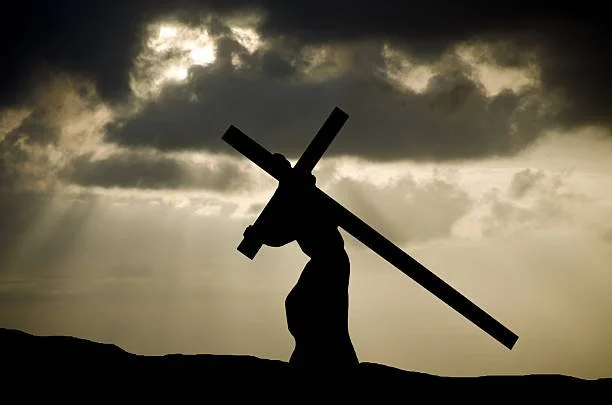
Our hospitals are full, our wards are full, Casualty waiting times are far too long and now the corridors are full. The reason is simple, there are too many patients and too many are going to the hospitals. In Jesus’ time there were hardly any hospitals and healthcare was limited. The ‘Basileias’ was an ancient multi-functional philanthropic and monastic institution in Caesarea Mazaka in Cappadocia, founded in the late fourth century by Basil of Caesarea, after whom it was named. It may have been the first hospital that provided comprehensive services to the wider public in one place, marking a major advance in medical care.
The United Kingdom allocates approximately 11.4% of its Gross Domestic Product (GDP) to total health expenditure, compared to 2.3% to 2.4% of GDP spent on defence and the armed forces. Over the long term, these two figures have shifted significantly. In the mid-1950s, the UK spent around 7.6% of its GDP on defence and just 2.8% on health. Today, health has become the largest single item of public expenditure.
We are pouring money into the black hole of health services but it is still and never will be enough. Yet all too often we face further seemingly impossible problems. Alzheimer's and similar forms of dementia are definitively on the rise in the UK. Driven by an ageing population and better diagnosis, dementia is currently the leading cause of death in the UK, accounting for roughly 1 in 10 deaths. It now claims more lives that heart disease and strokes. More than 980,000 people are estimated to be living with dementia in the UK today. This figure is expected to rise to approximately 1.4 million people by 2040.
We long for someone to do something but no-one seems to be able to help us.
Peter’s mother-in-law has a high fever
Such a scene of hopelessness has always been present. Matthew now records a typical problem:
“When Jesus came into Peter’s house, he saw Peter’s mother-in-law lying in bed with a fever.He touched her hand and the fever left her, and she got up and began to wait on him.” Matthew 8:14-15
Malaria was endemic to the marshy regions near the Sea of Galilee (where Capernaum was located) so this was a possible cause. Because a high fever (referred to as a ‘burning fever’ in the original Greek) was often a debilitating and potentially fatal condition in the ancient world, the sudden nature of the healing underscores the miraculous nature of this healing. What Matthew wants us all to learn is that when a person has been healed by Jesus a response of living for him is always required. Matthew adds:
“. . . and she got up and began to wait on him.” Matthew 8:14
In the Sermon on the Mount, described in the previous three chapters, Jesus taught the people with ‘great authority’. In chapter 8 this authority is shown in practice with Jesus preforming supernatural miracles, a man with leprosy is healed both physically and spiritually, the paralysed centurion’s servant was was healed when the Roman centurion trusted in Jesus. The centurion knew that it is the Word of God that matters:
“But just say the word, and my servant will be healed.” Matthew 8:8
Here Peter’s mother-in law was healed of a dangerously high fever. Note also that Peter was married as most men in those days were.
Many demon possessed came to Jesus
As so often happens, news spreads fast:
“When evening came, many who were demon-possessed were brought to him, and he drove out the spirits with a word and healed all the sick.” Matthew 8:16
This sounds strange to our ears but in those days they associated illness with the power of Satan. Kyphoscoliosis is a disease of the spine yet Dr Luke writes that she had been ‘crippled by a spirit’:
“On a Sabbath Jesus was teaching in one of the synagogues,and a woman was there who had been crippled by a spirit for eighteen years. She was bent over and could not straighten up at all.When Jesus saw her, he called her forward and said to her, “Woman, you are set free from your infirmity.”Then he put his hands on her, and immediately she straightened up and praised God.” Luke 13:10-13
The wording Jesus used is interesting, he suggests she has been ‘bound by Satan’ and that he is freeing her.
There were many witnesses to these remarkable miracles. How different this is to modern healers who are extremely reticent to reveal their longterm results to public scrutiny. When this has been done the results are a great disappointment. Doctors and medical researchers analysing the results of spiritual healers generally find that, while they can provide psychosocial comfort or help relieve mild psychological distress, their objective efficacy is poor. Clinical trials and reviews show a lack of measurable, verifiable cures for physical and severe mental illnesses.
Yet even Jesus’ enemies accepted that he was performing verifiable miracles. Thus the raising of Lazarus back to life after he had been in a tomb for 4 days was an astounding miracle that convinced many. Here was someone who entered our world who can make such a difference to what can blight our lives.
Ernest Gordon’s book, ‘Miracle on the River Kwai’ is a remarkable true story of what happened to prisoners of war held by the Japanese in the Second World War who became followers of Jesus after reading the Bible together.
This teaching about the power of Jesus should give rise to important questions. To what extent should we expect to see the same power demonstrated today? Jesus performed these extraordinary miracles to prove that he was the Messiah. For some years the apostles did perform some miracles but never to the extent or degree of Jesus. It is noticeable that in none of the later New Testament letters written after the ones to the troubled church at Corinth are miracles ever mentioned.
Can we expect Christians to suffer and die today? As we read on in Matthews account, answers are given. Even Jesus, the Son of God, suffered and died but then he rose again. This is what will happen to those who are in Christ. Christians may suffer and we will die but those who belong to Christ will have a glorious future with God. The apostles all suffered and they all died; at least eleven of them were killed, either executed by the authorities and slain by mobs. Jesus has promised that such people who serve him will be honoured by God:
“Anyone who loves their life will lose it, while anyone who hates their life in this world will keep it for eternal life. Whoever serves me must follow me; and where I am, my servant also will be. My Father will honour the one who serves me.” John 12:25-26
Matthew wants us to understand why Jesus can do what no-one else can do. His death to pay for sin can open the door to a new perfect world. Matthew teaches that the Old Testament Scriptures looked forward to God’s King, His Messiah, coming into his world. He will be obvious. He will open the eyes of the blind, the lame will walk.
The prophet Isaiah, teaching around 720 BC says that the Messiah will take our sicknesses but then goes on to say that he does this by paying the price for our sin:
“Surely he took up our pain and bore our suffering, yet we considered him punished by God, stricken by him, and afflicted. But he was pierced for our transgressions, he was crushed for our iniquities; the punishment that brought us peace was on him, and by his wounds we are healed.” Isaiah 53:4-5
Some translations use the word ‘sickness’ instead of ‘suffering’. However Isaiah 53 is all about the death of the Messiah and what this will achieve. Why does Matthew point us to this verse and not others that foretell his miracles more obviously. He knew what he was doing. Sin is the ultimate cause of sickness. There will be no sickness or death in heaven. We suffer as humanity because humanity has rejected the rule of God. This is why we will all die. Our world is under God’s judgment. In Isaiah 53 the cross is central, it is there that everything was potentially put right. Sin, sickness and Satan were there condemned.
Matthew wants to ask us all one vital question:
“Will you follow and serve God’s Messiah?”
What does it mean to follow Jesus?
Many people were following Jesus, probably because they were impressed by the miracles but for some it may have been his teaching ‘with authority’.
“Now while he was in Jerusalem at the Passover Feast, many people saw the signs he was doing and believed in his name. But Jesus on his part did not entrust himself to them, because he knew all people and needed no one to bear witness about man, for he himself knew what was in man.” John 2:23-25
When large crowds sought Him out after the miracle of feeding the 5,000, Jesus explicitly exposed their self-serving motivations. He knew they were following Him for physical comfort and free food rather than spiritual truth.
“Jesus answered, 'Very truly I tell you, you are looking for me, not because you saw the signs I performed but because you ate the loaves and had your fill.’” John 6:2
Have you noticed how much easier it is to attach people to church events when free food is offered?
Matthew here highlights two issues that prevent true discipleship.
Comfort
A Scribe approaches Jesus and he sounds so positive.
“Then a teacher of the law came to him and said, ‘Teacher, I will follow you wherever you go.’ Jesus replied, ‘Foxes have dens and birds have nests, but the Son of Man has no place to lay his head.’” Matthew 8:19-20
Jesus relatedly asks us to count the cost before turning to serve him. What did this Scribe think following Jesus would mean. Did he think he was joining a political band-wagon that would result in glory in this life?
This is the first of many times in Matthew that the title ‘Son of Man’ is used. It comes fro a prophecy in Daniel when a glorious figure, the ‘Son of Man’ is led into the presence of Almighty God and is then worshipped as God:
““In my vision at night I looked, and there before me was one like a son of man, coming with the clouds of heaven. He approached the Ancient of Days and was led into his presence. He was given authority, glory and sovereign power; all nations and peoples of every language worshiped him. His dominion is an everlasting dominion that will not pass away, and his kingdom is one that will never be destroyed.” Daniel 7:13-14
Jesus is saying:
“That person, that ‘Son of Man’ is me!”
Yet this divine human being will have nowhere to lay his head, he will suffer and die. The birds are better off - are you still willing to follow me? If you are I will accept you into my eternal kingdom.
What do we think following Jesus will be like. We must be clear that he will nt bring us comfort and ease, earthly security, riches and respect. This is so counterintuitive. Politicians appeal to us by promising benefits in this life, Jesus does the opposite. He wants his followers to focus on the next life. If we are never uncomfortable in our lives because we are following him we should question who we are really following.
Commitment
“Another disciple said to him, ‘Lord, first let me go and bury my father.’” Matthew 8:21
It could mean that this man’s father had just died but in those days, because of the temperatures in Israel the dead were buried on the day they died. It is therefore probable that he ants to go and look after his elderly father until he dies.
“But Jesus told him, ‘Follow me, and let the dead bury their own dead.’” Matthew 8:22
Procrastination is a dangerous road to go down. It usually means that nothing is done. When Joshua was making his final appeal to the Israelites after they had invaded the Promised Land and asked them to decide who is to be in charge of their lives:
“Now fear the Lord and serve him with all faithfulness. Throw away the gods your ancestors worshiped beyond the Euphrates River and in Egypt, and serve the Lord. But if serving the Lord seems undesirable to you, then choose for yourselves this day whom you will serve, . . . But as for me and my household, we will serve the Lord.” Joshua 24:14-15
When we hear God speak to our consciences, determine to act straight away. Determine to seek and follow the truth from now on. Jesus said this person, just as he says to all of us:
“Follow me.” Matthew 8:22
What did Jesus mean by saying:
“. . . and let the dead bury their own dead.’” Matthew 8:22
Obviously the physical dead cannot bury others. Jesus, as he often does is speaking spiritually. He is emphasising that people are either alive or dead spiritually. We are either in the light or in the dark, we are either sheep or goats, wheat or tares. In God’s eyes there is no third alternative, the are no ‘Don’t knows’. We have all made a decision about who rules and God knows what decision we have made. Jesus is reminding us that to be alive in him by trusting what he says and following what he teaches is what matters.
Obviously Jesus is not saying, ‘Don’t attend your parents funeral’ or ‘Don’t care for you elderly parents.’ These remain priorities for God’s people but we do such things in our service of Christ.
Notice that this apparent disciple address Jesus as ‘Lord’ yet he wanted to follow his own priorities. Jesus wants him to recognise that that he is Lord of all and that this is why all must follow and serve him.
Today it is so often family pressure that prevents people from following Jesus wholeheartedly. Parents don’t want their children to give everything to Christ.
C. T. Studd (1860-1931) was raised in a privileged family. His father had become a Christian during a Mission led by D.L.Moody. He went to Eton and Trinity College, Cambridge. He captained the university at cricket and became an opening batsman for England. He also became a Christian and gave all his wealth and comforts to Christ to fulfil the Great Commission. The English cricket star turned missionary believed,
“If Jesus Christ be God and died for me, then no sacrifice can be too great for me to make for Him”.
This core conviction drove him to live radically. His biography ‘C.T.Studd’ by Norman Grubb is inspiring and well worth reading.
esus has the authority of God not just to heal but to call people to wholeheartedly follow him. He never tries to trick us by putting the difficult bits in very small print. He calls us to count the cost.
In Luke 14, Jesus lays out the terms of discipleship. There were great crowds following Him. Everyone loved the miracles, healing, and free food. Jesus was cool, the talk of the town, and the latest star. But He knew their hearts. He knew they desired the benefits of what He did rather than an understanding of who He was. They loved His gifts, not the life He was calling them to. So He explained what it takes to be one of His followers:
“If anyone comes to me and does not hate his own father and mother and wife and children and brothers and sisters, yes, and even his own life, he cannot be my disciple. Whoever does not bear his own cross and come after me cannot be my disciple. For which of you, desiring to build a tower, does not first sit down and count the cost, whether he has enough to complete it? Otherwise, when he has laid a foundation and is not able to finish, all who see it begin to mock him, saying, ‘This man began to build and was not able to finish.’ Or what king, going out to encounter another king in war, will not sit down first and deliberate whether he is able with ten thousand to meet him who comes against him with twenty thousand? And if not, while the other is yet a great way off, he sends a delegation and asks for terms of peace. So therefore, any one of you who does not renounce all that he has cannot be my disciple.” Luke 14:26-33
Jesus said a lot in those simple illustrations. He quickly put an end to the idea that He offered some kind of welfare program. The gift of eternal life is free to anyone who asks:
“For God so loved the world that he gave his one and only Son, that whoever believes in him shall not perish but have eternal life.” John 3:16
However this belief requires a transfer of ownership:
“Then he said to them all: “Whoever wants to be my disciple must deny themselves and take up their cross daily and follow me.” Luke 9:23
“Those who belong to Christ Jesus have crucified the flesh with its passions and desires.” Galatians 5:24
‘Counting the cost’ means recognising and agreeing to God’s terms first. In following Christ, we can no longer simply follow our own inclinations. We cannot follow Him and the world’s way at the same time.
“Enter through the narrow gate. For wide is the gate and broad is the road that leads to destruction, and many enter through it.But small is the gate and narrow the road that leads to life, and only a few find it.” Matthew 7:13-14
Following Him may mean we lose relationships, dreams, material things, or even our lives but no-one will lose out in the long run - in eternity.
Those who are following Jesus simply for what they can get out of it won’t remain involved when the going gets tough. When God’s way conflicts with our way, if we have not counted the cost of being his servant, we will turn away at the threat of sacrifice and find something else to gratify our selfish desires. He repeats this warning in the parable of the sower:
“Others, like seed sown on rocky places, hear the word and at once receive it with joy.But since they have no root, they last only a short time. When trouble or persecution comes because of the word, they quickly fall away.” Mark 4:16-17
In Jesus’ earthly ministry, there came a time when the free food stopped and public opinion turned ugly. The cheering crowds became jeering crowds. And Jesus knew ahead of time that would happen.
Jesus ended His description of the cost of discipleship with a breathtaking statement:
“Any one of you who does not renounce all that he has cannot be my disciple.” Luke 14:33
‘Renouncing’ may mean we give up something physically, but more often it means we let go emotionally so that what we possess no longer possesses us. When we become one of His, we cannot continue to belong to this world:
“Do not love the world or anything in the world. If anyone loves the world, love for the Father is not in them. For everything in the world—the lust of the flesh, the lust of the eyes, and the pride of life—comes not from the Father but from the world. The world and its desires pass away, butwhoever does the will of God lives forever.” 1 John 2:15-17
We must make a choice, for we cannot serve both God and Mammon, the is the World
“No one can serve two masters. Either you will hate the one and love the other, or you will be devoted to the one and despise the other. You cannot serve both God and money.” Matthew 6:24
Matthew 8 teaches us that Jesus has astonishing authority that he uses for ur benefit. He can put right all that is going wrong, there is no-one else who an do this.
This is very challenging but could the refusal to take what Jesus says seriously be the reason why so many churches are so weak today. Rituals and lively praise cannot change people’s hearts, what we need is to hear the word of God and determine to obey it from now on. Jesus went all the way, willingly, to die on that cross for each of us. His love is greater that we can ever understand. He has our best interests at heart when he took our sin, our illnesses and gave us the hope of eternity.
What a wonderful king he is, he can put us right with God and then empower us, by empowering us with his Holy Spirit, to live as his servants in his world.
BVP
If you would like to discuss further, please get in touch with me on - berniepalmer1@sky.com
This website, www.bvpalmer.com, contains many interesting articles on a variety of important subjects, as well as videos and details of my books .
‘Christchurch Baldock’ meets at 10.30 am every Sunday in Knights Templar School, Baldock.