One boy had the misconception that the Maggie in this story involved a previous British Prime Minister visiting the baby Jesus. It just shows how people can misunderstand what the Bible is saying. The story of the visit of the Magi is unique to Matthews account of the gospel. It is clearly included for a reason, it is not just meant to be a lovely tale for children’s books or Sunday School lessons.
From the East
It is striking that the opening story in Matthew’s gospel is about Gentiles coming to worship the baby Jesus. Matthew’s theme is that that God’s Messiah has come for all people in the world. The universality of the gospel is how the book starts and how it ends (Matthew 29:18-20).
Details of the text
The Magi who came from the east were obviously important people. They had money to travel large distances and could afford expensive gifts. They were knowledgable about astronomy and the interpretation of the signs. They would almost certainly have travelled in a caravan. Partly for protection against robbers. Some have suggested that they were kings and that there were three of them but the text does not say this. When they arrived in Jerusalem they said:
“Where is the one who has been born king of the Jews? We saw his star when it rose and have come to worship him.” Matthew 2:2
They were asking this question to people in Jerusalem, and somehow King Herod got to hear about these important visitors and their quest. It is not surprising that Herod was concerned. He was king of Judea. The Roman Senate, with the backing of Mark Antony and Octavian (the future Augustus), had formally appointed Herod the Great as king of Judea in 40 B.C. He was given the title ‘King of the Jews’ by the Romans but he was not Jewish, he was an Idumaean. When civil war broke out between Antony and Octavian, Herod initially sided with Antony. After Antony was defeated, Herod successfully pleaded his case to Octavian, who confirmed his kingship in 30 B.C. Herod's father, Antipater, was an Edomite whose ancestors had converted to Judaism in the 2nd century B.C. The Idumaeans were a Semitic people from the region of Edom, now called Petra.
The Magi recognised that the remarkable astrological sign they had seen in the East indicated the birth of the Messiah. They recognised that this baby was already a king, not just a prince. They came to ‘worship’ this person, only God should be worshipped. Herod also understood that they were talking about the Messiah, God’s chosen king, he said so and not surprisingly was disturbed. How many people are disturbed when they are forced to confront Almighty God. Herod summonsed his theologians and asked them:
“. . . where the Christ was to be born.” Matthew 2:4
The fact that Herod ordered the slaughter of all baby boys in Bethlehem who were under two years of age does suggest that there was a considerable time interval between Jesus’ birth and the coming of the Magi. It also confirms that he was deeply disturbed
These Magi had seen some astronomical sign that they interpreted to mean the birth of the Messiah and nothing less. There were many Jews still living in the East at this time so it is not surprising that people were looking for the Messiah as this is a prominent theme in the Jewish Scriptures.
Are there any clues as to what this sign might have been? Note the Magi did not follow the star to Jerusalem, they saw the sign in the East and acted on it. The star only led them from Jerusalem to Bethlehem, a distance of only 5 miles which is surprising as they had already been told about this small town, so guidance there by a star was unnecessary. Was there another significance about this light shining on the baby?
In September 2009, ‘Weekend’ magazine gave the explanation of Professor David Hughes, Professor of Astronomy at Sheffield University. The thinks the sign the Magi saw was a conjunction of the planets. Zoroastrian Magi viewed Jupiter as representing a new king; Saturn the old. The planets coming together would signify a change of ruler. This happening in Pisces would speak to them of Israel as they associated Pisces with Israel. The first conjunction was in May as a result of which they travelled to Jerusalem. When they were in Jerusalem in September the second conjunction occurred. There was a third conjunction in November. The Bible shows there was a time gap between Jesus’ birth and the arrival of the Magi. They did not go to the stable but to a house Mary and Joseph had moved to.
Once they arrived in Jerusalem, their open declaration to Herod the Great gave them further direction – the religious leaders confirmed that prophecies revealed that the Messiah would be born in Bethlehem. Then, the ‘star’, appearing to stand still above Bethlehem, would absolutely assure them that their astronomical calculations and astrological expectations about a new king of Israel were sound. The details as to how the star led them to a house are uncertain. Could this be another reference to Old Testament prophecies?
There has been much debate in the literature as to whether it was a conjunction of the planets that signified the birth of a king and whether a comet might have led the way. However all of these ‘How’ questions are highly speculative and none of them give completely satisfactory answers. Some have suggested in the absence of any good explanation for the star ‘stopping over the place where the child was’ means that this could only be a supernatural light.
We, in post Enlightenment societies, are left with many questions about this story. How can a star appear in the East, then in Jerusalem and subsequently move south to Bethlehem and stand over one house? What is interesting is that Matthew must have recognised these issues but doesn’t try to answer them. He did the same over the virgin birth. The ‘How’ questions are simply left unanswered. He simply states that these things occurred as facts and asks us to answer the ‘Why?’ questions. He wants us to understand that a king has been born who will be recognised by the whole world.
Why these gifts?
Why did the Magi give gifts of gold, frankincense and myrrh? These are obviously significant. We cannot assume from this that there are just three Magi, there may have been many more. These valuable items were standard gifts to honour a king or deity in the ancient world. These same three items were among the gifts, recorded in ancient inscriptions, that King Seleucus II Callinicus offered to the god Apollo at the temple in Miletus in 243 B.C.
gold, a precious metal represents kingship
frankincense, an expensive perfume or incense represents divinity and worship
myrrh, an expensive anointing oil symbolises death and suffering. Myrrh was used as an embalming oil to anoint Jesus’ body after his crucifixion. Traditionally, myrrh represents Jesus's mortality and future,.
Again Matthew wants all his readers to recognise that Jesus is both King and God who will die for his people.
1. Background evidence for the coming Messiah
Why are we told that the wise men came from the East? Why was Herod so central in the way the story is told? One thing we know for certain about Matthew is that he recognised that the coming of Jesus fulfilled what the Jewish Scriptures talked about and there are several highly relevant Scriptures. Let us look at just three of these.
Psalm 72
This psalm is a prayer asking God to bless the king (traditionally associated with King Solomon), ensuring his reign brings justice, righteousness, and peace to the people, especially the poor and needy. The psalm prays for the king to be a righteous ruler, with a kingdom that flourishes and extends globally. It finishes by pointing to a Messianic King (Jesus Christ) whose eternal reign will bring lasting blessing, prosperity, and wholeness to the whole earth.
Versers 1-4 are a prayer that the king would be both righteous and compassionate:
“Endow the king with your justice, O God, the royal son with your righteousness. May he judge your people in righteousness, your afflicted ones with justice. May the mountains bring prosperity to the people the hills the fruit of righteousness.May he defend the afflicted among the people and save the children of the needy; may he crush the oppressor.” Psalm 72:1-4
This king will be a msn of integrity, his private life will be reflected in his public life. All his decisions will be pure and upright and open to the closest scrutiny. Oh that this could be said about many world leaders today. This king will ensure a just, righteous rule for rich and poor alike.
Verses 5-7 are a prayer that this just rule will continue into eternity and bring an everlasting prosperity and happiness:
“May he endure as long as the sun, as long as the moon, through all generations. May he be like rain falling on a mown field, like showers watering the earth. In his days may the righteous flourish and prosperity abound till the moon is no more.” Psalm 72:5-7
This Messiah will not be subject to a five year rule at the whim of an electorate, his righteous rule will be eternal.
Verses 8-11 tell us that this kings rule will be universal and international:
“May he rule from sea to sea and from the River to the ends of the earth.May the desert tribes bow before him and his enemies lick the dust.May the kings of Tarshish and of distant shores bring tribute to him. May the kings of Sheba and Seba present him gifts.May all kings bow down to him and all nations serve him.” Psalm 72:8-11
All kings will bow down to him and serve him. Verses 12-14 tell us that this just, eternal king won’t just be interested in wealthy supporters, everyone will benefit from his rule:
“For he will deliver the needy who cry out, the afflicted who have no one to help.He will take pity on the weak and the needy and save the needy from death.He will rescue them from oppression and violence, for precious is their blood in his sight.” Psalm 72:12-14
This reflects what God said to Isaiah that God’s promised king will rule righteously:
“Behold, a king will reign in righteousness.” Isaiah 32:1
Isaiah 60
This is another Messianic passage. It describes the world as being a dark place but into this world comes a glorious light, a person on whom God’s glory shines. Nations and kings will come to this king’s dawn.
“Arise, shine, for your light has come, and the glory of the Lord rises upon you.See, darkness covers the earth and thick darkness is over the peoples, but the Lord rises upon you and his glory appears over you.Nations will come to your light, and kings to the brightness of your dawn.
“Lift up your eyes and look about you: All assemble and come to you; your sons come from afar, and your daughters are carried on the hip.
Then you will look and be radiant, your heart will throb and swell with joy; the wealth on the seas will be brought to you, to you the riches of the nations will come. Herds of camels will cover your land, young camels of Midian and Ephah. And all from Sheba will come, bearing gold and incense and proclaiming the praise of the Lord.” Isaiah 60:1-6
These worshippers come from afar bringing gold and incense and praise. Jesus applied this psalm to himself, saying to the people:
“I am the light of the world. Whoever follows me will never walk in darkness, but will have the light of life.” John 8:12
Micah 5:2
This is another Messianic passage that gives more details. The Messiah will enter his world as a child and he will be born in Bethlehem. His origin will be of old, he will shepherd his flock and his greatness will reach to the ends of the earth.
“But you, Bethlehem Ephrathah, though you are small among the clans of Judah, out of you will come for me one who will be ruler over Israel, whose origins are from of old, from ancient times. Therefore Israel will be abandoned until the time when she who is in labour bears a son, and the rest of his brothers return to join the Israelites. He will stand and shepherd his flock in the strength of the Lord, in the majesty of the name of the Lord his God. And they will live securely, for then his greatness will reach to the ends of the earth.” Micah 5:2-4
In such promises from God, given in the Jewish Scriptures, our Old Testament, we are told that a mighty king will be born of a woman who will rule an international kingdom and that this rule will be eternal and over all people of the world. He will be born in Bethlehem, of the line of David and will be brought gifts of gold and incense. Kings will come to ‘the brightness of your dawn.’ Isaiah is saying that through him God’s light will shine. The whole of the Old Testament is about God’s plan to send this ruler to establish his eternal rule over all the nations.
This story is not so extraordinary. If God created this world, and people in it, it would be strange if he did not want to have a say as to how life should be lived. We would have to be hard-hearted and cynical not to long for a universal, just and prosperous eternal rule established by this divine king.
Humanity at heart does desire peace. Woodrow Wilson championed the League of Nations, a post-World War I organisation to ensure world-wide peace. The League ultimately failed to prevent World War II but this did lead to the establishment of the United Nations (UN) as its successor with the goal of maintaining international peace and security. It has not been that successful.
Every promise of every politician, at every election, promises utopia. They all know what people want, so that is what they promise. Humanists are atheists who recognise that heaven on earth is what they want to achieve. They are essentially a Christian heresy as the values they value are derived from Christianity - they cannot be derived from primordial soup.
The atheist John Lennon, of the Beatles fame, composed the famous song ‘Imagine’. He had been given a Christian Prayer book by his wife Ono and it was this that inspired the song. In this he rejects all religion in the first two verses but in the third verse, he longs for godly virtues and a love of sharing to be in everyone. This third verse reads:
"Imagine no possessions
I wonder if you can
No need for greed or hunger
A brotherhood of man
Imagine all the people
Sharing all the world
You
You may say I'm a dreamer
But I'm not the only one
I hope someday you'll join us
And the world will live as one"
This is a great vision, idealistic but utterly absurd and unattainable as we are all too selfish. However what an ideal, one unifying ruler who is deeply loved by all, one unified peace - it sounds like heaven. However Jesus, who knew the hearts of men, recognised reality and said that there will be wars and rumours of wars until he returns in glory to judge the living and the dead (Matthew 24:6-13). What Jesus said has been the tragically seen in the evidence of history. We humans are all morally very weak and selfish.
With this background information we can make sense of this mysterious visit of these equally mysterious astrologer-priest-kings from deep in the heart of the ancient Near East. These were representatives of the nations who came to worship the Messiah.
Matthew’s detail
Matthew records geographical facts so that we can understand what was happening in the light of the Old Testament prophecies. Herod obviously did not know the Scriptures very well, but he did recognise that the Magi were talking about the Messiah, God’s Chosen King.
“When he had called together all the people’s chief priests and teachers of the law, he asked them where the Messiah was to be born. “In Bethlehem in Judea,” they replied, “for this is what the prophet has written:
“‘But you, Bethlehem, in the land of Judah, are by no means least among the rulers of Judah; for out of you will come a ruler who will shepherd my people Israel.’” Matthew 2:4-6
They brought gifts just as Isaiah had foretold but more than this they were praising the Lord, Jehovah..
“. . . bearing gold and incense and proclaiming the praise of the Lord.” Isaiah 60:6
There is no doubt they were praising the arrival of God’s Messiah, they worshipped him. It is the proclamation of the Lord that god would cherish most.
“Arise, shine, for your light has come, . .” Isaiah 60:1
The light has dawned, at least for some foreigners. Here are the first of the nations coming to worship the Lord’s king, His eternal ruler.
So Matthew is taking us back to the Scriptures, written by an unchanging God hundreds of years before Jesus, but by doing so he speaks directly to all ages. In the Magi’s visit he portrays the reality of God’s plan for eternity. They teach us that the Messiah had indeed arrived. There are more prophecies that hae yet to be fulfilled, for these we must wait for his final return in glory to judge both the living and the dead and to separate the ‘sheep from the goats’ (Matthew 25).
God’s eternal plan has never altered, the Old Testament teaching about the need for sacrifices to take away sin was fulfilled in the ultimate sacrifice of Jesus, once for all time, on that cross. Look anywhere in the Old Testament and it is obvious that God has always looked forwards to the culmination of history in the coming of the Messiah and his teaching, his death and his resurrection. These Scriptures teach that God’s king will come, then His king arrived but now we wait for this same king to return to separate his people from those who reject his rule.
2. Two Ways to live
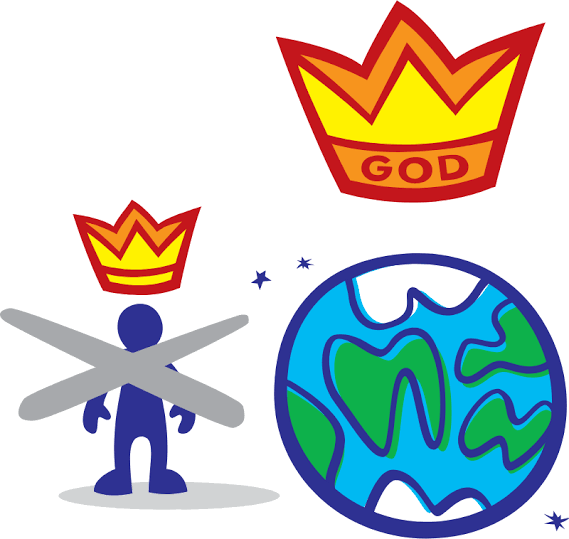
Matthew writes this story in such a way that the decision about how we should react to Jesus is made clear. We can either be like the Magi and come and worship the King despite the costs they must have paid or we can be like Herod the Great, give lip service to being religious, but in our hearts reject God’s rule
Stirred to the core
The Magi were committed to serving God, the cost for them was significant. They probably came from Iraq which was 500 miles away, no easy journey in those days. Culturally, historically and politically everything was against them. They were not Jews yet they come to the king of the Jews. In the Middle East the adjoining nations have always been bitter rivals, just as we see today. Theologically everything was also against them. They did not have the advantages of the Jews with regular Bible teaching and the modelling of the gospel in their sacrificial system based on the temple in Jerusalem, yet in spite of this they came to worship the king. No trouble was too great, nothing will put them off. God matters so much to them. They bring really valuable gifts to this king, not that he needs money, frankincense or myrrh. What he wants is more - our hearts and out love. This commitment resulted in their experiencing a great joy.
“When they saw the star, they were overjoyed.” Matthew 2:10
It was seeing this star rest over the house where the young toddler was living that so excited them. They had not seen Jesus yet. Literally this verse reads:
“When they saw the star they rejoiced - a joy great exceeding”
Have we all experienced this joy? We also haven’t seen Jesus in the flesh yet, although we will. We also, like the Magi, can know that joy in expectancy, based on the evidence we already have.
They then bow before the king and give themselves to worship him for the rest of their days. We need to get away from the idea that worship is what we do for an hour or two on Sunday.
Today in our society there are people from very different cultural backgrounds. There are Arabs, which is what the Magi probably were, and every other culture and nationality around us, yet they all need to come and worship God’s Messiah.
Shaken but not stirred
The arrival of the Magi and the news they shared caused considerable upheaval.
“When King Herod heard this he was disturbed, and all Jerusalem with him.” Matthew 2:3
He then learns what the Scriptures say about the Messiah and where will be born. You would hope that he would also be excited about the arrival of God’s Messiah, but no, he passes the responsibility on to others, to the Magi, and asks them to go and worship him. Perhaps, like Pilate later he wanted to wash his hands of the matter. He pretended to be interested but we know from his later behaviour that he regarded God’s Messiah as his enemy.
“He sent them to Bethlehem and said, “Go and search carefully for the child. As soon as you find him, report to me, so that I too may go and worship him.” Matthew 2:6
Herod was outwardly impressive but in his heart he was God’s enemy. He was stirred but he was no shaken to the core of his being.
We can all be like this. We can put on a outward show of being God’s people but in our hearts not be devoted to living our lives for him. He had the right words but there was no depth. Doubtless he would say he was too busy, too important, too many other things going on in life, too costly but he has made the wrong choice.
Have we all mad the right choice?
BVP