Matthew 1:1-17 Is Jesus Authentic?
A group of children were asked,
“How many gospels are there?”
“Four, of course,” came the immediate reply.
“Wrong. There is only one gospel, that is the news about Jesus, but there are four records of this gospel in the New Testament!”
This may seem rather pedantic but the gospel is the message about Jesus, who he is and what he has done. Each record of the gospel gives a slightly different perspective and have a slightly different aim.
Matthew’s version is written from a Jewish perspective and emphasises the Kingship and rule of Jesus. He has chosen stories and teachings from all that Jesus said and did that highlight Jesus to be God’s one and only Messiah. ‘Messiah’ is a Hebrew word for ‘God’s Chosen King’. The Greek word for Messiah is Christos. or Christ The final words of his account make his purpose clear:
“Then Jesus came to them and said, “All authority in heaven and on earth has been given to me. . . ” Matthew 28:18
This book is about God’s supreme ruler who has been given ultimate authority over everything that has ever been created. This is why Jesus continued:
“. . . Therefore go and make disciples of all nations . . .” Matthew 28:19
He said this because everyone should recognise who he is and bow before him. He is God’s eternal king, his Christ.
What do you think about Jesus?
There is so much confusion today. A boy in Bermondsey asked his teacher:
“Miss, why did they give Jesus a swear word for a name?”
Others would describe him as a powerful prophet, others as a charismatic leader and yet others as a healing hero. Some see him as just a figure who lived in the Middle East two thousand years ago who may have been extraordinary but this is of little relevance to us sophisticated people today. Yet how few recognise him to God’s eternal Messiah, the ruler of the universe and king of all people.
Many regard Christians as those who require a bit of help and need Jesus much like some children need a sentimental comfort blanket. They may think Christians belong to churches because we need support. But look again at the ending of Matthew’s book.
“All authority in heaven and earth has been given to me, . . .”
The most important question we all face is:
“Is this claim of Jesus credible?”
If God really has sent his son to rule the earth, if the accounts about him are true, this should have a profound effect on each of us. It means we would be fools to live our lives here on earth as if that is all there is. Jim Elliott was a young American missionary who went to the Auca Indians in Ecuador, South America and was killed in trying to pass on the Christian message. He had written,
“He is no fool who gives what he cannot keep in order to gain what he cannot lose.”
If the story about Jesus, his life, teaching, crucifixion and resurrection are not true then Christianity is simply a lie. The apostle Paul recognised that being true is the strength of Christianity. It depends on historical facts about one person, facts that can be assessed. He wrote:
“And if Christ has not been raised, our preaching is useless and so is your faith.More than that, we are then found to be false witnesses about God, for we have testified about God that he raised Christ from the dead. But he did not raise him if in fact the dead are not raised. For if the dead are not raised, then Christ has not been raised either. And if Christ has not been raised, your faith is futile; you are still in your sins.Then those also who have fallen asleep in Christ are lost. If only for this life we have hope in Christ, we are of all people most to be pitied.” 1 Corinthians 15:14-19
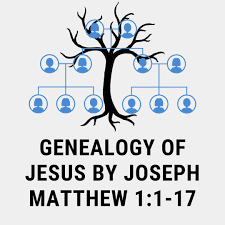
Is Jesus the authentic Son of David?
Matthew starts his record by insisting that Jesus is authentic:
“This is the genealogy of Jesus the Messiah the son of David, the son of Abraham . . .” Matthew 1:1
Genealogies were very important to Jews. Copies were kept by the Sanhedrin in Jerusalem. Josephus began his autobiography with a similar list showing his ancestral pedigree.
Jesus is a direct descendant of King David. That the Messiah would be such had been repeatedly prophecies in the Old Testament. These say that God has promised to send his ruler and that he will reign eternally. Many of these prophecies are listed in the appendix but let us look at one of them:
“For to us a child is born, to us a son is given, and the government will be on his shoulders. And he will be called Wonderful Counsellor, Mighty God, Everlasting Father, Prince of Peace. Of the greatness of his government and peace there will be no end. He will reign on David’s throne and over his kingdom, establishing and upholding it with justice and righteousness from that time on and forever. The zeal of the Lord Almighty will accomplish this.” Isaiah 9:6-7
Note carefully what this prophecy said wri,tten by Isaiah 700 years before Jesus was born. God’s Messiah would enter his world as a baby. He would grow up to rule on King David’s throne. He would be called ‘Mighty God’ and he will rule for ever.
A girl with a Jewish background phoned up a church office wanting to know about the claims of Jesus and whether she should believe them. She asked:
“How can I believe Jesus really is God’s King?”
Over the phone she was told about this verse. Who else, other than Jesus, could this prophecy refer to? She was told about the prophecies that tell that this baby would be born in Bethlehem, (Micah 5:2), would die by crucifixion (Psalm 22:12-18) and yet would rise from the dead (Psalm 16:10, Isaiah 53) and then this man will be accepted by God as his equal (Daniel 7:13-14). King David was told that his descendant would establish God’s kingdom for ever (2 Samuel 7:11-16. Jeremiah was told, around 600 years BC:
“In those days and at that time I will make a righteous Branch sprout from David’s line; he will do what is just and right in the land.In those days Judah will be saved and Jerusalem will live in safety. This is the name by which it will be called: The Lord Our Righteous Saviour.’” Jeremiah 33:15-16
What other descendant of David was righteous and was called both Lord (Jahweh) and Saviour?
The idea of God breaking into his kingdom should not be a surprise. Even atheists, if they have an open mind, should concede that there is a possibility of God existing. Once that possibility is conceded it is reasonable to suppose that this God would want to break into his world to establish his kingdom.
Matthew’s first point in his book is to emphasise that when God does break in he will have to come from David’s line as that is precisely what God had promised. Anyone claiming to be God’s Messiah must first fulfil this prophecy. The words that he starts with ‘the Son of David’ are crucial. In the appendix are some of those who have been said to be God’s Messiah but none were descendants of David and none survived death so they could reign for ever!
When preparing this article I came across a commentary that starts with Matthew chapter 2. Chapter 1 was not mentioned. What a shame as it misses the point Matthew wants everyone to understand. God’s involvement in history is being fulfilled as we read the genealogy of Jesus. His credentials are there for all to see. It should make any Jew want to read on to see what this great king achieved. It is no surprise that this book was widely accepted and became a best seller!
The emphasis on the royal rule of Jesus helps us understand the difference between Matthew’s genealogy and that of Luke. Matthew emphasises the royal lineage of Jesus, he traces it through King Solomon and only lists 26 generations. This could be the line of Joseph, Jesus step-father. Luke, in contrast, lists 41 generations traced through Nathan, another son of King David, and shows the humanity of Jesus, going right back to Adam.
The title ‘Son of David’ is used 10 times in Matthews gospel. This refers back to the prophecy that all Jews would recognise:
“When your days are over and you rest with your ancestors, I will raise up your offspring to succeed you, your own flesh and blood, and I will establish his kingdom.He is the one who will build a house for my Name, and I will establish the throne of his kingdom forever. I will be his father, and he will be my son.” 2 Samuel 7:12-14
Matthew calls Jesus ‘the Son of Abraham’, not ‘a son’ but ‘the son’ (Matthew 1:1). Here the ‘Son of David’ will be called ‘the Son of God’ and his kingdom will rule for ever. This genealogy is well structured. Matthew lists 14 generations between Abraham and David, then another 14 before the exile in Babylon and then a final 14 before the coming of Jesus. This does help people to memorise the list but it could be a clever way to repeatedly re-emphasise the ideas that the Messiah is a descendant of David. In Hebrew the alphabet is used as numerals. Thus
Aleph means a or 1
Beis means b or 2
Gimmel means g or 3
Dalet means d or 4
The word ‘David’ in Hebrew D, W, D, the numerals therefore add up to 14!
Matthew’s point is that Jesus is a completely different sort of leader who is utterly trustworthy because of who he is. He is God’s chosen king with all the necessary attributes of love and justice. He is not a floored ruler, he is the long awaited Messiah of God, the son of David.
In the west there is a serious collapse in our ability to trust authority. This is promoted by the media that love to highlight any faults leaders have. In the home, the leadership of parents is widely questioned, in our schools the teachers’ authority is rapidly going down, and our politicians are widely considered to be crooked and selfish. The percentage of people willing to die for King and country is low. Doubtless in Jesus time there was also much distrust of the Sadducee and Roman leaders. How we need a real leader we can trust completely.
Is Jesus the authentic Son of Abraham?
The title ‘son of Abraham’ is also striking. God promised Abraham that he would be the ancestor of the Messiah. God told Abraham,
“All peoples on earth will be blessed through you.” Genesis 12:1–3
This established the covenant and the promise that a future worldwide blessing would come through Abraham's descendants.
After Abraham proved his faith, God reiterated this covenant, declaring,
“ . . . through your offspring all nations on the earth will be blessed.” Genesis 22:18
The Apostle Paul later clarified that this word ‘offspring’, which is in the singular, refers to Christ.
Is Jesus relevant to us?
Some consider that Jesus is now just another teacher of morality but, other than that he is not relevant to the problems of a modern society. Some think:
“What Jesus did for Jews in Israel two thousand years ago could be done by others in other nations at other times. Couldn’t Muhammad be the Messiah for Arabs? Couldn’t the Dalai Lama be the Messiah for the Tibetans? I am English, is Jesus that relevant today for us?
This is an essential question.
The above prophecies to Abraham are clear that the Messiah is for all people because God is the creator and God of all.
“All peoples on earth will be blessed through you.” Genesis 12:2
“ . . . through your offspring all nations on the earth will be blessed.” Genesis 22:18
This good news is for everybody on earth, whatever their nationality or religion. God promised that he would enter his world at a certain time in history. Through one man, who entered his world as a baby, and who only ministered fro three years on one nation at one time in history, the benefit off his rule and eternal justice and care is available to all people on earth. The Old Testament repeatedly talks about this Messiah whose rule will bring blessings to all peoples.
If the Messiah is from God, we should expect him to rule the whole universe. He cannot be a minor local deity.
Matthew cleverly makes this point by the way he includes four women in this list before mentioning Mary, the mother of Jesus. These four women were all Gentiles:
Tamar (Genesis 36) was probably a Canaanite who acted as a prostitute to Judah.
Rahab (Joshua 2) was a prostitute in Jericho who became the great grandmother of King David.
Ruth was a Moabitess who married Boaz and became the grandmother of King David
Bathsheba was the wife of Uriah the Hittite, the man David had murdered after he had seduced his wife. She became the mother of Solomon.
Matthew’s point in writing this genealogy, in the way he did, could not be clearer. Jesus had Gentiles in his family tree, to demonstrate that he is the King of Gentiles as well as of Jews. The fact that three of these women were all involved in immorality again shows that the gospel is open to all who have sinned against God.
There are some notable omissions from this genealogy. In verse 10, three kings are left out, Joash, Amaziah and Azariah. These three all did ‘what was right’ in the eyes of the Lord so it is interesting to ask why they were omitted. Could it be a reminder that our good works can never satisfy the almighty God, we need a Saviour.
Four of those mentioned, Rehoboam, Joram, Amon and Jechoniah were definitely unrighteous. They should teach us a humbling lesson and they all had godly fathers. Grace does not necessarily run in families, a person’s faith must be personal and life-changing for a person to be acceptable to God.
So this passage teaches us that Jesus’ rule is universal and therefore he is just as relevant to the Taliban in Afghanistan, as to the self-satisfied people of Britain.
Jesus is God’s Messiah and he calls on each of us to recognise this and bend out knee to him and begin to serve him.
Appendix 1
False Messiahs
There have been many claimants to be Messiahs but none fulfil Matthew’s first criterion, they must be a descendant of King David.
Dositheos the Samaritan lived in the mid-1st century, he tried to convince Samaritans that he was the Messiah but was not of the tribe of Judah.
Moses of Crete lived in the 5th century. This apocalyptic prophet and messianic claimant appeared in Crete. He promised to lead the Jews of the island to the Promised Land by walking on water, but his claim was not based on Davidic ancestry.
Serenus was an 8th-century Syrian figure who declared himself the Messiah and a prophet akin to Moses, rather than a Davidic king. He amassed followers by challenging rabbinic authority but was eventually arrested.
Baháʼu’lláh was the founder of the Baháʼí Faith. He was born in 1817 in Persia, and is believed by his followers to be a messenger of God in a line that includes Jesus and Muhammad.
Sun Myung Moon was the founder of the Unification Church. He was born in 1920 in Korea and claimed to be the Second Coming of Christ. His mission was to complete what he saw as Jesus's unfinished work, but this claim was not tied to a Davidic lineage.
Joseph Smith was the founder of the Latter Day Saint (Mormon) movement and claimed to be a prophet sent to restore the early Christian church. While his followers believe he is a figure of Messianic significance, this claim is not based on a Davidic family line.
David Koresh founded the Branch Davidian and claimed to be its final prophet. A total of 82 died during the Waco siege. Some thought of him as a Messiah.
Jim Jones was an American cult leader who promised his followers a utopia in the jungles of South America after proclaiming himself messiah of the Peoples Temple, a San Francisco-based charismatic group. He ultimately led his followers into a mass suicide on November 18, 1978, which left more than 900 dead and came to be known as the Jonestown Massacre.
Appendix 2
The differences between Matthew's and Luke's genealogies of Jesus
These are generally explained by their different audiences and theological purposes. One traces the lineage through Mary and the other through Joseph, or that one is a royal/legal line and the other a physical/biological line.
Matthews genealogy begins with Abraham, the father of the Jewish people, and ends with Jesus, whereas Luke’s begins with Jesus and moves backward to Adam, the first human and ultimately to God.
Matthew’s gospel gives a line of descent through Solomon, David’s son and emphasises the royal or kingly line. In contrast Luke’s genealogy goes through Nathan, another son of David and is a non-kingly line.
The purpose of Matthew’s version is to show that Jesus is the promised Messiah of the Jews, fulfilling the Old Testament prophecies. Luke emphasises Jesus’ humanity and his role as the Saviour of both Jews and Gentiles.
Matthew’s genealogy is structured into three sets of fourteen generations, likely to represent the numeric value of David’s name. He names Joseph’s father as Joseph. There are no such divisions in Lukes version. Luke names Heli as Joseph’s father
It is possible to reconcile these differences. A widely held view is that Matthew provides Joseph's legal genealogy, while Luke provides Mary's biological genealogy (or vice versa), which would naturally be different after David. This is supported by Luke's focus on Mary in his birth narrative, and Matthew's focus on Joseph. Luke's phrasing "Jesus... the son, as was thought, of Joseph, son of Heli" (Luke 3:23) could be interpreted as Joseph being the son-in-law of Heli (Mary's father).
Another explanation is that Matthew records the legal line of succession to the Davidic throne, while Luke records the actual biological line of descent. This may involve the practice of levirate marriage (Deuteronomy 25:5), where a man would marry his deceased brother's widow to produce an heir for the dead brother. In such a scenario, a son could have a biological father and a different legal father, accounting for the different fathers named for Joseph (Jacob and Heli).
Ancient genealogies sometimes omitted generations, especially if an ancestor was not well-known or to create a desired literary structure (like Matthew's fourteen-generation groups), which further explains the different number of names.
Ultimately, both Gospels use their unique genealogies to affirm Jesus' descent from David, a critical requirement for the Jewish Messiah, while at the same time reinforcing the specific theological message each author intended to convey to their respective audiences.
B V Palmer