Mark 15:33-38. The Death of Christ
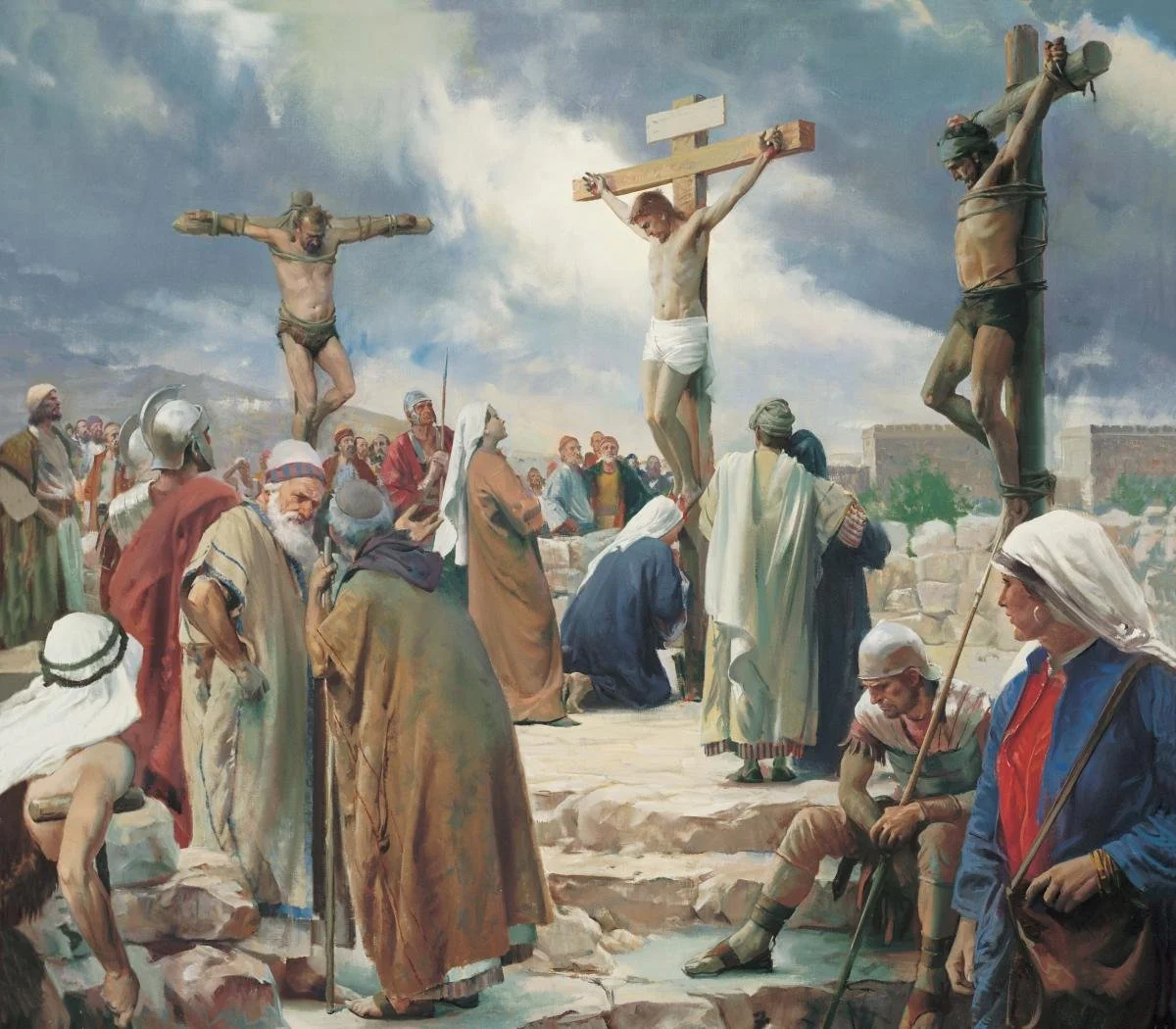
When Jesus died the work of atonement was completed. The ransom for our sin had been paid:
“For even the Son of Man did not come to be served, but to serve, and to give his life as a ransom for many.” Mark 10:45
Two Signs of Significance
Both would grab the attention of all in Jerusalem at that time.
The sun was darkened for 2 hours. v. 33
The darkness reminded all of the serious ness of sin against God. Darkness and evil are often associated. As Jesus took our sin God had to turn away.
“…who have left the straight paths to walk in dark ways.” Proverbs 2:13
“The night is nearly over; the day is almost here. So let us put aside the deeds of darkness and put on the armour of light.” Romans 13:12
Paul calls believers to leave sinful, “dark” behaviour behind as we live in the light of Christ.
“For you were once darkness, but now you are light in the Lord. Live as children of light.” Ephesians 5:8
“Dark paths” symbolise sin, ignorance of God, and moral confusion. But the Bible offers hope: through Jesus, we are called out of darkness into His marvellous light:
“But you are a chosen people, a royal priesthood, a holy nation, God’s special possession, that you may declare the praises of him who called you out of darkness into his wonderful light.” 1 Peter 2:9
This darkness should remind us of the utter darkness reserved for those who reject the Lord Jesus.
“They are wild waves of the sea, foaming up their shame; wandering stars, for whom blackest darkness has been reserved forever.” Jude 13
The darkness at Christ’s death lasted just 3 hours, but those who reject the atonement he won for us will face an eternity of darkness.
2. The Veil in the Temple was torn from top to bottom. v. 38
This taught the end of Jewish ritualism. The way into God’s presence is now available for us all:
“The Holy Spirit was showing by this that the way into the Most Holy Place had not yet been disclosed as long as the first tabernacle was still functioning.” Hebrews 9:8
Now Gentiles and jews can be members of God’s kingdom. May our churches remember that we now worship God ‘in spirit and in truth’ (John 4:24) and not return to altars, sacrifices and a priesthood. Now all followers of Jesus are priests, his representatives in a fallen world.
“You also, like living stones, are being built into a spiritual house to be a holy priesthood, offering spiritual sacrifices acceptable to God through Jesus Christ.” 1 Peter 2:5
“But you are a chosen people, a royal priesthood, a holy nation, God’s special possession, that you may declare the praises of him who called you out of darkness into his wonderful light.” 1 Peter 2:9
Peter applies this priestly language to all believers, showing that every Christian is called to offer worship, prayer, and service to God.
“…and has made us to be a kingdom and priests to serve his God and Father…” Revelation 1:6
Jesus has made believers priests, emphasizing our access to God and calling to serve. Under the New Covenant, there’s no longer a class of priests mediating between God and people like under the Old Testament. Through Christ, every believer has direct access to God and can “offer spiritual sacrifices” like praise, prayer, good works, and evangelism.
“Let us then approach God’s throne of grace with confidence, so that we may receive mercy and find grace to help us in our time of need.” Hebrews 4:16
Jesus became Accursed for us
At the ninth hour Jesus cried out and asked us all to answer his question:
“My God, my God, why have you forsaken me? Mark 15:34
In his agony he felt separated from his Father because he was now bearing our sin. His sacrifice to atone for our sin is the only way to explain this phrase, taken from the opening verse of Psalm 2 that is all about his crucifixion.
“He is the atoning sacrifice for our sins, and not only for ours but also for the sins of the whole world.” 1 John 2:2
The Greek word translated atonement, hilasmos, means propitiation or the means of forgiveness.
“God presented Christ as a sacrifice of atonement, through the shedding of his blood—to be received by faith.” Romans 3:25
Jesus’ death satisfied God’s justice, turning away wrath and making forgiveness possible.
“But he was pierced for our transgressions, he was crushed for our iniquities; the punishment that brought us peace was on him, and by his wounds we are healed.” Isaiah 53:5
Jesus did bear the penalty for our sin and its punishment in our place.
“…But he has appeared once for all at the culmination of the ages to do away with sin by the sacrifice of himself.” Hebrews 9:26
His sacrifice was once for all, sufficient and final. The New Testament consistently teaches that Christ’s death was substitutionary, sufficient, and necessary to atone for sin, bringing forgiveness, reconciliation, and peace with God.
Forsaken but still loved
The relationship with his father was never broken. Jesus still addressed him as ‘My God’. Even when forsaken he was still the beloved Son of God and his Father was pleased with what he had done. We also may feel at times deserted by God and not feel his presence but that does not change the fact that if we are members of his Kingdom he still loves us deeply.
We should therefore never give way to despair. We should look at our lives to see if there is anything coming between us and our Lord. Thus Job could say:
“Though he slay me, yet will I hope in him; I will surely defend my ways to his face.” Job 13:15
We will also all face difficulties at times but the bible urges us to remain true to our Lord:
“Who among you fears the Lord and obeys the word of his servant? Let the one who walks in the dark, who has no light, trust in the name of the Lord and rely on their God.” Isaiah 50:10
Psalm 42 describes a person going through a stage of depression. He feels rejected by God. This psalm also uses the same words as Jesus on the cross:
“I say to God my Rock,“Why have you forgotten me? Why must I go about mourning, oppressed by the enemy?” My bones suffer mortal agony as my foes taunt me, saying to me all day long, “Where is your God?” Psalm 42:9-10
The the psalmist reminds us all:
“Why, my soul, are you downcast? Why so disturbed within me? Put your hope in God, for I will yet praise him, my Saviour and my God.” Psalm 42:11