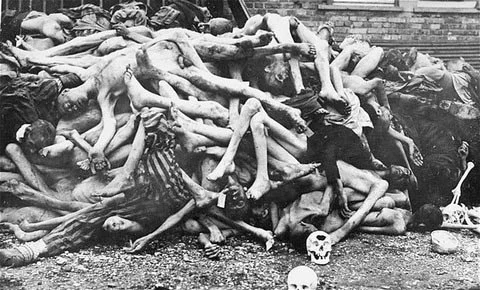
Dr Eduard Krebsbach was a Nazi physician in the concentration camp of Mauthausen. He was a highly trained dctor who became cruel to advance his understanding of science and his political standing.. He killed many by injecting gasoline or phenol directly into heart of prisoners hence the prisoners named him Dr. Spritz. He did not see it to be wrong, he believed that it was his work.
Krebsbach did not refute the murders on his trial. He claimed that prisoners who were ill and weak were just animals who need to be killed. He argued that it was humane since the state was spared the burden of looking after them. This was Nazi thinking: when a person, who is simply an animal, was not able to work or serve there was no value in their life. He refused to admit guilt but did not deny the evidence given against him
In 1946, Krebsbach was sentenced to death for war crimes in Dachau Trials and he was hanged on 1947 at Landsberg Prison. The big question is why was he wrong? Sick or difficult animals are simply ‘put down’ so why is this wrong when we think about humanity?
In India people who marry for love and break the caste system can be murdered. In islam, a person who is brought up in that belief system but turns away to become a christian may be killed by either the state of families.. Is this wrong and if so why? Are political or religious leaders above an abstract moral law?
Ancient Greece
While ancient Greek culture produced great advances in philosophy and democracy, evidence suggests that life, for large segments of the population, particularly infants, slaves, and women, human life was often of little value. Due to poor hygiene, high infant mortality, and risky living conditions, life expectancy was quite low, often cited around 25-30 years at birth
1. Infanticide and Exposure of Infants
Unwanted newborns were often left to die by exposure. Plutarch describes Spartan elders examining infants and ordering those deemed ‘ill-born and deformed’ to be cast into a chasm (the Apothetae) at the foot of Mount Taygetus. Aristotle, in his work Politics, wrote that ‘as to the exposure of children, let there be a law that no deformed child shall live’. Exposure was not limited to ‘weak’ babies; children of poor families, particularly females who required expensive dowries, were commonly exposed. Exposure was a common, "guilt-free" method to get rid of children, particularly girls, considered a financial burden but the extent of this practice is uncertain.
2. The Treatment of Slaves and Helots
Slaves were regarded as property (douloi) rather than people, and their lives could be taken without significant punishment. Spartans, who were outnumbered by their slave class (helots), used state-sponsored violence to maintain control. The Crypteia was a yearly ritual where young Spartan men were allowed to kill any helots they caught in the countryside to keep them terrified and subservient. Tens of thousands of Athenian slaves worked in the silver mines at Laurium, performing dangerous labor that led to extremely short life spans. Slaves were regularly whipped, branded, or subjected to intense physical labor without the legal rights afforded to citizens.
3. Extreme Brutality in Warfare
Siege warfare often resulted in the complete elimination of a city’s population. In a famous historical account, Athenians killed all the men of military age on the island of Melos (416 BC) and sold the women and children into slavery. An Athenian leader, Cleo, advocated for the execution of all male citizens of Mitylene and the enslavement of their women and children, a view that was nearly adopted. At Plataea, the Spartans broke their promise of a fair trial, executing all male captives after a lengthy, brutal siege.
Ancient Rome
Evidence from ancient Rome also suggests that human life, particularly for the poor, slaves, and infants, was often treated as disposable or of low value. This perspective was deeply embedded in Roman law, social hierarchy, and entertainment.
1. Infant Exposure and Abandonment
It was socially acceptable, legal, and common for parents to abandon newborns ("exposure"), particularly female infants or those with disabilities. A Roman father had absolute legal power (patria potestas) over his children, including the right to decide whether a newborn would be accepted into the family or exposed, essentially giving them the right of life and death. Infants were exposed for economic reasons (too poor to feed them) or to avoid dividing property among too many heirs.
2. Treatment of Slaves as Property
Under Roman civil law, slaves were classified as servus non persona est (chattel or property, not human beings with legal rights). Owners could legally punish, torture, or kill their slaves without consequence. Slaves worked in deadly conditions in mines or agricultural gangs, with a typical lifespan in bondage estimated at only around five years.
3. Entertainment and Violent Spectacles
While gladiators were expensive to train, games frequently involved fatal fights to the death to entertain the masses. Studies suggest that 10–20% of bouts resulted in the death of one participant, and in later periods, the death rate climbed higher. Criminals, prisoners of war, and sometimes women were thrown to beasts or forced to fight until death in the ‘midday games’. It is estimated that 400,000 people died in the Colosseum alone over its 700-year history.
4. Poor Quality of Life for Common Citizens
Life expectancy at birth was roughly 25–30 years, largely due to high infant mortality and hazardous living conditions. Poor residents lived in insulae (rickety apartment blocks) that often collapsed or burned down. The majority of the population was poor, and food shortages or outbreaks of plague frequently led to massive death tolls.
5. Legalised Cruelty
Criminal justice was punitive rather than reformative, with gruesome deaths, such as being burned alive or killed by beasts, reserved for lower-class criminals. Criminals were frequently sentenced to the mines (ad metalla), which was essentially a slow death sentence.
While some Roman philosophers and later Christian influences began to speak out against these practices, the majority of the Roman era was characterised by a high tolerance for violence and a low valuation of individual life.
The Greeks and Romans were only following what others, including those in authority were doing. Today many would react strongly against such barbarity but again questions must be asked, ‘Why is this wrong?’ And “What changed people’s attitudes?’
Throughout history many rulers and powerful regimes have behaved inhumanely.
Adolph Hitler and the Nazis
The Nazi regime, led by Adolf Hitler, systematically murdered approximately 17 million people between 1933 and 1945, including six million Jewish people in the Holocaust. 7 million Soviet civilian were also killed through starvation, reprisals, and purposeful neglect. 1.8 million non-Jewish Polish civilians were targeted for elimination or used for forced labor. Between 250,000–500,000 Roma people were also targeted on racial grounds. Furthermore thousands of Jehovah’s Witnesses, homosexuals, political prisoners, and others who were unacceptable to the regime were also killed.
The killings were driven by a racist, antisemitic ideology that aimed to eliminate those deemed "inferior" or enemies of the German state, aiming to secure ‘living space’. Nazis believed in the superiority of the "Aryan" race and categorised others, especially Jews, Roma, and Slavs, as "subhuman"
The Nazis created a massive network of over 20,000 concentration and extermination camps, such as Auschwitz-Birkenau, Treblinka, and Sobibor, to carry out these murders in an industrial, systematic manner
The 'Nuremberg Defence' was a legal argument used by Nazi officials stating they were not guilty because they were merely following superior orders. It was rejected because it would grant impunity to criminals and ignore personal accountability. The Nuremberg trials established that individuals are responsible for their actions, and following illegal orders is not a defence, a principle later codified in international law. In essence the court held that there is a moral law that is superior to all other political or religious laws. Although people may be revolted instinctively against cruel inhumane acts the question remains ‘Why are these acts wrong?’.
Joseph Stalin
Joseph Stalin was responsible for the deaths of millions through famine, forced labor, and political purges. His policies caused roughly 14.5 million famine deaths in the 1932–33 famine, particularly in Ukraine. His Great Purge resulted in over 300,000 executions in 1938 alone.
Millions were sent to Gulag camps, where they were forced to work under lethal conditions. Entire populations and millions of people were forcibly resettled to remote areas.
Historians and contemporary perspectives often describe Stalin's reign as a total disregard for human life and health. Examples include the 1933 Nazino tragedy (or "Cannibal Island"), where 6,500 prisoners were abandoned on a Siberian island without food, leading to atrocities.
Personalised Power
While some sources note his private life included devotion to his daughter, his public record shows a, sometimes, "moral and spiritual monster".
Historian estimates suggest that Stalin's actions, including his purges, deportations, and famine, caused the deaths of approximately 20 million people in the Soviet Union
Sadam Hussein
Sadam Hussein was found Saddam Hussein convicted of crimes against humanity. Specifically, he was found guilty by the Iraqi High Tribunal for his role in the 1982 Dujail massacre, where 148 Shi'ite men were killed in retaliation for a failed assassination attempt against him. He was also found guilty of wilful killing, illegal imprisonment, and torture. He was executed by hanging on December 30, 2006, before other charges, such as the Anfal campaign against the Kurds, could be finalised
Many people were killed and tortured but why was this wrong?
The Role of the Bible
Although humans have a natural instinct to be kind, loving and forgiving to those we love, it is the Bible that advocates extending these virtues to all people because that is the nature of God. The Lord explained his character to Moses on Mount Sinai:
“And he passed in front of Moses, proclaiming, “The Lord, the Lord, the compassionate and gracious God, slow to anger, abounding in love and faithfulness, maintaining love to thousands, and forgiving wickedness, rebellion and sin. Yet he does not leave the guilty unpunished; he punishes the children and their children for the sin of the parents to the third and fourth generation.” Moses bowed to the ground at once and worshiped.” Exodus 34:6-8
God’s people are called to be imitators of God so his nature should be ours.
The Bible begins by stressing that human beings are distinct from the rest of God’s creation. We were created in the image of God.
“So God created mankind in his own image, in the image of God he created them; male and female he created them.” Genesis 1:27
All humans are especially valued because of this. This is why it was so wrong for Cain to murder his brother Abel out of jealousy (Genesis 4:6-8). God said to Noah after the flood:
“And for your lifeblood I will surely demand an accounting. I will demand an accounting from every animal. And from each human being, too, I will demand an accounting for the life of another human being. ‘Whoever sheds human blood, by humans shall their blood be shed; for in the image of God has God made mankind.’” Genesis 9:5-6
It is very hard to derive a persuasive argument for the value of human life without invoking the nature of God. It is God who values human life and any who undervalue this will be accountable to him.
Included in the Ten Commandments that God gave to his people is the sixth commandment:
“You shall not murder” Exodus 20:13
The precise meaning of the Hebrew used here specifically refers to unlawful, premeditated, or malicious killing of a human being, as distinct from a killing such as in self-defence or legalised capital punishment.
.