Who is Jesus?
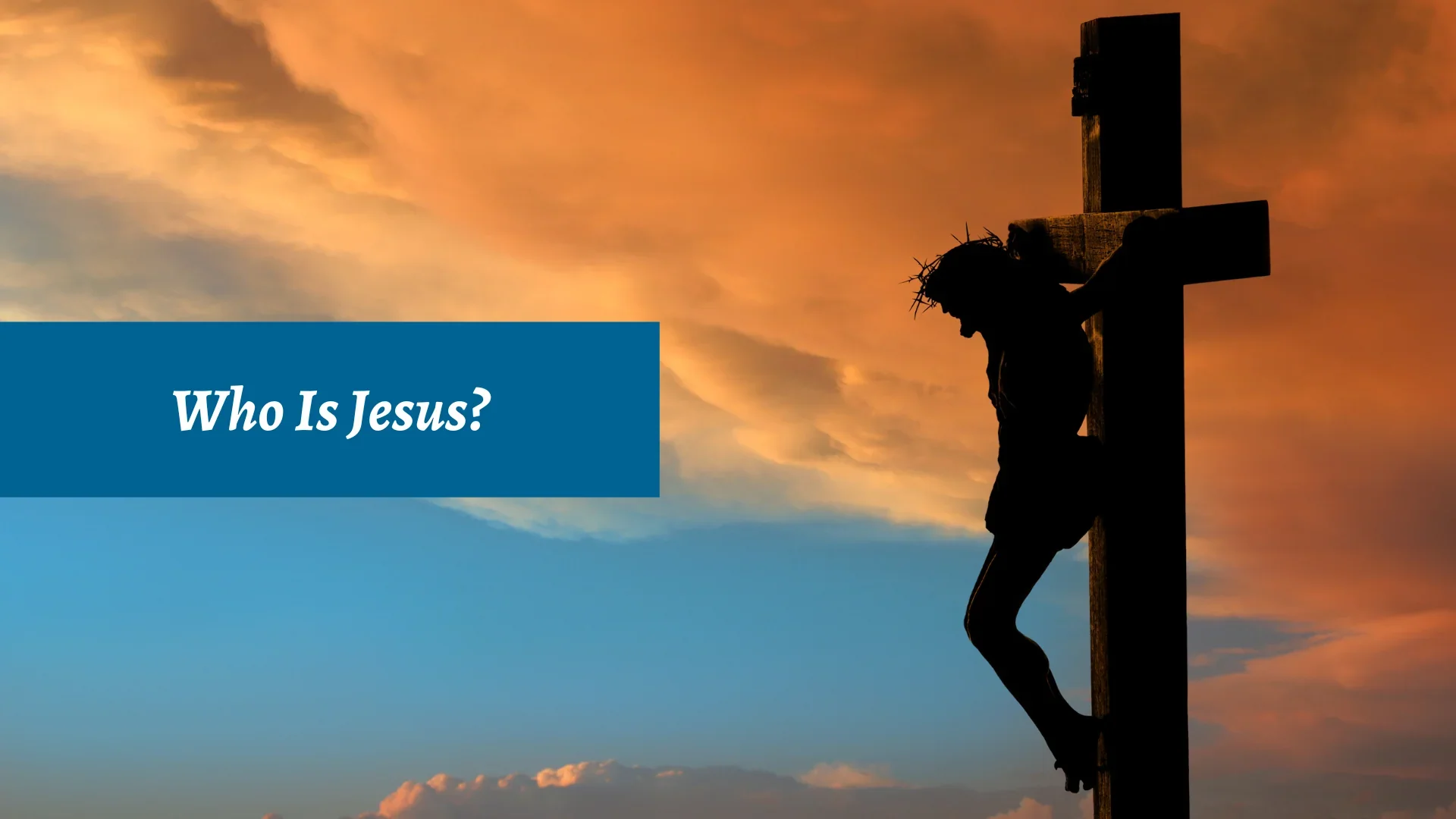
Could it be that the reason churches in the West are so weak is that we have not really grasped who Jesus is. When his disciples became sure of the answer it radically changed their lives. Living for Jesus then became the only thing that really mattered.
Luke’s gospel emphasises from the beginning that the man Jesus was also the very Son of God. Mary was told by the angel Gabriel who her son would be:
“He will be great and will be called the Son of the Most High. The Lord God will give him the throne of his father David.” Luke 1:32
This naturally puzzled Mary who questioned how she could become a mother when she was still a virgin:
“The angel answered, “The Holy Spirit will come on you, and the power of the Most High will overshadow you. So the holy one to be born will be called the Son of God.” Luke 1:35
Zechariah, the father of John the Baptist knew what John’s role was to be, a prophet who would go before the Lord, the Most high God:
“And you, my child, will be called a prophet of the Most High; for you will go on before the Lord to prepare the way for him,” Luke 1:76
The genealogy of Mary that Luke includes mentions that Jesus would be the direct descendent of King David but goes further back to emphasises that he really would be the descendent of God himself.
“. . . the son of Enosh, the son of Seth, the son of Adam, the son of God.” Luke 3:38
When Jesus was tempted the focus was always on the question as to whether he is the Son of God:
“The devil said to him, ‘If you are the Son of God, tell this stone to become bread.’” Luke 4:3
“The devil led him to Jerusalem and had him stand on the highest point of the temple. “If you are the Son of God,” he said, “throw yourself down from here.” Luke 4:9
When Jesus began a healing ministry many recognised what this demonstrated:
“Moreover, demons came out of many people, shouting, “You are the Son of God!” But he rebuked them and would not allow them to speak, because they knew he was the Messiah.” Luke 4:41
When the demon-possessed man, Legion, met Jesus he cried out,
“When he saw Jesus, he cried out and fell at his feet, shouting at the top of his voice, ‘What do you want with me, Jesus, Son of the Most High God?’” Luke 8:28
At his trial before the Sanhedrin Jesus openly told them who he was:
“But from now on, the Son of Man will be seated at the right hand of the mighty God. They all asked, “Are you then the Son of God?” He replied, “You are right in saying that I am.” Luke 22:70
Tensions at Nazareth Luke 4:14-30
After his baptism and a time of being tempted by Satan in the desert, Jesus returned to Galilee where he had been raised as a child. He was now around thirty years old. He travelled around Galilee speaking in their synagogues and was very well received by those who heard him. He then visited his home town of Nazareth and on the Sabbath went, as was his habit, to the local synagogue. He was again invited to speak. He stood to read from the scroll containing the book of Isaiah. It is significant that most synagogues today have a scroll containing the Torah, the first five books of the Old Testament, but not one for the book of Isaiah. Jesus unrolled the scroll and, after finding the passage he wanted, began to read from the beginning of Isaiah 61:
“The Spirit of the Lord is on me, because he has anointed me to proclaim good news to the poor. He has sent me to proclaim freedom for the prisoners and recovery of sight for the blind, to set the oppressed free, to proclaim the year of the Lord’s favour.” Luke 4:18-19
He then sat down to teach the congregation. Most rabbis taught from a chair. Luke tells us that those present were gripped, presumably by both Jesus’ demeanour and by what he was saying. The reason Jesus chose this passage became apparent as he began his sermon:
“Today this Scripture is fulfilled in your hearing.” Luke 4:21
Jesus spoke in such a gracious way that his listeners were amazed. They knew him as just a carpenter’s son so how could he speak like this and do those miracles? Perhaps some expected to see a miracle such as a blind person receiving their sight. Expectancy must have been high.
Jesus chose this passage for a special reason and it is possible that he went on to explain the context as Luke says that this was just the beginning of what he said. Let’s look at the context.
The context of Isaiah
Isaiah lived around 700 BC. The northern kingdom of Israel had already been destroyed by the Assyrians. The Bible is clear that God ordained this destruction because of their persistent wickedness and rejection of himself. The little state of Judah had held out but Isaiah warns them that they would suffer a similar fate from the Babylonians because of their backsliding.
Isaiah 58
This chapter reveals that the reaction of the people of Judah to the difficulties they were facing was religious, they held a fast. God tells Isaiah to warn the people that religious activities are not what God requires:
“Shout it aloud, do not hold back. Raise your voice like a trumpet. Declare to my people their rebellion and to the descendants of Jacob their sins.” Isaiah 58:1
God’s people had an outward show of religion but it was only superficial and not heartfelt. God saw the truth:
“For day after day they seek me out; they seem eager to know my ways, as if they were a nation that does what is right and has not forsaken the commands of its God. They ask me for just decisions and seem eager for God to come near them.” Isaiah 58:2
They went so far as to hold a fast in the hope that that would make God change the way he was dealing with them!
“‘Why have we fasted,’ they say, ‘and you have not seen it? Why have we humbled ourselves, and you have not noticed?’”
“Yet on the day of your fasting, you do as you please and exploit all your workers. Your fasting ends in quarrelling and strife, and in striking each other with wicked fists. You cannot fast as you do today and expect your voice to be heard on high.” Isaiah 58:3-4
Outward orthodoxy and theological correctness is not all that God wants, he wants people’s hearts and this will be seen in how people live. Nothing less than a radical rethink, repentance, will do.
“Is not this the kind of fasting I have chosen: to loose the chains of injustice and untie the cords of the yoke, to set the oppressed free and break every yoke? Is it not to share your food with the hungry and to provide the poor wanderer with shelter - when you see the naked, to clothe them, and not to turn away from your own flesh and blood?” Isaiah 58:6-7
A real Christian faith will always be seen in the way that it overflows as a love for others. A love for others is no substitute for a love for our Lord, which is the first and greatest commandment, but love for others will always be seen to accompany this. (Matthew 22:34-40).
When God’s people have such a Christ-centred faith everything will change:
“Then you will call, and the Lord will answer; you will cry for help, and he will say: Here am I.” Isaiah 58:9
When we humble ourselves before him he responds with a warm, ‘Here am I’. The relationship is restored and God’s righteousness is given to us.
Isaiah 59
However God knows how stubborn our hearts are and knows that it will take a miracle to change us. Isaiah makes the diagnosis of man’s lot clear:
“But your iniquities have separated you from your God; your sins have hidden his face from you, so that he will not hear. For your hands are stained with blood, your fingers with guilt. Your lips have spoken falsely, and your tongue mutters wicked things.” Isaiah 59:2-3
The wonderful truth is that, in spite of our rebellion God himself will step in to remedy the dreadful, helpless situation mankind has put himself into. There was no purely human leader who could bring about the ends God wanted. God would have to act himself:
“The Lord looked and was displeased that there was no justice. He saw that there was no one, he was appalled that there was no one to intervene; so his own arm achieved salvation for him, and his own righteousness sustained him. He put on righteousness as his breastplate, and the helme
t of salvation on his head; he put on the garments of vengeance and wrapped himself in zeal as in a cloak.” Isaiah 59:15-17
Isaiah 60
God was determined to save a people for himself who would then live for his ends. Isaiah 60 is a wonderful chapter depicting the glory of God’s people whom he will call from across the nations. God himself will be their Saviour and redeemer:
“Then you will know that I, the Lord, am your Saviour, your Redeemer, the Mighty One of Jacob.” Isaiah 60:16
Isaiah 61
Jesus claimed to be God’s Chosen King, the Messiah, that Isaiah had foreseen would come to deliver a people for himself:
“The Spirit of the Sovereign Lord is on me, because the Lord has anointed me to proclaim good news to the poor. He has sent me to bind up the brokenhearted, to proclaim freedom for the captives and release from darkness for the prisoners, to proclaim the year of the Lord’s favour and the day of vengeance of our God, to comfort all who mourn,” Isaiah 61:1-2
It is as if this script was written specifically for Jesus! It goes on to describe the glory that he would give to his people. Despair would fade to be replaced by joyful praise. The righteousness of God their Saviour would be credited to their account and with his help they will become like him.
“ . . . to bestow on them a crown of beauty instead of ashes, the oil of joy instead of mourning, and a garment of praise instead of a spirit of despair. They will be called oaks of righteousness, a planting of the Lord for the display of his splendour.” Isaiah 61:3
Oaks are solid trees that can withstand much buffeting by the weather and Christians will display God’s love and righteousness in all situations.
Isaiah 65
Isaiah reminds us that God would draw people to himself from all nations:
“I revealed myself to those who did not ask for me; I was found by those who did not seek me. To a nation that did not call on my name, I said, ‘Here am I, here am I.’” Isaiah 65:1
What wonderful news this is, that those of us born outside Judaism can now become the people of God. The conditions remain the same, we must repent, rethink the direction of our lives, and determine to live in tune with our Lord.
This may seem too good to be true but God then tells Isaiah when all this will be fulfilled. It starts now but the reality is yet to come in the next real world. He will create a heavenly city of God:
“See, I will create new heavens and a new earth. The former things will not be remembered, nor will they come to mind. But be glad and rejoice forever in what I will create, for I will create Jerusalem to be a delight and its people a joy. I will rejoice over Jerusalem and take delight in my people; the sound of weeping and of crying will be heard in it no more.” Isaiah 65:17-19
In this world we will rejoice forever. All our old problems will be forgotten.
The Saviour is described
In the preceding section of Isaiah we are told much about God’s Messiah, his Servant King, who would come and achieve all this. Isaiah shares four songs about this Servant King. The first begins:
“Here is my servant, whom I uphold, my chosen one in whom I delight; I will put my Spirit on him, and he will bring justice to the nations. He will not shout or cry out, or raise his voice in the streets. A bruised reed he will not break, and a smouldering wick he will not snuff out. In faithfulness he will bring forth justice; he will not falter or be discouraged till he establishes justice on earth. In his teaching the islands will put their hope.” Isaiah 42:1-4
At Jesus’ baptism God himself encouraged Jesus and ourselves that Jesus was indeed the Son of God. This verse from Isaiah was quoted:
“And a voice came from heaven: ‘You are my Son, whom I love; with you I am well pleased.’” Mark 1:11
It is up to God’s people to make the news about Jesus widely known. Though his disciples were relatively few it would be up to them to pass the news on:
“ . . . let them give glory to the LORD and proclaim his praise to the islands.” Isaiah 42:12
This Servant king wants us to know that he will be very close to all his people and that whatever problems they face they are safe in his hands; he will always be with us until heaven materialises.
“Do not fear, for I have redeemed you; I have summoned you by name; you are mine. When you pass through the waters, I will be with you; and when you pass through the rivers, they will not sweep over you. When you walk through the fire, you will not be burned; the flames will not set you ablaze. For I am the Lord your God, the Holy One of Israel, your Saviour.” Isaiah 43:1-3
What reassurance this gives us. If we are living with Christ nothing can harm us – our eternal destiny is secure.
Isaiah, in the fourth Servant song (Isaiah 52:13 – 53:12), gives us one of the most remarkable prophecies in the Bible. It describes, in great detail, how God’s Messiah would be the remedy for our sin. He would take on himself our sin that separates us from God and die as our substitute. The animal sacrifices were but a picture of what God himself would do to pay for our sin. This passage includes:
“Surely he took up our pain and bore our suffering, yet we considered him punished by God, stricken by him, and afflicted. But he was pierced for our transgressions, he was crushed for our iniquities; the punishment that brought us peace was on him, and by his wounds we are healed. We all, like sheep, have gone astray, each of us has turned to our own way; and the Lord has laid on him the iniquity of us all.” Isaiah 53:4-6
This is the Christian gospel in a nutshell, we are unable to help ourselves but God has taken on himself the very sin that separates us from him. Although the Messiah would die for us that would not be the end – he will rise from the dead. Staggering though this prophecy is, that is exactly what happened to Jesus:
“Yet it was the Lord’s will to crush him and cause him to suffer, and though the Lord makes his life an offering for sin, he will see his offspring and prolong his days, and the will of the Lord will prosper in his hand. After he has suffered, he will see the light of life and be satisfied; by his knowledge my righteous servant will justify many, and he will bear their iniquities.
Therefore I will give him a portion among the great, and he will divide the spoils with the strong, because he poured out his life unto death, and was numbered with the transgressors. For he bore the sin of many, and made intercession for the transgressors.” Isaiah 53:8-12
The historian H. G. Wells said that a man’s greatness can be measured by ‘what he leaves to grow, and whether he started others to think along fresh lines with a vigour that persisted after him.’ Wells, although not claiming to be a Christian, acknowledged: “By this test Jesus stands first.”
Alexander the Great, Charlemagne (styled “the Great” even in his own lifetime), and Napoleon Bonaparte were powerful rulers. By their formidable presence, they wielded great influence over those they commanded. Yet, Napoleon is reported to have said:
“Jesus Christ has influenced and commanded His subjects without His visible bodily presence.”
The claim of Jesus
This is why what Jesus said in the synagogue in Nazareth is mind-blowing and staggering. He says that God, through the prophet Isaiah, is foretelling what he would achieve. History shows that this was true. Jesus did do miracles as no-one else has done, the blind did see and the lame did walk. He did die for our sin and he did rise again. He did teach us how we can be certain that we are acceptable to God. He is truly great, even today. He has set his people free to live lives that have his priorities. He alone can honestly claim:
“The Spirit of the Lord is on me, because he has anointed me to proclaim good news to the poor. He has sent me to proclaim freedom for the prisoners and recovery of sight for the blind, to set the oppressed free, to proclaim the year of the Lord’s favour.” Luke 4:18-19
The reaction of people
In Jesus' time, Nazareth had a population of only around 400 people. They knew Mary and Joseph, his family, and the carpentry workshop. At first Jesus listeners ‘all spoke well of him’ (Luke 4:22) Undoubtedly they would have heard of the miracles he had performed at Capernaum and elsewhere and Jesus knew that this was what they really wanted. How easy it is to want a faith that makes me feel comfortable but is not for the glory of God. The last thing the people in the synagogue wanted to do was to bow down before Jesus and say, ‘My Lord and my God’ yet that is the only response God wants. Jesus said to them
“You will tell me, ‘Do here in your hometown what we have heard that you did in Capernaum.’” Luke 4:23
They were saying, ‘If you are so special give us proof!’ They were acting as judge whereas the truth is the other way round – God was judging them over their reaction to Jesus. They didn’t want him to be their Lord. God chooses people on the basis of how they respond to Jesus. He reminds them of what Scripture teaches by reminding them of the prophets Elijah and Elisha.
“‘Truly I tell you,’ he continued, ‘no prophet is accepted in his hometown. I assure you that there were many widows in Israel in Elijah’s time, when the sky was shut for three and a half years and there was a severe famine throughout the land. Yet Elijah was not sent to any of them, but to a widow in Zarephath in the region of Sidon. And there were many in Israel with leprosy in the time of Elisha the prophet, yet not one of them was cleansed—only Naaman the Syrian.” Luke 4:24-27
God choses whoever he wants from all nations, to be his holy people. The poor widow of Zarephath and the rich important general of Syria were both Gentiles and yet they were accepted by God. The Israelites were worshipping Baal and other idols so God took away his blessing from them. They rejected God so he rejected them.
The people of Nazareth were furious to hear that God might prefer Gentiles to themselves. They drove Jesus out of the synagogue and then out of the town to a local cliff top. They were so angry they wanted to throw him down the cliff face. Jesus however just walked away throw the crowd. Their only hope for eternity left them to themselves!
Doubtless those people of Nazareth went back to their ordinary everyday lives, rejecting the rule of Jesus. The tragedy is that one day they will meet Jesus again but this time in judgment with him sitting on his heavenly throne. Their excuse, that they wanted more evidence, will not be valid then.
Today many like the idea of Jesus, the standards he represents and what he has done for others but, like the Jews in Isaiah’s day and the people of Nazareth in Jesus time’, many refuse to recognise their need of God’s forgiveness and fail to recognise who Jesus really is. The consequence of this decision will be eternally fatal.
The apostle John describes the vital decision that everyone, must make. Jesus was rejected by many Jews but the opportunity to become one of God’s people remains open to us all now:
“He came to that which was his own, but his own did not receive him. Yet to all who did receive him, to those who believed in his name, he gave the right to become children of God.” John 1:11-12
BVP