The Message of Paul’s First Recorded Sermon
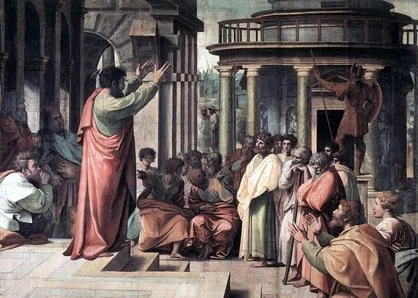
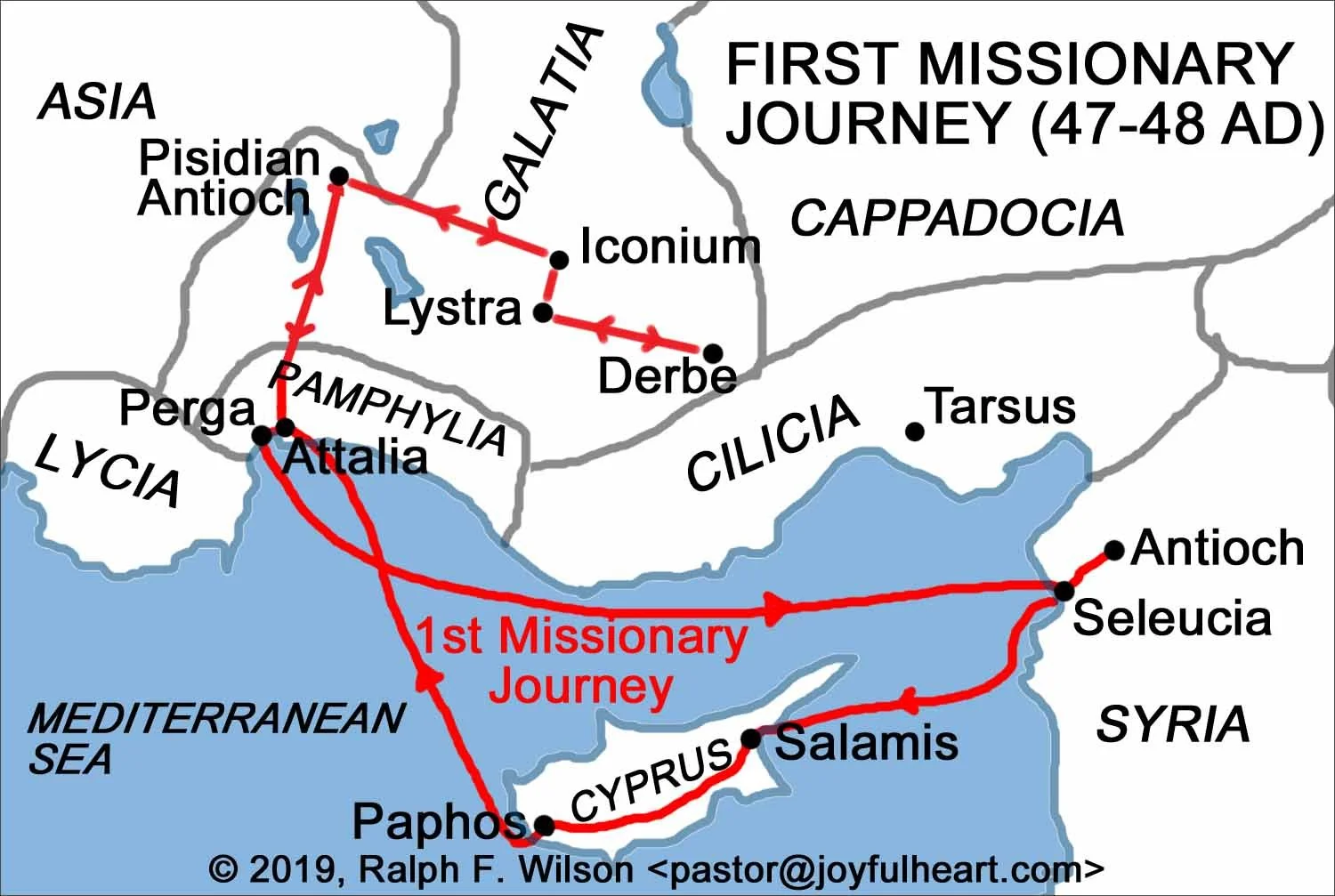
Paul’s sermon at Pisidian Antioch (Acts 13:16–41) was his first recorded sermon and a key moment in his missionary work. He delivered it in a synagogue to both Jews and God-fearing Gentiles. Its structure is similar to that of Peter’s first sermon at Pentecost and this suggests there was a common outline of the preaching of the early church. His main points can be summarised as follows:
1. God’s Faithfulness to Israel’s History (vv. 16–22)
Paul begins by reviewing Israel’s history to connect with his Jewish audience:
God chose the people of Israel in Egypt.
He delivered them from slavery.
He gave them the land of Canaan.
He gave them judges and then kings, including David.
This beginning surely aimed to reassure his listeners that the Christian message about the coming of the /messiah was a fulfilment of the Jewish Scriptures and establish a continuity with Jewish history. He showed that God had always been actively working toward something greater.
2. Jesus Is the Promised Saviour from David’s Line (vv. 23–25)
“From this man’s descendants (David’s) God has brought to Israel the Saviour Jesus, as he promised.” (v. 23)
He confirmed that Jesus is the fulfilment of God’s promise to David.
He reminded them that John the Baptist prepared the way and pointed people to Jesus.
In this was he showed how how Jesus is the Messiah in fulfilment of prophecy.
3. Jesus Was Rejected and Crucified, but God Raised Him (vv. 26–31)
The people and rulers in Jerusalem did not recognise Jesus.
Though innocent, He was condemned and crucified.
God raised Him from the dead, and many witnesses saw Him.
He established the resurrection was proof of Jesus’ identity and authority.
4. Jesus Fulfils Old Testament Prophecy (vv. 32–37)
Paul quotes Scripture to show the resurrection was foretold:
Psalm 2:7 – “You are my Son…”
Isaiah 55:3 – The sure mercies of David.
Psalm 16:10 – “You will not let your Holy One see decay.”
Thus he proved from Scripture that Jesus was the risen Messiah.
5. Justification Comes Through Faith in Jesus, Not the Law (vv. 38–39)
“Through Jesus the forgiveness of sins is proclaimed to you. Through him everyone who believes is set free from every sin…”
Paul now stresses that salvation is not found in belonging to a group of people but only in a personal relationship with Jesus, who is God’s Son who has entered his world. He emphasise forgiveness and justification come only through faith in Christ, not through the Law of Moses or Judaism.
6. Warning Not to Reject This Message (vv. 40–41)
Paul ends with a warning from Habakkuk 1:5:
“Look, you scoffers, wonder and perish…”
There is a personal appeal to make a decision about Jesus and he urged them not to reject God’s offer of salvation.
This sermon lays the foundation that now all people, both Jews and Gentiles can be included in God’s eternal kingdom because of the Gospel about Jesus.
Application of these lessons in Paul’s sermon to today
When any Christian is trying to explain the gospel to others it is very important to find a bridge that links you and what you have to say to your listeners. Paul started by reaffirming their common Jewish heritage and builds on that.
1. Trust God’s Faithfulness in History
Just as Paul recounted how God had guided Israel through history, we’re reminded that God is sovereign and faithful across generations. He reminds them that God has a plan and purpose, even when we don’t see it. He encourages them to live with confidence that His promises still hold true today.
“Jesus Christ is the same yesterday and today and forever.” Hebrews 13:8
2. Know and Proclaim the Gospel Clearly
Paul preached that Jesus had been publicly crucified and had then risen. His message was evidence based and was given with clarity, boldness, and Scriptural support. We must be ready to do the same. We also must learn how to explain the Christian Gospel clearly, having learn supportive Scripture to back our message so we can share it clearly. It is vital that we keep Jesus at the centre of our message, not morality or religion.
Salvation can never be found by our religious affiliations, by our good works, or family tradition, it can only be found through having a personal; relationship with Jesus Christ himself.
3. Rely on the Resurrection as the Foundation of Faith
Paul centreed his sermon on the resurrection of . It’s not optional — it’s essential. His resurrection both proved his claim to be the Son of God but also signifies that we, Christ’s followers have been given a new power to live a very different life with Jesus at the centre. Our would is a world full of despair and death and we can share the hope of resurrection live with any who will repent and turn back to live God’s way.
“Therefore, if anyone is in Christ, he is a new creation; the old has gone and the new has come.” 2 Corinthians 5:17
“If Christ has not been raised, your faith is futile . . .” – 1 Corinthians 15:17
4. Emphasise that Justification is only by Faith, Not Works
Paul said,
“Through him everyone who believes is set free from every sin…” Acts 13:39
No-one can win God’s favour through the way we live. Salvation is a gift for those who turn to Christ and we can rest in the freedom of this fact. We, like the apostles and early church need to share this freeing truth with others stuck in legalism or guilt.
5. Understand That Some Will Reject the Message
Paul ends with a warning: don’t scoff at or dismiss God’s offer of salvation. The decision people make will affect their eternal destiny. Our job is to proclaim the gospel clearly, the decision is theirs. We should not be discouraged by rejection - it’s an inevitable part of Gospel ministry. We should stay faithful, even when people resist or oppose us.
“The message of the cross is foolishness to those who are perishing . . .” 1 Corinthians 1:18
6. Recognise that the Gospel Is for All People
Though he spoke in a synagogue, Paul’s message was also given the Gentiles that were present, showing that the Gospel is for all people, whatever their nationality or religious background. The church today should also cross ethnic, cultural and social boundaries with the Gospel God has commissioned us with. No one is beyond God’s reach.
Paul’s sermon challenges us to boldly declare the Gospel, to trust God’s faithfulness, and to live in the freedom and power of resurrection hope.
BVP