Celibacy in the Church
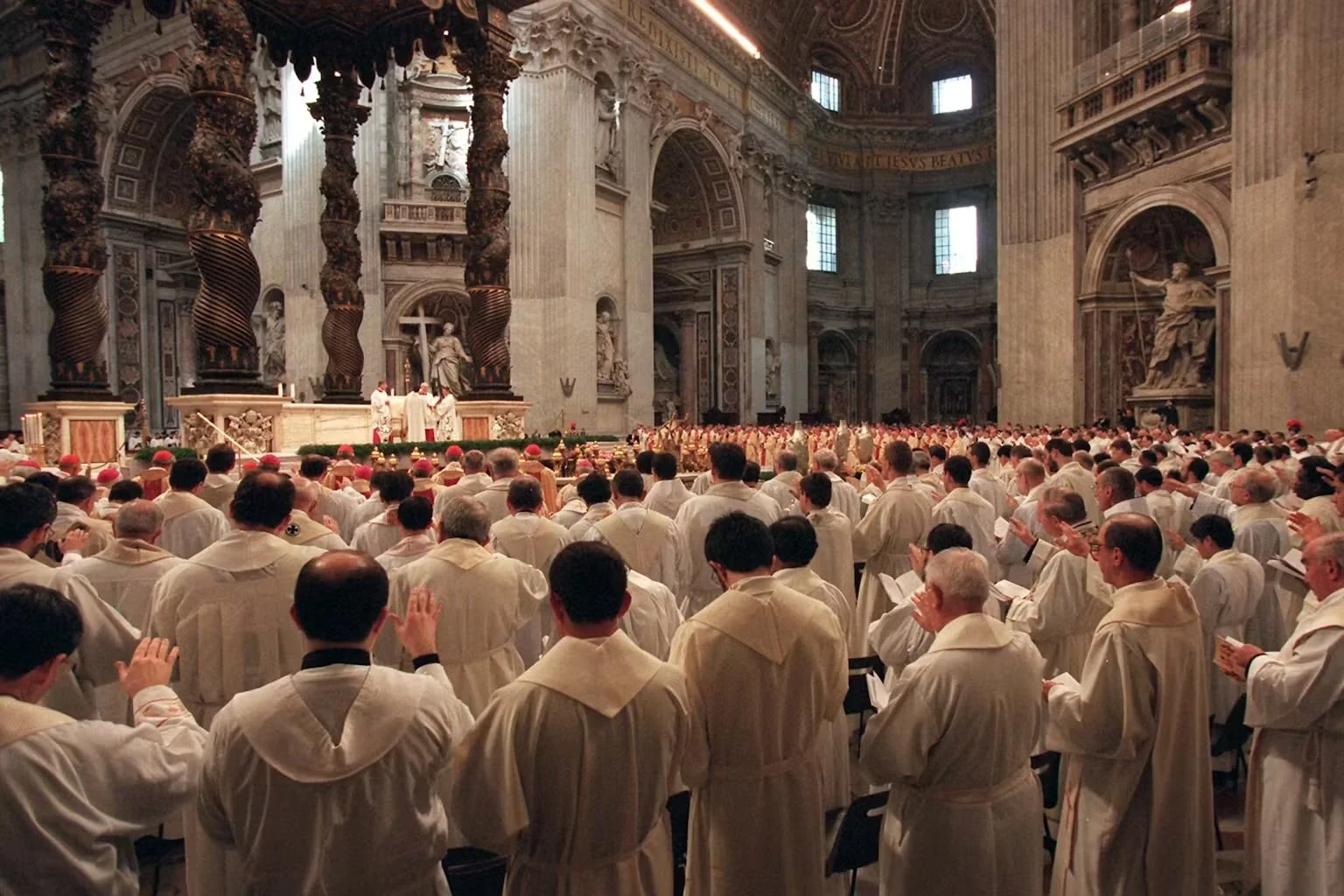
The problem of sexual misbehaviour began long before Christendom and this is yet another example of how worldly philosophy can infiltrate into churches.
Ancient philosophies on sex and marriage
Many ancient philosophers thought that there was something wrong with sex! Many thought that sexual activity weakened a man. In the 6th century BC, Pythagoras taught that sexual acts were harmful to health. When asked when people should make love he replied,
“When you want to weaken yourself.”
This concept that men were weakened by sex was continued in the teaching of Xenophon, Plato, Aristotle and even Hippocrates, the physician many centuries before Christ. Aristotle, who later became a great favourite of the medieval church, advocated the subordination of women to men, thinking that they were less virtuous.
In contrast there was much hedonism in Greek thinking as pleasure was an alternative goal of the Epicurians. In contrast the Stoics rejected this pleasure-seeking preferring duty and even celibacy.
One of the features of Stoic philosophy, a major school of thinking in the ancient world being popular between 300BC and 250AD was their abhorrence of sexual activity outside marriage.
Seneca, a Stoic, was the tutor of the eleven year old Nero. He wrote in an article on marriage,
“All love for someone else’s wife is shameful. But it is also shameful to love ones own wife immoderately. In loving his wife the wise man takes reason for his guide, not emotion. He resists the assault of passions, and does not allow himself to be impetuously swept away into the marital act. Nothing is more depraved than to love one’s spouse as if she were an adulteress.”
For them, although marriage was to be highly honoured, sex was only for procreation. They advocated equal rights and education for women. However the Stoic maxim, verbalised by Seneca was,
‘Do nothing for the sake of pleasure.”
Writers such as Plutarch, one of the most popular writers of his day, dying in 120AD, was great advocate of monogamous marriages.
Gnostics on sex and marriage
Because Gnostics viewed the physical body as an impediment to the divine spark within, their views on physical intimacy split into two radically opposing philosophical directions: strict asceticism and libertinism.
The dominant view across the majority of surviving Nag Hammadi texts is that sexuality is the Demiurge's principal tool to trap divine souls in the material realm.
Ascetic Gnostics viewed reproduction as the ultimate entrapment because it creates new physical bodies, thus subdividing and imprisoning more divine light in the material world. In texts like the ‘Apocryphon of John’, sexual desire is described as a ‘counterfeit spirit’ planted by archons (flawed cosmic rulers) to cloud human spiritual awareness. Abstaining from sex and marriage was viewed as a way to starve the physical prison and prepare the spirit to return to the divine source (the Pleroma).
Early Christian critics like Irenaeus accused certain Gnostic groups, such as the Barbelo Gnostics and followers of Simon Magus, of practicing ritualised sexual libertinism. For these groups, if the material body is completely separate from the spirit and destined for destruction, physical actions hold no ultimate spiritual weight. Therefore, ‘food is for the body, and the body for food’.
Gnosticism often viewed the division of gender (male and female) as a symptom of the cosmic fall. True spiritual perfection was frequently envisioned as a return to an androgynous or genderless state, fusing opposites back into a single, unified entity in the divine realm.
The thinking of Jesus and his Apostles on sex and marriage
Jesus had a high view on the importance of marriage. When some Pharisees tried to trick him he responded by affirming the authority of Scripture:
“Some Pharisees came to him to test him. They asked, ‘Is it lawful for a man to divorce his wife for any and every reason?’
‘Haven’t you read,’ he replied, ‘that at the beginning the Creator “made them male and female,” and said, “For this reason a man will leave his father and mother and be united to his wife, and the two will become one flesh”? So they are no longer two, but one flesh. Therefore what God has joined together, let no one separate.’ Matthew 19:3-6
He affirms that the sexes and marriage are gifts of God.
We know Peter was married, Jesus healed his mother in law in Capernaum (Matthew 8:14–15, Mark 1:29–31, and Luke 4:38–39.). According to Eusebius, Peter’s wife was martyred on the same day that Peter was famously crucified upside down. He wrote:
“They say, accordingly, that when the blessed Peter saw his own wife led out to die, he rejoiced because of her summons and her return home, and called to her very encouragingly and comfortingly, addressing her by name, and saying, ‘Oh thou, remember the Lord.’ Such was the marriage of the blessed, and their perfect disposition toward those dearest to them.”
Paul wrote about the qualities that should be seen in church elders, saying:
“Now the overseer is to be above reproach, faithful to his wife, temperate, self-controlled, respectable, hospitable, able to teach, not given to drunkenness, not violent but gentle, not quarrelsome, not a lover of money. He must manage his own family well and see that his children obey him, and he must do so in a manner worthy of full respect. (If anyone does not know how to manage his own family, how can he take care of God’s church?). 1 Timothy 3:2-5
There are some advantages if a church leader, especially an itinerant preacher is single as he can then devote his thinking to his ministry and not be concerned about family problems. Paul wrote on this subject to the troubled church in Corinth, he longs that they should understand how great an obligation the gospel places on Christians - we are here for Christ. Note that this applies to all Christians, not just those who lead churches.
“I would like you to be free from concern. An unmarried man is concerned about the Lord’s affairs – how he can please the Lord. But a married man is concerned about the affairs of this world – how he can please his wife – and his interests are divided. An unmarried woman or virgin is concerned about the Lord’s affairs: her aim is to be devoted to the Lord in both body and spirit. But a married woman is concerned about the affairs of this world – how she can please her husband. I am saying this for your own good, not to restrict you, but that you may live in a right way in undivided devotion to the Lord.
If anyone is worried that he might not be acting honourably towards the virgin he is engaged to, and if his passions are too strong[a] and he feels he ought to marry, he should do as he wants. He is not sinning. They should get married. But the man who has settled the matter in his own mind, who is under no compulsion but has control over his own will, and who has made up his mind not to marry the virgin – this man also does the right thing. So then, he who marries the virgin does right, but he who does not marry her does better.” 1 Corinthians 7:32-38
The thinking of the Roman Catholic Church on sex and marriage
The majority of ordained men in the Roman Catholic church were married until 1139 AD when priests were no longer allowed to marry.
The pressure to stop marriage among ‘the religious’ grew since gnostic thinking within the broad church distinguished the physical from the spiritual. The argument went that both Jesus and possibly Paul were single so what better example is there to follow. It has also been suggested that celibacy acts as a foreshadowing of heaven, where Jesus taught that earthly marriage will no longer exist. Another argument is that, rather than devaluing marriage, celibacy is a spiritual gift where a priest's natural desire for a family is transformed into supernatural fatherhood over his entire parish community.
Regional 4th-century councils began heavily restricting clerical marriage and requiring ‘clerical continence’ (abstaining from marital relations after ordination).There was increasing pressure for celibacy:
AD 306 - Council of Elvira, Spain, decree 43: a priest who sleeps with his wife the night before Mass will lose his job.
AD 325 - Council of Nicea: decreed that after ordination a priest could not marry.
AD 352 - Council of Laodicea: women are not to be ordained. AD 385 - Pope Siricius left his wife in order to become pope and decreed that priests may no longer sleep with their wives.
Even St. Augustine wrote, in AD 401,
“Nothing is so powerful in drawing the spirit of a man downwards as the caresses of a woman.”
The universal requirement of absolute celibacy was legally imposed and enforced during the Gregorian Reforms via the First Lateran Council (1123) and Second Lateran Council (1139). These decrees officially invalidated clerical marriages.
There were possibly other motives for encouraging compulsory celibacy. According to a recent historical analysis, a major practical driving force behind the medieval mandate was Rome's concern that the children of priests would inherit valuable Church lands and property, creating competing wealthy dynasties.
In 1532 Emperor Charles V introduced his ‘Penal rules’ which imposed the death penalty for the use of contraceptives!
Although the Roman Catholic Church has strictly maintained the rule of celibacy, this is not the view of all the churches they are in communion with. The 23 Eastern Rite Catholic Churches, such as the Ukrainian or Melkite Catholic Churches, continue their ancient tradition of ordaining married men to the priesthood, though their bishops must remain celibate. On a case-by-case basis, the Vatican grants dispensations allowing married former Anglican, Episcopalian, or Lutheran ministers who convert to Catholicism to be ordained as Catholic priests. Married men are permitted to be ordained into the permanent diaconate, though they cannot marry after ordination if they are widowed.
Historical facts about sexual aberrations within the church
There was a father and son pope combination, Pope Hormisdas (514-523) was father to Pope Silverius, (536-537 AD) who himself fathered an illegitimate daughter.
The 2nd Council of Tours, in AD 567, decreed that any cleric found in bed with his wife would be excommunicated for a year and reduced to the lay state.
Pope Pelagius II, in 580 AD made it his policy not to bother married priests as long as they did not hand over church property to wives or children.
Pope Gregory the Great, 590-604 AD said that all sexual desire is sinful though he did not expand on this to explain how God had intended procreation to occur.
At least seven popes were married. Several others had children either before or during their papacies. Pope Julius II, the pope who commissioned Michelangelo to paint the Sistine Chapel, fathered three daughters. Documents have shown that in the 7th century the majority of priests in France were married. In the 8th century St. Boniface reported to the pope that in Germany almost no bishop or priest was celibate.
In 836 AD the Council of Aix-la-Chapelle openly admitted that abortions and infanticide took place in convents and monasteries to cover up activities of incelibate clerics. St. Ulrich, (890 – 973 AD) the Prince-Bishop of Augsburg bishop, argued from Scripture and common sense that the only way to purify the church from the worst excesses of imposed celibacy was to permit priests to marry.
Differences between Roman Catholic and Eastern Orthodox Churches on sex and marriage
Clerical celibacy was a significant, long-standing source of friction between these groups of churches, culminating in the Great Schism of 1054 AD. While it was not the main theological problem, the difference over papal supremacy and the ‘Filioque’ clause in the Nicene Creed, it was the different practices regarding married clergy that served as a highly visible flashpoint.
The Roman Catholic West had solidified its strong celibacy doctrines during the Gregorian Reforms of the 11th century and codified by the Second Lateran Council in 1139. Rome mandated absolute celibacy for all ranks of the clergy. This was driven by a desire to align the priesthood with monastic ideals and prevent church property from being inherited by priests' children.
The Orthodox Eastern tradition had codified its rules at the Council in Trullo (692 AD). The East established that while bishops must be celibate (chosen from the monastic ranks), deacons and priests could remain married, provided they were married before their ordination. The Council in Trullo explicitly criticised Rome for forcing its priests to separate from their wives or pledge total continence, which aggravated Rome and caused the Pope to reject that council's canons.
Because both sides viewed their own practices as safeguarding apostolic tradition, the difference became a tool for mutual criticism. Roman authorities often looked down on the Eastern practice, sometimes accusing married Orthodox priests of lacking the ritual purity or total dedication required for the ministry. Orthodox theologians viewed Rome’s mandatory celibacy as an unnatural, heavy-handed innovation that deviated from scriptural precedents, such as St. Paul's guidelines on married overseers, and risked causing moral corruption among clergy forced into a vow they did not choose.
By the time the legates of Pope Leo IX and Patriarch Michael I Cerularius excommunicated each other in 1054 AD, the dispute over celibacy, alongside the Western use of unleavened bread (azymes) for communion, was frequently cited in polemical texts as proof that the other side had strayed from the true faith.
Summary of Differences between churches on sex and marriage
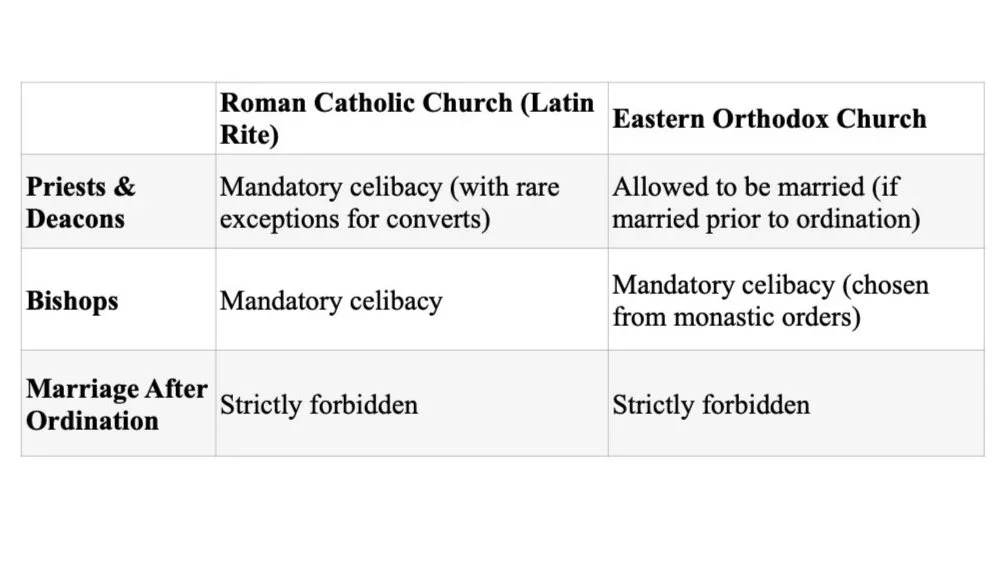
While, today, the Catholic Church views celibacy as a matter of discipline rather than an unchangeable dogma—evidenced by the fact that Rome permits married priests within Eastern Catholic Churches in communion with it, the issue remains a historical marker of the cultural alienation that fractured the medieval Christian world.
In 1045 AD Benedict IX had resigned in order to marry. In 1074 AD Pope Gregory VII said that anyone who was to be ordained must first pledge to be celibate; priests had to escape from the clutches of their wives. In 1095 AD Pope Urban II had priests wives sold into slavery and children were abandoned. In 1123 AD Pope Calistus II decreed through the First Lateran Council that clerical marriages were invalid. This decree was confirmed in 1139 AD by the Second Lateran Council under Pope Innocent II.
Yet in the 14th century there was still some ambiguity. In the 15th century approximately half priests were married and this was widely accepted by the people.
Reformation view on sex and marriage
Martin Luther and the Protestant Reformation completely rejected mandatory clerical celibacy and redefined marriage as a divinely ordered, honourable estate rather than an inferior state to virginity.
Luther argued that the Bible does not command celibacy for pastors. He pointed to pastoral qualifications in the New Testament (such as 1 Timothy, 2 Timothy, and Titus) which assume a leader is the "husband of one wife", as well as 1 Corinthians 7, which notes it is "better to marry than to burn" with passion.
Luther labeled forced vows of celibacy a "devilish tyranny" and a "doctrine of devils," claiming human beings lacked the authority to forbid what God designed. He pointed out that mandatory celibacy did not actually produce chastity. Instead, it led to widespread secret concubinage, hidden relationships, and moral hypocrisy, noting that the church frequently profited by collecting fines from priests who kept concubines.
Luther viewed marriage as a safe, God-given institution designed for mutual love, procreation, and a protection against sexual immorality.
Popes who were the son of clergy:
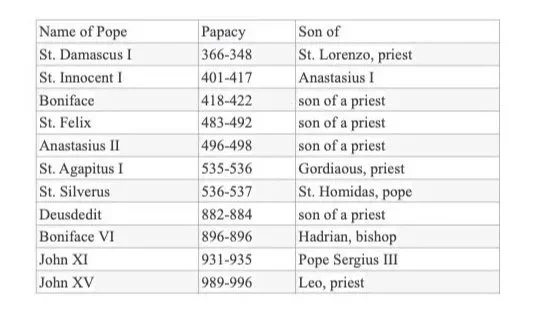
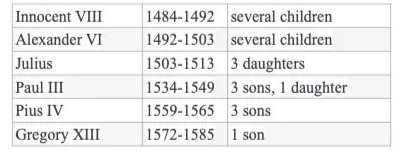
At least seven popes were married. Several others had children either before or during their papacies. Pope Julius II, the pope who commissioned Michelangelo to paint the Sistine Chapel, fathered three daughters. There was a father and son pope combination, Pope Hormisdas (514-523 AD) was father of Pope Silverius, (536-537 AD) who himself fathered an illegitimate daughter.
Popes who had illegitimate children after 1139 AD
Present problems
There have been innumerable examples of priests who have fallen into sexual sin today. Richard Sipe was a former priest and psychologist, who died in August 2018, who devoted much of his life to the psychological problems of priests. He wrote extensively on priestly celibacy. In 1990, he published ‘A Secret World: Sexuality and the Search for Celibacy’ and he estimated then that at any given time only 50% of priests, monks and bishops are actually celibate. This contributes to a culture of lying.
In a 2016 letter to San Diego Bishop Robert McElroy, Sipe wrote:
“Sooner or later it will become broadly obvious that there is a systemic connection between the sexual activity by, among and between clerics in positions of authority and control, and the abuse of children. . . When men in authority — cardinals, bishops, rectors, abbots, confessors, professors — are having or have had an unacknowledged-secret-active-sex life under the guise of celibacy, an atmosphere of tolerance of behaviours within the system is made operative.”
In other words, priests and bishops are not going to expose others because they may be guilty themselves.
There are also very real practical problems. How can priests help with marital problems and the bringing up of children if they have no experience of these issues?
What better advice on celibacy can be given than that of Paul in Scripture, when writing to the troubled church at Corinth:
“. . . so that you may learn from us the meaning of the saying, “Do not go beyond what is written.” 1 Corinthians 4:6
The God who gave us the Bible clearly established marriage as the norm. He also said to all people:
“Marriage should be honoured by all, and the marriage bed kept pure, for God will judge the adulterer and all the sexually immoral.” Hebrews 13:4
How easy it is for gnostic ideas, that go beyond Scripture, to infiltrate into so many areas of church life!
BVP
This article has been posted on the website www.bvpalmer.com where there are many other helpful articles and videos.
Christchurch Baldock is a Bible teaching, gospel centred, local church. More details can be found on its website. It meets every Sunday morning at 10.30 am in Knights Templar School, Baldock
Bernard can be contacted at berniepalmer1@sky.com