Stars in the Bible
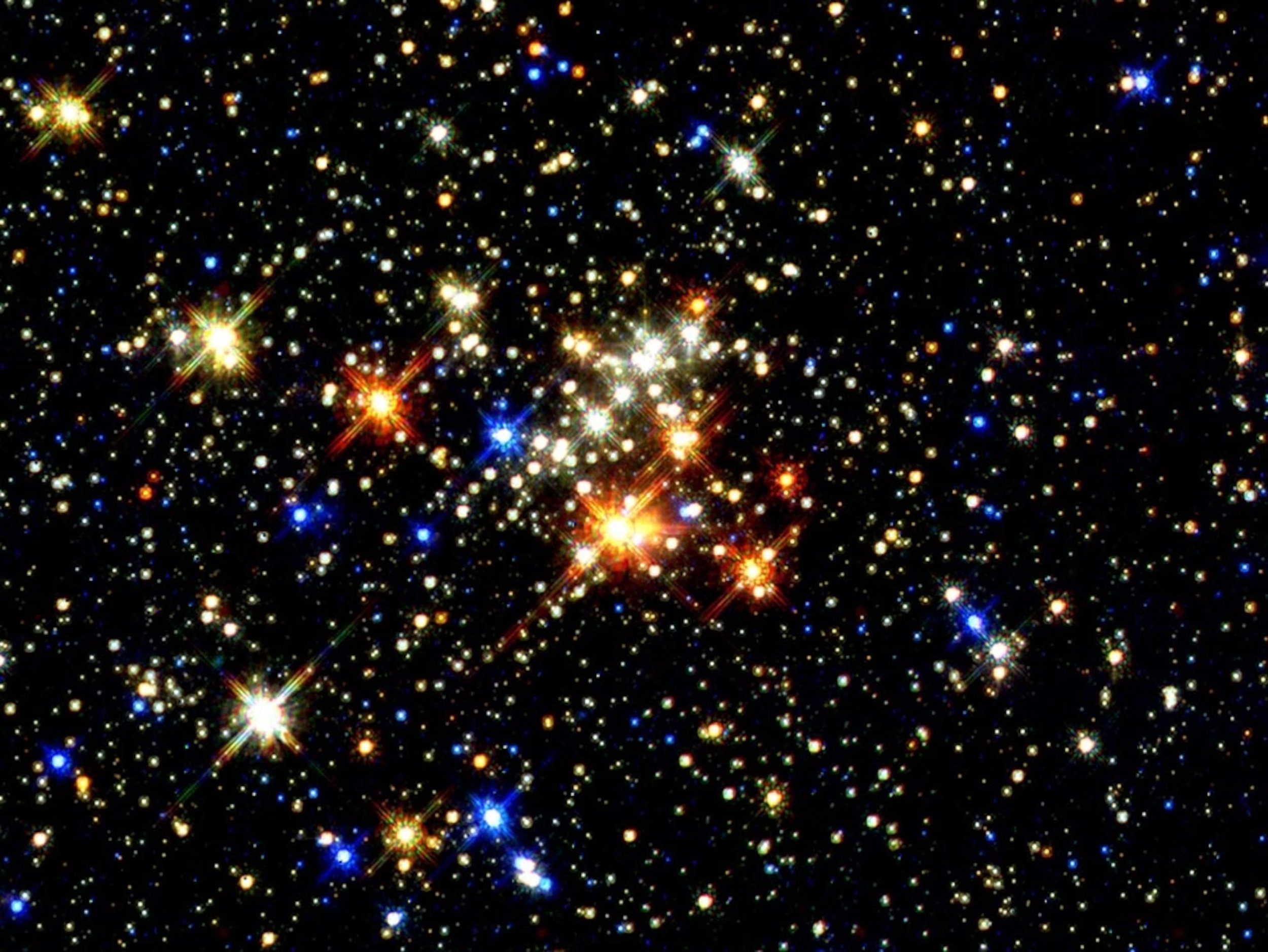
Under the name of ‘stars’, the Hebrew meant all the constellations, planets, and heavenly lights, except the sun and moon. The psalmist, to exalt the power and omniscience of God, says,
“He determines the number of the stars and calls them each by name.” Psalm 147:4
In the East in those days the stars shone with much more brilliancy than today in the west. They portrayed beauty, power and reliability. Almost all heathen nations impute to them life, knowledge, power, and to pay them a sovereign worship and adoration. The Israelites had to be warned against this sin.
“Do not learn the ways of the nations or be terrified by signs in the heavens, though the nations are terrified by them.” Jeremiah 10:2
In the Bible the image of a star is often used, not just as physical entities in the heavens but as people. In much the same way today, those people who are in prominent positions in sport, drama or other walks of life are still often called ‘stars’.
The seer, Balaam was ordered by Balak, king of Moab, to come and curse the Israelites who were threatening his rule. He refuses to do this and four times he blesses them. In his fourth oracle he prophesies:
“I see him, but not now; I behold him, but not near. A star will come out of Jacob; a sceptre will rise out of Israel. He will crush the foreheads of Moab, the skulls of all the people of Sheth.” Numbers 24:17
Who are the sons of Sheth? Many scholars prefer to translate this as ‘sons of tumult’ (ASV, RSV), interpreting it as a description for rebellious, or proud nations that will be overcome by the coming ruler. It could mean ‘sons of Satan’. This prophecy was fulfilled partially by Moses, then by King David but ultimately by David’s descendent, Jesus. He was to be the kingly star who would come much later and who will crush all rebellion against God.
Jesus describes himself as the foremost star:
“I am the Root and the Offspring of David, and the bright Morning Star.” Revelation 22:16
Peter compared the guidance some obtain by reading the stars to that given by Jesus when he controls people,
“We also have the prophetic message as something completely reliable, and you will do well to pay attention to it, as to a light shining in a dark place, until the day dawns and the morning star rises in your hearts.” 2 Peter 1:19
Stars can also be used to represent God’s people who share the gospel with those around them. Thus Paul wrote:
“ . . . so that you may become blameless and pure, ‘children of God without fault in a warped and crooked generation.’ Then you will shine among them like stars in the sky . . .” Philippians 2:15
The Magi saw a sign in the stars that gave them no doubt that a King had been born. They asked:
“Where is the one who has been born king of the Jews? We saw his star when it rose and have come to worship him.” Matthew 2:2
They had recognised that this king was no ordinary king as the sign caused them to travel such a long distance in order to ‘worship’ him. Did they know of Balaam’s prophecy and link this with what they saw in the skies? According to Herodotus, these Maghi were originally a tribe of the Medes (Herodotus i.101), whose skill in astrology and divination the term was applied to the learned and priestly caste among the followers of Zoroaster. They were thus in principle worshippers of one only God, and rejected polytheism and idolatry. The simple creed and high morality, which Zoroastrianism in its purest form professed, would prepare its faithful disciples to receive a further revelation. We may reasonably believe that the wise men who had been thus guided to worship the new-born king of the Jews had been faithful to the light afforded to them. Peter was to come to understand
“I now realise how true it is that God does not show favouritism but accepts from every nation the one who fears him and does what is right.” Acts 10:34-35
This does not mean that such people don’t need a Saviour but that the Lord longs for such people to see the light there is in Christ.
There is a legend still discussed in Palestine which may possibly explain how an actual star may have led the Magi to Bethlehem. Remember Herod’s rabbis had told them to go to Bethlehem as that was where the prophet Micah had said the Messiah would be born. At Bethlehem there is a well that is still shown to pilgrims as the means whereby the wise men ‘saw the star’ the second time. It is said that when they had reached Bethlehem, apparently nearly at mid-day, one of them went to the well of the inn in order to draw water. Looking down into the well he saw the star reflected from the surface of the water and knew that it must be directly overhead. Its re-observation under such unusual circumstances would be a sufficient assurance to the Magi that they had reached the right place, and inquiry in the inn would soon inform them of the visit of the shepherds, and of the angelic message which had told them where to find the babe `born in the city of David, the Saviour, which is Christ the Lord.’ Such theories however are pure conjecture.
BVP