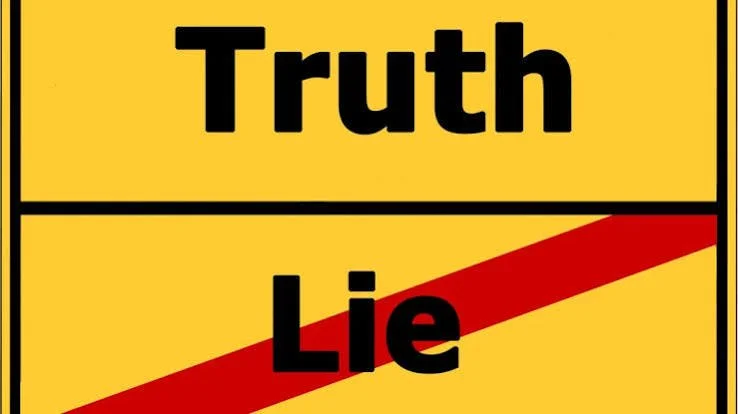
I was recently asked by a Sikh friend,
“What interests you most?”
I’m not sure what he expected but I simply said:
“Truth”
Cornel West, the philosopher and academic co-authored a book ‘Truth Matters: A Dialogue on Fruitful Disagreement in an Age of Division’. In increasing political and religious divisions, surely a search for ‘truth’ must be the way forward.
Dr. Martin Luther King Jr., who was heavily involved in seeking racial equality and was killed for this stance, insisted that truth must remain foundational to love, justice, and the movement for human liberation. Sir Keir Starmer, when the UK Prime Minister repeatedly stated that honesty, integrity, and telling the truth matter in politics.
It is obvious that to have a well balanced society, with successful industry and businesses, truth and honesty need to be encouraged. Those who abuse social support should be discouraged, yet at the same time we must find ways to support those who have real needs. Ways need to be found to establish such obvious goals in a society that is becoming increasingly selfish and people vote for self-interest. It is obvious that there must be checks on those in power, otherwise dictatorships with all its abuses will run out of control, as has been seen so often during the last century, wherever leaders, whether religious or not, have absolute power.
The ideal check is that everybody understands the profound truth that we are all subject to God’s judgment. If Hitler, Stalin, Pol Pot, the Ayatollahs and Saddam Hussein understood this truth and what this judgment would be based on and result in for therm, it would have made vast differences to the way they behaved.
Such leaders define for themselves what is true, but what matters is whether what they believe is God’s truth. What a person means when they say, ‘My truth is’may not have any relationship to the truth God knows. ‘My truth’ is simply ‘my idea off what I would like the truth to be’.
Jesus’ attitude
It will hardly be surprising for anyone to learn that truth was central to the teaching and behaviour of Jesus. In the four Gospels, Jesus says ‘truly’ (originally spoken as ‘Amen’ in Aramaic/Hebrew, and recorded as amēn in the Greek manuscripts) over 70 times.
While it is standard practice today for people to say "Amen" at the end of a prayer, Jesus uniquely used it at the beginning of his statements to emphasize that what he was about to say was an absolute, authoritative truth.
In Matthew, Mark, and Luke, Jesus always uses a single ‘truly’
"Truly I say to you...".
This phrase appears over fifty times across these three books: [
Matthew: 30–31 times
Mark: 13–14 times
Luke: 6 times
The Gospel of John is entirely unique, here Jesus never uses a single ‘truly’; instead, he always doubles it for extreme emphasis, saying
“Truly, truly I say to you. . . .” or “Verily, verily. . .” in older translations.
The phrase ‘Truly, truly, I say to you’ is a translation from the original Greek, “Amēn, amēn, legō hymin” and appears exactly 25 times in John’s record of the gospel. All 25 occurrences are spoken exclusively by Jesus and are found only within the Gospel of John. John uniquely records Jesus doubling the word for intense focus.
He used this phrase during key moments of His earthly ministry. Thus when speaking with the Jewish leader, Nicodemus, he explained the necessity of spiritual rebirth, religious sincerity is not enough for God Jesus said:
“Truly, truly, I say to you, unless one is born again . . .” John 3:3
When speaking to the crowds he emphasised that to follow himself was the only way to eternal life.
“Truly, truly, I say to you, whoever believes has eternal life.” John 6:47
To the Pharisees:he insisted that he had always existed, so claiming to be divine,
“Truly, truly, I say to you, before Abraham was, I am.” John 8:58
Jesus' predicted of Peter's upcoming denial about knowing Jesus, responding directly to Peter's bold claim that he would die for Him. Jesus replied,
“Will you really lay down your life for me? Very truly I tell you, before the rooster crows, you will disown me three times!” John 13:38
In ancient Judaism, ‘Amen’ was a congregational response used at the end of a prayer or reading from Scripture to mean, ‘Let it be so’.
Jesus completely reversed this cultural norm by placing ‘Amen, Amen’ at the beginning of his statements. By doing this, he demonstrated that he did not need a rabbi, a prophet, or the law to validate his words - his authority was entirely His own, he was speaking God’s truth and nothing but the truth. The phrase ‘Truly, truly’ signals that Jesus is not just passing along a message from God like the Old Testament prophets did. Instead, it highlights his claim to divinity. He is speaking about heavenly and spiritual matters from personal, firsthand experience as the Creator who originated those truths.
Grammatically, this phrase highlights the importance of what he was then to say. Whenever Jesus uses ‘Truly, truly,’ it serves as a warning that what follows is a non-negotiable, essential truth. He longs that people should understand what God has to say about God’s judgment, about salvation and what eternal life involves.
The phrase ‘Truly, truly, I say to you’ serves as a way of declaring Jesus's absolute divinity, supreme authority, and eternal existence.
The most direct relationship occurs when Jesus uses "Truly, truly" to preface His most radical ‘I am’ claim. When the Pharisees questioned his authority and age, Jesus responded:
"Truly, truly, I say to you, before Abraham was, I am.” John 8:58
By anchoring the ‘I am’ (Greek Egō eimi) with a double ‘Truly,’ Jesus slammed the door on any ambiguity. The use of ‘Truly, truly’ alerted His listeners to a massive, non-negotiable spiritual reality, and then he used ‘I am’ to claim for himself the personal name of God:
“God said to Moses, ‘I am who I am.’ This is what you are to say to the Israelites: ‘I am has sent me to you.’” Exodus 3:14.
The listeners understood this connection immediately - they picked up stones to kill Him for blasphemy.
The two phrases demonstrate a profound shift in how God communicates with humanity. Prophets like Isaiah or Jeremiah validated their messages by repeatedly saying,
“Thus says the LORD.”
They relied entirely on God's name, Yahweh (‘I AM’), to give their words weight. In the Old Testament, the translation of the name of God, ‘Jehovah’, is always written with capital letters, LORD.
Jesus in the New Testament bypassed this tradition. Instead of pointing to an external authority, he used the phrase,
‘Truly, truly, I say to you’
He did this to point to His own authority, and then used ‘I am’ to reveal that He is the very LORD the prophets were quoting.
Throughout the Gospel of John, these two phrases work together like a divine highlighter and as a title deed. The ‘Truly, truly’ highlights what Jesus is about to say, it acts as a solemn warning that a fundamental, unchangeable reality is being spoken. It demands our absolute focus. The ‘I am’ defines exactly who is speaking and reveals His divine identity. For example, Jesus combines them to define His exclusive role in salvation:
“Truly, truly, I say to you, I am the door of the sheep.” John 10:7
Such claims by Jesus are remarkable:
“Then Jesus declared, “I am the bread of life. Whoever comes to me will never go hungry, and whoever believes in me will never be thirsty.” John 6:35
“ I am the good shepherd. The good shepherd lays down his life for the sheep. The hired hand is not the shepherd and does not own the sheep. . . I am the good shepherd; I know my sheep and my sheep know me - just as the Father knows me and I know the Father - and I lay down my life for the sheep.” John 10:11-15
Jesus was talking to Martha after her dead brother Lazarus had been in a tomb for four days. She knew there was a resurrection form the dead at the ned of time but then Jesus tells her that he is able to raise the dead both on the last day but even in the present.
“I am the resurrection and the life. He who believes in Me, though he may die, he shall live. And whoever lives and believes in Me shall never die. Do you believe this?” John 11:25-26
The raising of Lazarus from the dead became so well known that the authorities determined to kill Jesus. Lazarus’ resurrection really did happen.
Truth matters
Christianity depends on whether the records of what Jesus said and did are reliable. Was he the incarnation of God, our creator or was he a fraud. The apostle Paul insisted that the resurrection of Jesus is the absolute foundation of Christianity. He stated:
“And if Christ has not been raised, our preaching is useless and so is your faith. More than that, we are then found to be false witnesses about God, for we have testified about God that he raised Christ from the dead.” 1 Corinthians 15:14-15
To this could be added that if Jesus did not fulfil the many prophesies in the Jewish Scriptures about God’s Messiah he is a fraud because he claimed that these were all about him.
At the beginning of his ministry we was in the Nazareth Synagogue reading from the scroll of Isaiah, which prophesied that the Messiah would bring good news to the poor and freedom for prisoners, Jesus sat down and declared,
“Today this scripture is fulfilled in your hearing.” Luke 4:16-21
Jesus told religious leaders,
“You study the Scriptures diligently because you think that in them you have eternal life. These are the very Scriptures that testify about me.” John 5:39, 5:46
After his resurrection, Jesus walked with two disciples to Emmaus, seven miles from Jerusalem and he explained, using their Scriptures, the meaning of his death:
“Beginning with Moses and all the Prophets, he explained to them what was said in all the Scriptures concerning himself.” Luke 24:27
He later told his disciples when he returned to meet them in the locked upper room:
“ . . . everything written about me in the Law of Moses, the Prophets and the Psalms must be fulfilled.” Luke 24:44
The Jewish Scriptures foretold that the Messiah would perform extraordinary miracles to authenticate himself. If Jesus is that Messiah he had to perform those miracles. God is a supernatural being so any revelation of himself will be substantiated by supernatural acts. No-one, not even his enemies doubted that he really did extraordinary miracles, the blind did see, the lame did walk and some dead were raised. What his enemies doubted was whether Jesus was the Messiah, God’s chosen king.
Pontius Pilate asked Jesus if he is a king. Jesus answered that his kingship is not of this world, and that everyone who belongs to the truth listens to his voice.
““You are a king, then!” said Pilate.
Jesus answered, “You say that I am a king. In fact, the reason I was born and came into the world is to testify to the truth. Everyone on the side of truth listens to me.”
This prompted Pilate's famous reply,
“What is truth?”
Truth is vital in a search for reality, for a real faith that will make me acceptable to God.
We all recognise qualities that we want to see in others , honesty, kindness, loyalty, integrity and courage. These values cannot be derived from an atheistic primordial chemical soup, they are the nature of God. If Jesus was God he must demonstrate such characteristics. Not even his enemies could find any sin in him. In Matthew 26:59-60, the chief priests and the Sanhedrin had to actively seek out false witnesses to testify against Jesus, showing they could not find any legitimate, provable faults in his action. Similarly Pilate found no fault in him. Holiness and righteousness were a pillar of the way Jesus’ followers were to live by.
After Jesus ascended to heaven, witnessed by the disciples, they spent the rest of their lives proclaiming and proving the truth of Jesus claims. Eleven out of the twelve were either executed by the authorities or killed by angry mobs because they insisted they were telling the truth about Jesus.
Today, as always people do not want this story to be true because it would mean radical changes in how we live. Jesus gives us new priorities, to live a his representatives in his world.
BVP
This article has been posted on the website www.bvpalmer.com where there are many other helpful articles and videos.
Bernard can be contacted at berniepalmer1@sky.com